"The priest is you. The abbey is everywhere. The ceremony has already begun."
— Golden Flower AbbeyWhat the Ordained
Are Called to Do
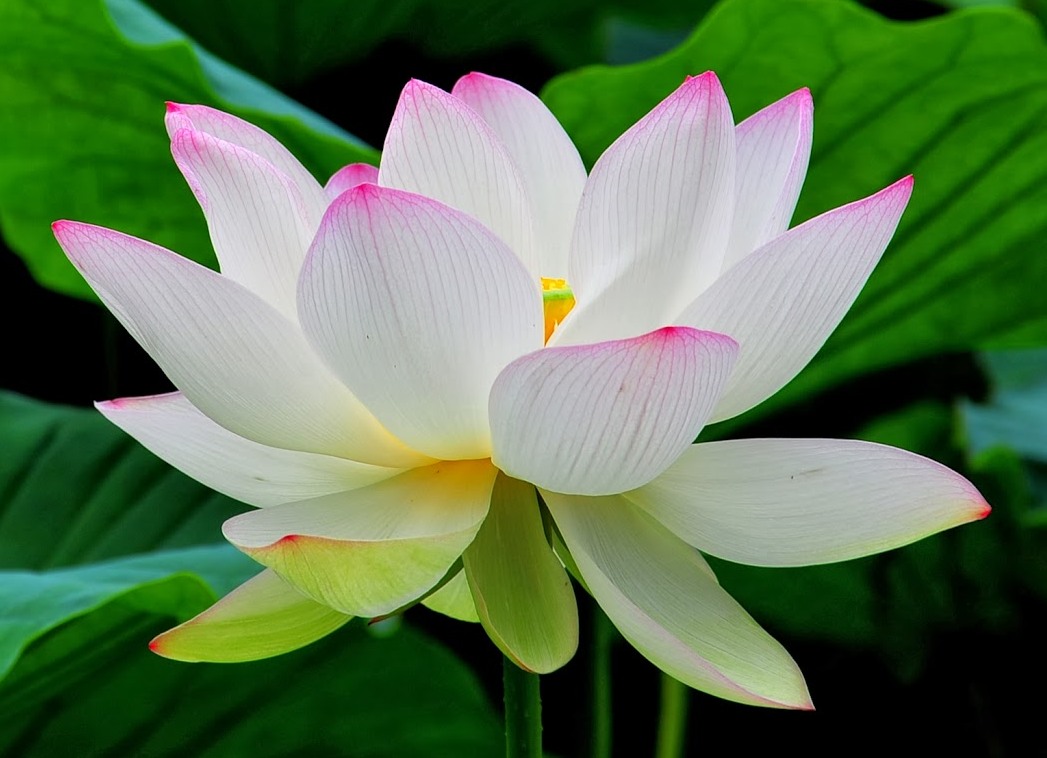
Ordination in this tradition is not a gate, a credential, or a purchase. It is a public ceremonial acknowledgment of the spiritual authority you have always carried — the community saying: We see the White Lotus in you. We trust you to carry it consciously.
To see the sacred in the ordinary and to name it — blessing a meal, a home, a friend in need, watering the seeds of the divine in all things.
To sit with another in their suffering — not as an expert, but as a compassionate witness who trusts their inner wisdom.
To share what you have learned — about meditation, sacred plants, and the heart — with humility, in service of the path.
To mark the thresholds of life — birth, death, union, healing — with intention and reverence, opening space for the sacred to be seen.
Ordination is not the beginning of your spiritual authority. It is a public, ceremonial acknowledgment of the authority you have always carried.
— The Golden Flower Abbey
<!-- Example: ordination application form, -->
<!-- payment widget, or sign-up block -->
<div class="your-component">
<!-- component content -->
</div>
The Unmoving Light:
The Shared Ground of All Being
In the beginning, and at the end, and in the eternal dimensionless moment between, there is only the Unmoving Light — the Suchness, the Tathata, the ultimate nature of all things.
Buddhism and Christianity, for all their apparent differences, converge at a single point if one looks deeply enough. Buddhism names the ultimate reality Nirvana — the "unborn, unbecome, unmade, unconditioned" ground of pure awareness. Christian mysticism names it the Godhead — the silent divine essence beyond even the personal God of prayer and covenant, the ineffable source from which the Trinity itself emanates.
Our theology names that shared ground The Unmoving Light. It is panentheistic: every universe, every Pure Land, every realm of being is contained within it as a dream within the mind of a sleeper, yet it utterly transcends the dream. It is deistic in its action: it does not intervene, does not answer prayers with miracles, does not rewrite the story for any character within it. It simply is — and that isness is the ground of all possibility.
To pray to the Suchness for intervention is like a character in a book asking the paper it's printed on to change the story. The paper does not intervene — and yet without it, no story exists at all. We direct our active prayer and spiritual practice towards the "holy and divine emanations." These are the bridge between the unknowable and the knowable. They are the aspects of the Divine that have character, personality, and a direct relationship with creation. You can pray to the Divine Mind for wisdom, to the World Soul for healing, or to the mystical Trinity. It's a way of honoring the ultimate mystery while still having a tangible and loving relationship with the Divine as it touches our reality.
This single insight dissolves the ancient argument between theism and non-theism. The Buddhist is correct: the ultimate is not a personal, intervening deity who manipulates events on behalf of the faithful. The Christian is equally correct: there is a divine source of all being, infinitely beyond the material world. The Unmoving Light satisfies both intuitions at once, because it is the ground that makes both insights possible. From the Unmoving Light, through the Avatars, to the guides walking beside you now — one unbroken river of compassion flows downward toward every living soul.
The Golden Flower Abbey of the White Lotus Society
Buddhas & Christs:
Co-Equal Avatars of the Inactive God
The Unmoving Light does not act directly. It is, by its nature, inactive — perfect, silent, unmoved. And yet from its infinite potential, a subtle vibration arises: the first ripple of compassion on the surface of a boundless ocean. This vibration crystallizes into the Buddhas and Christs — not rivals, not mutually exclusive saviors, but co-equal avatars, perfect conscious expressions of the same source appearing in different cultures and ages.
Each such avatar arrives with a cosmic purpose: to build and preside over a Pure Land — a realm of enlightened existence where the conditions for awakening are optimal, where the dharma, the word, the truth can be heard without the obstruction of suffering and ignorance. Amitabha's Sukhavati and Christ's Kingdom of Heaven are, in this reading, not competing heavens but different cultural names for the same kind of compassionate emanation from the source.
The Divine Teacher Archetype: Buddha and Christ
The proof that these avatars represent the same cosmic principle is written in the remarkable structural parallels of their mythic biographies. When the life stories of Gautama Buddha and Jesus Christ are examined not as competing historical records but as archetypal narratives, the same pattern emerges with astonishing consistency.
| Archetypal Stage | Buddha Narrative | Christ Narrative |
|---|---|---|
| Miraculous Birth | Queen Maya's dream of the white elephant | Virgin birth through the Holy Spirit |
| Signs of Destiny | Prophecy of the world teacher | Magi and messianic prophecies |
| Threat at Birth | King fears the prophecy of renunciation | King Herod orders the massacre of infants |
| Spiritual Withdrawal | Siddhartha departs the palace | Jesus retreats to the wilderness |
| Temptation | Mara's assault beneath the Bodhi tree | Satan's temptation in the desert |
| Awakening / Mission | Enlightenment at dawn | Baptism and revelation of divine mission |
| Teaching | The Buddha teaches the Dharma | Christ teaches the Kingdom of God |
| Gathering Disciples | Formation of the Sangha | The Twelve Apostles |
| Compassionate Ministry | Healing suffering and ignorance | Healing the sick and forgiving sins |
| Final Transcendence | Parinirvana — final liberation | Resurrection |
These parallels are not evidence of copying. They are evidence that religious communities, drawing from what Carl Jung called the collective unconscious, naturally shape the life of their founder into the universal template of the divine teacher — a living symbolic map of the path to awakening that every seeker can walk in their own inner life.
<!-- Example: image gallery, video embed, -->
<!-- testimonials block, or media section -->
<section class="your-section">
<h2>Your Heading</h2>
<p>Your content...</p>
</section>
A Single Hierarchy of Grace
This perfectly encapsulates a sophisticated spiritual path of radical transcendence combined with a rich, symbolic, and immanent spiritual practice.
Both Buddhism and Christianity populate the cosmos with beings of great wisdom and compassion dedicated to the liberation of others. This theology unifies those beings into a single spiritual hierarchy — not a hierarchy of power, but of radiance and proximity to the source. It flows like light from a single hidden lamp.
The panentheistic source and ground of all being. Inactive, transcendent, infinite. The ocean that contains all waves.
Perfect conscious expressions of the Suchness, appearing in different cultures to create Pure Lands and teach the path home.
Beings dedicated to the liberation of all sentient life, inhabiting the Pure Lands, studying the deepest mysteries of the source.
The first point of contact between the Pure Lands and the material world. Messengers who sing, protect, and deliver inspiration.
Spiritually advanced human souls drawn into the orbit of the Angels after their passing, becoming revered guides and intercessors.
The personal companions of incarnated souls, gently steering the living toward the path that leads ultimately back to the Light.
One Grammar,
Two Languages
Perhaps the most stunning structural evidence for a shared spiritual source is the parallel triadic architecture of both traditions' central sacred relationships.
In Pure Land Buddhism, the central devotional triad consists of Amitabha Buddha (the infinite source of light), Avalokitesvara / Guanyin (the one who hears the cries of the world), and Mahasthamaprapta (the great power that guides beings toward liberation). When their functional roles are compared to the Christian Trinity, rather than their doctrinal definitions, a remarkable correspondence appears.
| Archetypal Role | Pure Land Buddhism | Christianity |
|---|---|---|
| Transcendent Source | Amitabha Buddha — Infinite Light | God the Father |
| Compassionate Presence | Avalokitesvara / Guanyin — Hears the Cries | The Holy Spirit |
| The Manifest Savior | Mahasthamaprapta — Guides to Liberation | Jesus Christ |
Guanyin & the Virgin Mary: A Convergence Across Cultures
The figure of Guanyin offers one of history's most evocative case studies in parallel spiritual evolution. Originally the male bodhisattva Avalokitesvara in Indian Buddhism, this figure transformed in China — likely influenced by Taoist goddess traditions and, some historians suggest, by Nestorian Christian imagery arriving via the Silk Road — into a feminine embodiment of compassion recognized across East Asia.
By the medieval period, Guanyin and the Virgin Mary share an almost uncanny resemblance of spiritual function: both are compassionate mothers who hear the prayers of the suffering; both are protectors of sailors and travelers; both are depicted holding children. Whether through direct cross-cultural exchange or parallel archetypal evolution, both traditions independently generated the same figure — the feminine face of divine mercy — because both traditions were drawing from the same deep well.
This is the deepest message of the archetypal approach: religions do not merely borrow from one another. They converge, independently, on the same symbolic forms, because those forms are not arbitrary inventions but reflections of actual structures in human consciousness and cosmic reality.
One Ocean,
Different Waves
Buddhism and Christianity are not contradictory doctrines but complementary mythic languages pointed at the same ineffable truth.
Buddhism provides the profound philosophy of Suchness and the detailed cartography of the Bodhisattva path — the wisdom that realizes the Unmoving Light. Christianity provides the powerful narrative of incarnation, sacrificial love, and redemption — the compassion that flows from the Unmoving Light into human life. One illuminates the nature of the destination; the other illuminates the warmth of the journey.
In this view, no seeker is forced to choose between the Buddha and the Christ. The Buddha embodies the wisdom that recognizes the Unmoving Light in all things. The Christ embodies the love that rushes toward every being lost in darkness. They are two hands of the same source, two different mythic languages describing the same transformation of consciousness, two waves forever rising from — and forever returning to — the same silent, boundless, infinite ocean.
<!-- Example: newsletter signup, donation widget, -->
<!-- or social share buttons -->
<div class="cta-block">
<button>Begin Your Ordination</button>
</div>