The Way of Heaven: Zìrán & Wúwéi
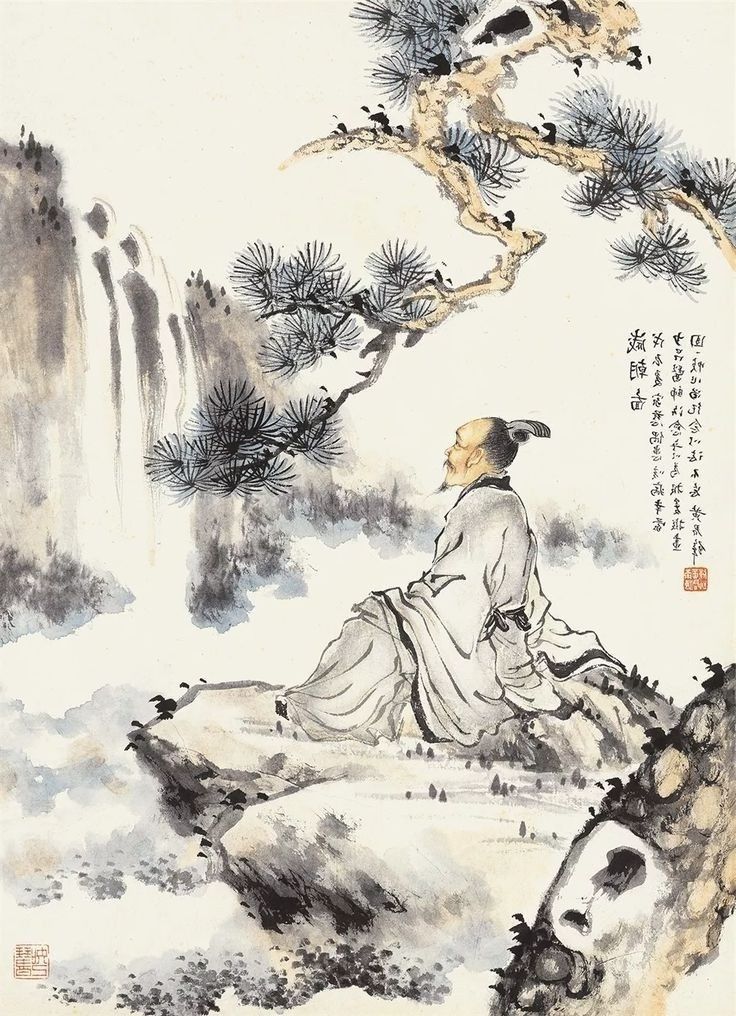
The Tao Te Ching, attributed to the sage Laozi, is one of the most enduring and quietly influential works in human history. A slender book whose depth expands the more one contemplates it, composed in brief, poetic verses that speak of the Tao — the ineffable source and pattern of all things — teaching paradoxical wisdom of softness, humility, and effortless action. Often regarded as second only to the Bible in global circulation, it has guided seekers for over two millennia toward alignment with the subtle rhythms of existence.
Imagine a river that never tries to be a river. It flows around stones, nourishes roots, and returns to the sea without effort or intention. That is the Way of Heaven (Tiandào) — the universe's own effortless, self-correcting intelligence. The sage doesn't struggle; they listen, align, and move with the current. That is wúwéi — not laziness, but action so natural it leaves no trace.
The journey in all three traditions begins not with mastery but with surrender. The Tao Te Ching opens recognizing that the Tao which can be told is not the eternal Tao. In Pure Land, this same humility becomes tariki — entrusting oneself to other-power. In Hesychast Christianity, the Jesus Prayer grounds the practitioner in creaturely smallness before the uncreated light.
The uncarved block and the flow of nature
The Tao Te Ching speaks of pu — the uncarved block — as the symbol of our original nature before the mind imposes categories. The sage preserves this primordial simplicity through returning again and again to the root of stillness. Xuán, the dark mystery, is not a void to be feared but the inexhaustible source from which all things arise and return.
"The Tao that can be told is not the eternal Tao. The name that can be named is not the eternal name." — Tao Te Ching, Ch. 1
The mystery that does not need to be solved
The Tao cannot be completely captured by words, because words describe particular things while the Tao encompasses the whole. Before there are names, categories, divisions, arguments, and distinctions, there is the mysterious unity from which everything arises. This gives Taoist spirituality its remarkable sense of openness. The Tao does not demand that every mystery be solved — instead, the Taoist learns to become comfortable with mystery. The mountain does not need to explain itself in order to be a mountain. The river does not need a philosophy in order to reach the sea. A flower does not need to understand spring before it blooms.
Human beings possess the extraordinary ability to reflect upon existence, but that same ability can sometimes separate us from the simplicity of existence. Taoist wisdom therefore encourages a return to direct experience: breathing, walking, observing, cultivating the body, caring for others, appreciating nature, practicing stillness, and becoming attentive to the subtle movement of life. The Tao is found wherever life is allowed to become fully alive.
Ziran — the Way of Naturalness
One of the great spiritual principles associated with Taoism is ziran, often translated as naturalness or spontaneity. To live naturally does not mean abandoning discipline or responsibility. It means discovering the form of discipline that harmonizes with one's nature rather than constantly fighting against oneself. The Taoist asks: What happens when I stop forcing? What happens when I listen before acting? What happens when I allow wisdom to mature naturally? What happens when strength becomes gentle, when knowledge becomes understanding, when ambition becomes service?
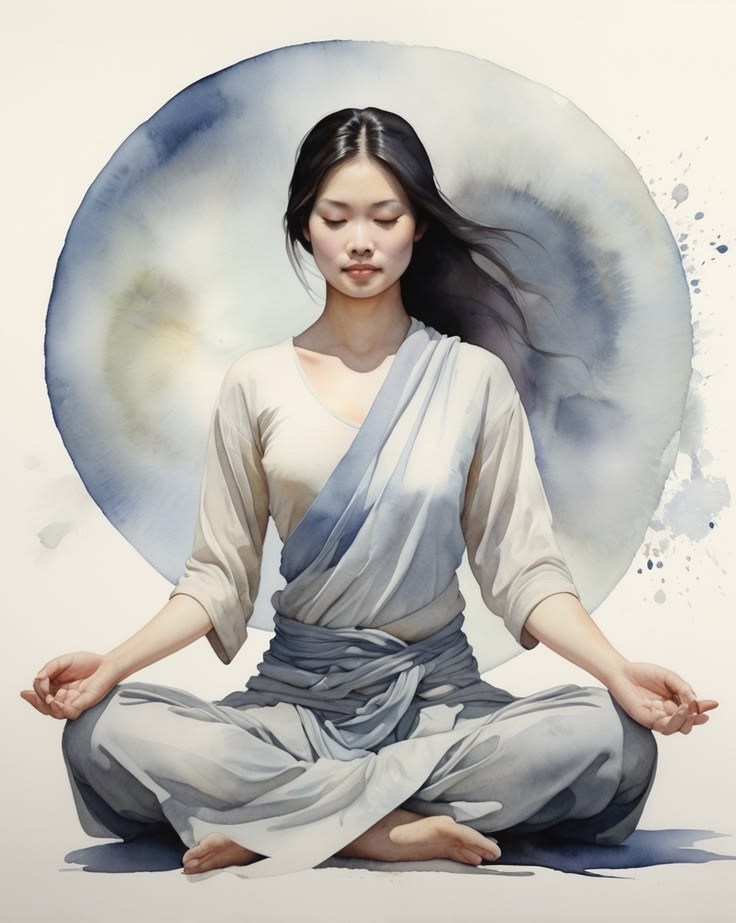
This is the spirit of wúwéi. It does not mean doing nothing. Rather, it points toward action so harmonious with circumstances that it does not feel like forcing. The skilled person learns when to move, when to wait, when to speak, when to remain silent, and when to allow events to unfold. The master does not struggle unnecessarily with the river. The master learns to sail.
The relativity of opposites
The second chapter of the Tao Te Ching offers one of its most quietly radical teachings: that beauty and ugliness, good and bad, being and non-being, difficult and easy, long and short, high and low — all of these arise only in relation to one another, and none exists as a fixed, independent thing. Call something beautiful, and ugliness has already been born alongside it in the mind. This is not moral relativism so much as an invitation to stop clinging to any single side of a pair. The sage, Laozi says, "acts without striving and teaches without words" — precisely because grasping at one half of a whole is itself the source of struggle. To see clearly is to see the pairing, not just the preferred half.
The soft overcomes the hard
Few images recur in the Tao Te Ching as often as water. "Nothing in the world is as soft and yielding as water," the text observes, "yet for dissolving the hard and inflexible, nothing can surpass it." A great river carves a canyon not by force but by patient, formless persistence — taking the shape of whatever contains it, always seeking the lowest place, and in doing so, wearing down stone that no hammer could break in a single blow. This is the Tao Te Ching's answer to power as the world usually understands it. Rigidity looks strong until the moment it snaps; the tender shoot bends in the storm and stands again after the great oak has fallen. "The rigid and hard will be broken. The soft and weak will overcome."
"The softest thing in the universe overcomes the hardest thing in the universe." — Tao Te Ching, Ch. 43
The usefulness of emptiness
Chapter eleven turns the ordinary logic of use on its head. Thirty spokes converge on a wheel's hub, Laozi observes, but it is the emptiness at the center that lets the wheel turn and the cart move. Clay is shaped into a vessel, but it is the hollow within that makes the vessel useful for holding anything at all. Doors and windows are cut into a room's walls, but it is the empty space they open that makes the room a place one can actually live in. "Therefore," the text concludes, "profit comes from what is there; usefulness from what is not there." The lesson runs against the grain of a mind trained to measure worth only by what can be added, built, or acquired — and suggests that the unfilled space in a life, a schedule, or a heart is not a deficiency to be corrected but the very thing that makes the rest usable.
The Three Treasures
In its sixty-seventh chapter, the Tao Te Ching names three treasures the sage holds and guards: compassion, frugality, and the reluctance to place oneself ahead of others. Compassion, Laozi says, gives rise to courage; frugality gives rise to generosity, because the one who needs little has much to give; and the humility that declines to grasp for the foremost place is precisely what allows a person to become fit to lead. These three are offered not as separate virtues to be practiced one at a time but as a single posture toward life — a way of holding power, resources, and position so lightly that none of them can calcify into the self-importance that eventually topples every ruler, teacher, and household who forgets to hold them so.
Governing by non-interference
The Tao Te Ching is, among other things, a manual for rulers — though its counsel runs directly against the instinct to rule by decree. "The more prohibitions there are," it warns, "the poorer the people become. The more sharp weapons the people have, the more troubled the state." Of the best kind of leader, it says simply: "when his task is accomplished and his work done, the people all say, 'we did this ourselves.'" This is wúwéi applied to power itself — governance so attuned to the natural inclinations of a people that it becomes invisible, leaving credit and dignity where they belong rather than gathering them upward. The same wisdom scales down from empires to households and communities: the parent, the teacher, the elder who governs best is very often the one whose guiding hand is felt least and trusted most.