White Lotus Society · Dharma Library
Science and Religion
Where the Lamp of Science Meets the Flame of Awakening
From the Abbey Press

A holistic, non-reductionist reading of Genesis 1 as a hierarchy of logical prerequisites — where quantum biology, cosmology, and the ancient text converge.
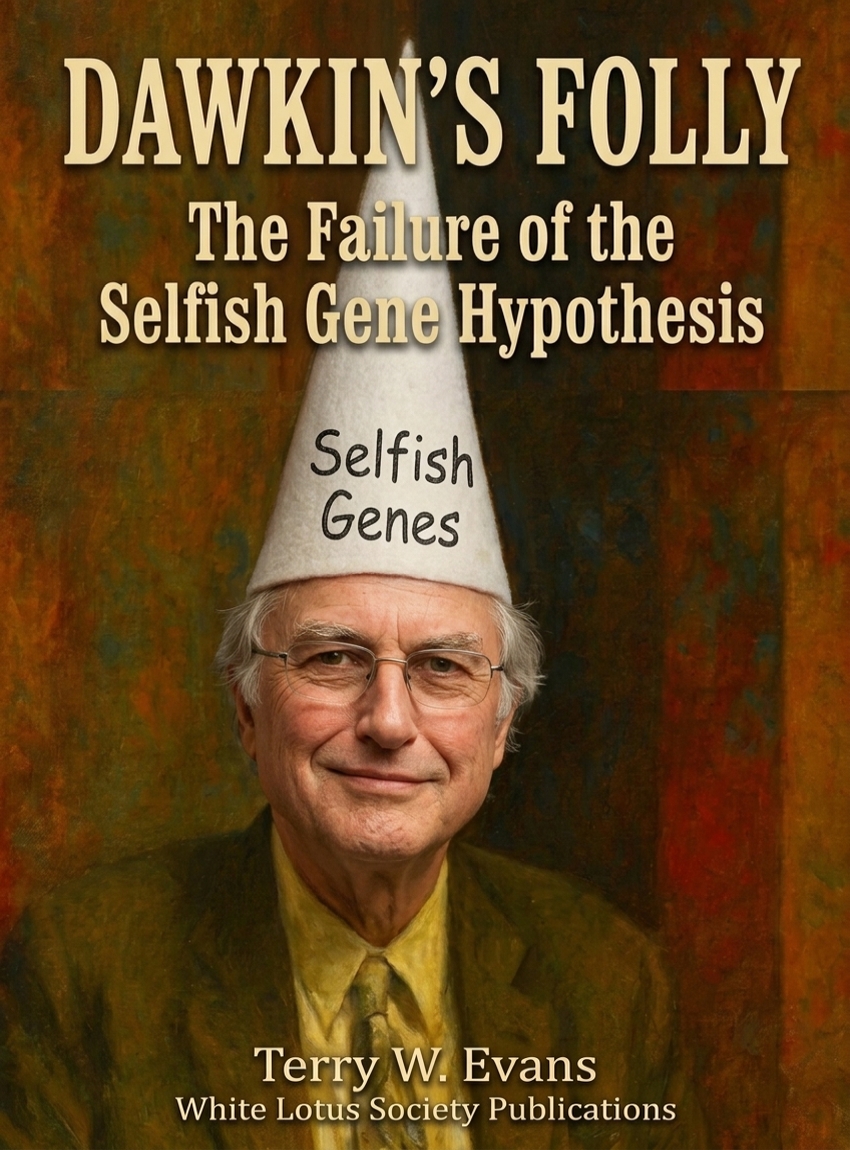
The case for a holistic biology — epigenetics, bioelectric fields, and the active genome dismantle the gene-centric doctrine of neo-Darwinism.

The sun as the gardener's partner: solar aquaponics, agrivoltaics, the solar beehive, and a plain electrical primer for the home, the small farm, the community commons, and the church garden.
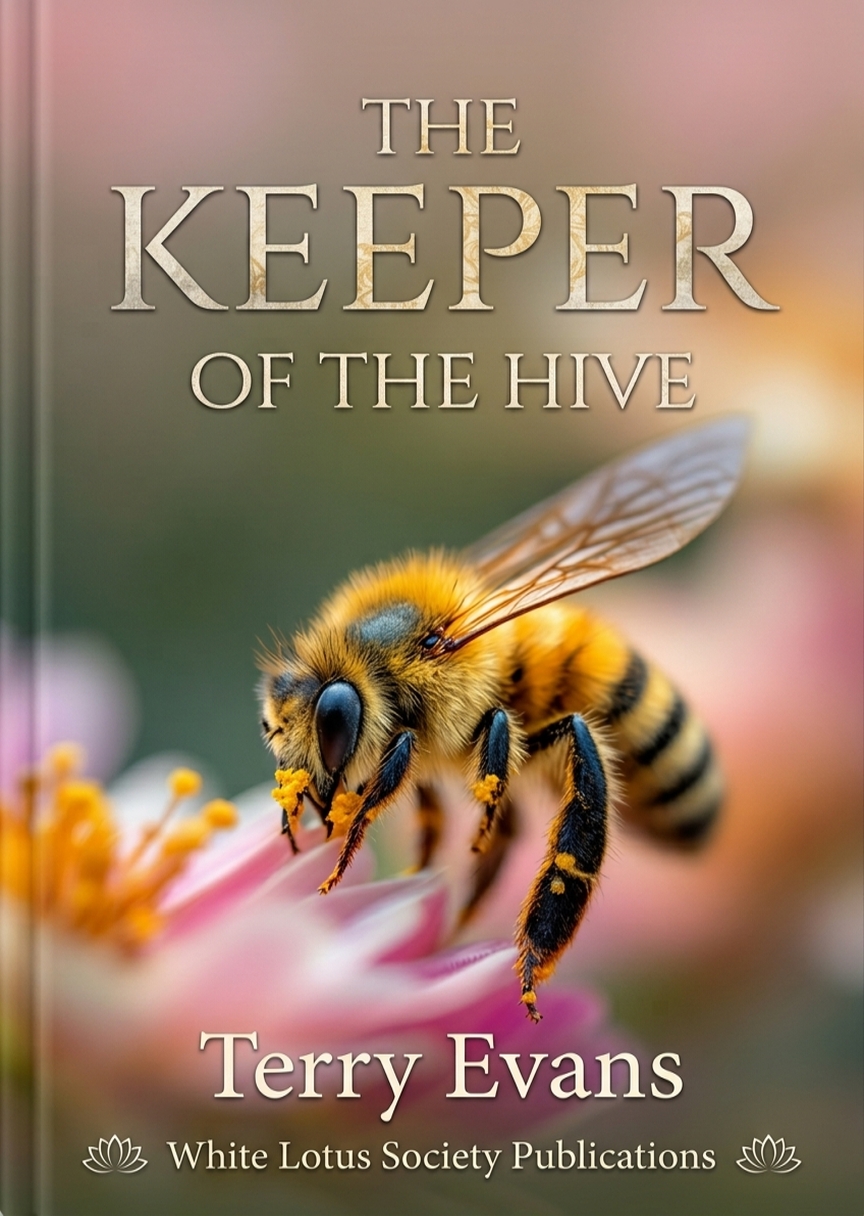
A complete guide to the keeper's calling: the history of the hive, colony life, equipment, the beekeeper's year, the gifts of the hive, and the spiritual life of the one who tends it.
I · The Great Convergence
The End of the Wall Between
Science and the Sacred
For three centuries, the Western mind erected a wall between the laboratory and the temple — between the language of equations and the language of prayer. It was a wall built on a misunderstanding: that the rigorous demanded the absence of the luminous. That to measure was to diminish. That faith and fact were irreconcilable strangers.
That wall is dissolving. Not because science has grown less rigorous, but because it has grown more so — pursuing its own logic to depths where matter melts into probability, time bends upon itself, and the observer becomes inseparable from the observed. The hard edge of materialism softened first at the quantum frontier, where particles existed in superposition until witnessed, where entanglement laughed at locality, and where the elegant mathematics underlying reality carried a strange whiff of the numinous.
The contemplative traditions were never surprised by this. The Taoist sages who spoke of the Tao that cannot be named, the Vedic rishis who mapped consciousness as the ground of all being, the Buddhist logicians who deconstructed the self into a stream of interdependent arisings — they were, in their own idiom, scientists. Observers of the deepest order. Their laboratories were the trained and stilled mind; their instruments, refined attention; their peer review, unbroken lineages of verification across millennia.
The convergence now underway is therefore not a capitulation of one to the other. It is a recognition of a shared territory — the nature of reality, the nature of mind, the nature of the cosmos — approached from different angles by different tools, converging on truths too vast for either tradition alone to hold.
II · Dharma, Mysticism & the Scientific Spirit
The Mystic as Empiricist:
Dharma in the Age of Discovery
Dharma — the sustaining law, the righteous path, the nature of things as they truly are — is not a doctrine imposed from outside. It is what is discovered when inquiry goes deep enough. In the Hindu, Buddhist, Taoist, and Sufi traditions alike, the highest knowledge was never merely believed; it was verified through practice, transmitted through direct experience, and updated through the living encounter with reality.
This is also the scientific spirit at its finest. Science, at its heart, is a commitment to looking at what is, rather than what we wish were so. The contemplative mystic and the genuine scientist share this uncommon courage: to let reality correct their assumptions. When a quantum physicist discovers that the act of measurement collapses a wave function, she has stumbled into the same territory the Buddhist meditator has walked for 2,500 years — the radical entanglement of knower and known.
Mysticism in science is not superstition dressed in white coats. It is the recognition that reality exceeds our current models, that the map is never the territory, and that the greatest scientists — Einstein, Bohr, Schrödinger, Heisenberg — were, by their own testimony, moved by something that felt like reverence. Schrödinger studied Vedanta and wrote that consciousness appears to be singular. Einstein wrote of the cosmic religious feeling as the deepest motivation of scientific research. These were not momentary poetic flourishes. They were honest reports from the frontier.
The Golden Flower Abbey holds that this recognition is not a detour from rigorous inquiry but its deepest expression. Dharma is the law that science seeks. The White Lotus blooms precisely at the intersection of disciplined investigation and the willingness to be astonished.
Wave-particle duality, observer effects, and the measurement problem converge with nondual philosophies of mind and perception.
Epigenetics, morphogenetic fields, plant sentience, and the holistic ecology of living systems dissolve the mechanistic organism.
First-person phenomenology, samadhi research, and the rigorous cartographies of inner states found in Vedanta, Yoga, and Dzogchen.
From the fine-tuned constants of physics to the Anthropic Principle — the cosmos appears as if it knew we were coming.
III · Nonduality, Consciousness & the Hard Problem
Consciousness as the Ground:
Science Within the Nondual
The Hard Problem of Consciousness — why there is something it is like to be, why qualia arise, why the light is on at all — remains the most intractable puzzle in modern philosophy of mind. No amount of neural correlates fully explains the felt quality of red, the ache of longing, the expansion of understanding in a moment of insight. The brain in third-person description does not yield the first-person fact of experience.
The nondual traditions offer not a solution that bypasses the problem but a recontextualization that dissolves it: consciousness is not produced by the brain as steam is produced by a kettle. Consciousness, in the Advaita Vedanta, Kashmir Shaivite, Dzogchen, and Zen frameworks, is the prior condition — the field in which all phenomena, including brains and bodies, arise and subside. Matter does not generate mind. Mind, in a deeper sense, is what matter is made of — or rather, the division between mind and matter is itself a conceptual overlay on an undivided aware presence.
This is not mystical obscurantism. It is a philosophical position taken with increasing seriousness by figures such as David Chalmers, Bernardo Kastrup, Donald Hoffman, and Thomas Nagel — who argue that physicalism as currently understood cannot account for consciousness, and that some form of panpsychism, idealism, or neutral monism may be required. The science of consciousness is beginning to look, with newly humble eyes, toward the contemplative archives.
Meanwhile, advanced neuroscience of meditation — from the studies of Matthieu Ricard's gamma oscillations to default mode network dissolution in deep practice — is beginning to render in the language of third-person science what the yogi always knew in first-person experience: that the sense of a bounded, separate self is a construction, and its relaxation reveals something vast and undivided beneath.
IV · Holism Superseding Reductionism
The Whole That Exceeds
the Sum of Its Parts
Reductionism has been the great engine of scientific progress: break the system into its components, describe the components precisely, and you have described the system. It is a method of breathtaking power that produced antibiotics, semiconductors, and the Standard Model of particle physics. To dismiss it would be as foolish as to crown it absolute.
Yet emergence — the arising of properties at higher levels of organization that cannot be predicted from the lower levels alone — persistently exceeds reductionist accounting. Wetness is not a property of H2O molecules; life is not a property of amino acids; consciousness is not a property of neurons. Something new appears at each level of complexity that was not present in the parts. The whole exceeds the sum. This is not hand-waving. It is one of the most rigorously studied phenomena in complexity science, systems biology, and emergence theory.
The holistic knowledge paradigm does not abandon analysis. It situates analysis within synthesis. It asks not only "what are the parts?" but "what is the organizing principle that makes them a whole?" It recognizes that living systems, ecosystems, cultures, and psyches are not merely complicated (many interacting parts) but complex (exhibiting self-organization, feedback, nonlinearity, and irreducible wholeness). The medicine that follows from such a view treats the patient, not merely the pathology. The ecology that follows tends the web of life, not merely the targeted species.
This is the science of which the great traditions always spoke: a knowledge that holds the part and the whole simultaneously, that sees the tree and the forest and the biosphere and the living planet as a single conversation.
V · The Dharma Library
The Living Archive:
Why the Library Is Sacred
In every civilization that endured, the library was a temple. Alexandria held the mathematics of Egypt and the philosophy of Greece in the same rooms. Nalanda sheltered logic and meditation, astronomy and ethics under one roof. The great Islamic libraries of Córdoba and Baghdad made no distinction between the natural sciences and the sciences of the soul. The library was not a storage facility; it was a living organ of civilization's memory and aspiration.
We live in an age of unprecedented information — and of unprecedented forgetting. The fragmentation of knowledge into competing academic silos means that the biologist who would speak to the quantum physicist, or the contemplative practitioner who would speak to the neuroscientist, must first translate across mutually suspicious dialects. The synthetic mind, the one that holds the whole, has no institutional home.
The Golden Flower Abbey of the White Lotus Society exists to be that home. An online dharma library and advanced science library that refuses to honor the artificial boundary between the investigation of outer reality and the investigation of inner reality. That holds Nagarjuna alongside Niels Bohr, the Yoga Sutras alongside epigenetic research, the Tao Te Ching alongside chaos theory and complexity science.
To value such a library is to value civilization's continuity with its own deepest aspirations. Every text preserved is a conversation kept alive across centuries. Every connection drawn between traditions is a synapse formed in humanity's collective mind. The library does not merely hold knowledge — it holds the possibility that knowledge might one day become wisdom.
Sanskrit, Pali, Tibetan, and Chinese classics — Vedanta, Mahayana, Taoism, Sufism — in translation and commentary.
Quantum field theory, cosmology, the measurement problem, the many-worlds interpretation, and what they mean for the nature of reality.
Epigenetics, morphic fields, psychoneuroimmunology, the microbiome, and the intelligence of organic life beyond mechanism.
The hard problem, contemplative neuroscience, nondual philosophy, and rigorous first-person methodologies of inner exploration.
VI · The Flowering
The Golden Flower Blooms
at the Boundary of Knowing
The Secret of the Golden Flower — that ancient Chinese text of Taoist alchemy and meditation that Carl Jung found so resonant with his own depth psychology — speaks of a light that turns back upon itself: consciousness recognizing its own nature. It is an image of the deepest convergence. The light that goes out to illuminate the world eventually curves back to illuminate itself. Science, taken to its limit, becomes self-reflexive. It begins to investigate the investigator.
This is the frontier. This is where the White Lotus Society stands its ground — not between science and religion as adversaries to be reconciled, but at the living edge of inquiry itself, where every honest question about the nature of things eventually opens onto the mystery of the one who is asking. The Abbey is a place to pursue that question without premature closure — with the rigor of the scientist and the surrender of the mystic, holding both without collapsing one into the other.
We study advanced biology because life is extraordinary beyond any mechanistic account. We study the most advanced physics because matter is stranger than materialism imagined. We do not separate science and religion because they are two languages attempting to speak the same unspeakable thing: the nature of existence, of consciousness, of the luminous ground from which all phenomena arise.
The library that holds this knowledge is not merely useful — it is holy. Not because we have declared it so, but because the knowledge itself carries a quality of the sacred: the awe before the real, the humility before the vast, the love of truth for its own sake. Come, enter, read, and let your understanding be enlarged. The Golden Flower is in perpetual bloom. The White Lotus is always rising.