Mount Meru & the Cosmos
Samye lays its halls and stupas out as a working model of the cosmos itself, Mount Meru rising at the center with the iron-ring mountains closing the circle at its edge.
Buddhist Stream
Built as a virtual pilgrimage through real sacred ground — Mount Wudang and its Golden Hall in Taoism, Donglin Temple at Mount Lu and Mount Kailash in Buddhism, Meteora and the twenty monasteries of Mount Athos in Eastern Christianity — this tour carries a seeker through the same order any pilgrim keeps in any tradition: approach, threshold, gate, hall, incense, treasury, garden, community, path, spring, and summit.
Begin the JourneyEvery pilgrimage begins long before the traveler takes a single step. It begins with curiosity, longing, and the quiet recognition that beauty, wisdom, and truth are worth seeking.
This museum has not been designed as an ordinary website. It is intended to be experienced much like walking through an ancient monastery, a mountain sanctuary, or a great museum whose galleries reveal their treasures gradually. Every chamber introduces another piece of a larger story.
Architecture, artwork, manuscripts, sacred landscapes, meditation, history, philosophy, and living traditions come together here as parts of one continuous journey rather than isolated subjects.
Instead of racing toward information, visitors are encouraged to slow their pace. The spaces between ideas become just as meaningful as the ideas themselves.
The question this pilgrimage keeps asking, in one form or another, is a different one than the tidy version usually told. Three traditions, sharing far more caravan road, far more mixed cities, and far more genuine centuries of neighborly contact than the popular "three separate streams" picture usually admits, still answered to entirely different scriptures, calendars, and gods, and still built entirely distinct sanctuaries out of that shared road. A slow approach. A threshold crossed deliberately. A hall built around a vow. Smoke rising. Water at the source. A mountain that draws the eye upward without ever quite being climbed. This tour does not flatten that history into a single faith wearing three masks. It lays the evidence out, station by station, and lets both the contact and the distinctness stay visible at once.
The instinct behind it is not new. In 386 CE, the monk Huiyuan gathered a mixed company of monks, officials, and poets beneath Mount Lu and bound them by a shared vow before a lotus pond — a fellowship remembered as the White Lotus Society, and the root from which Golden Flower Abbey still draws its name and its habit of holding more than one stream of wisdom in a single hand. What follows is built in that same spirit: not a merger of traditions into one, but a place where several can be seen clearly, side by side, without being asked to become each other.


Samye lays its halls and stupas out as a working model of the cosmos itself, Mount Meru rising at the center with the iron-ring mountains closing the circle at its edge.
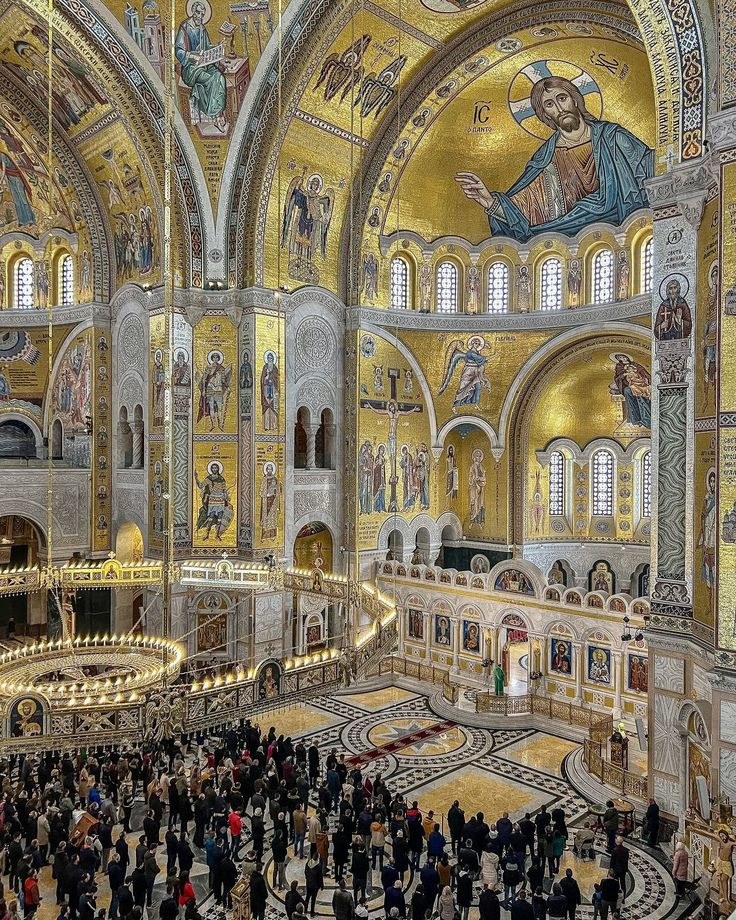
Hagia Sophia reaches no single direction at all: its dome, ringed at the base by forty windows, seems to float on a golden chain let down from heaven.

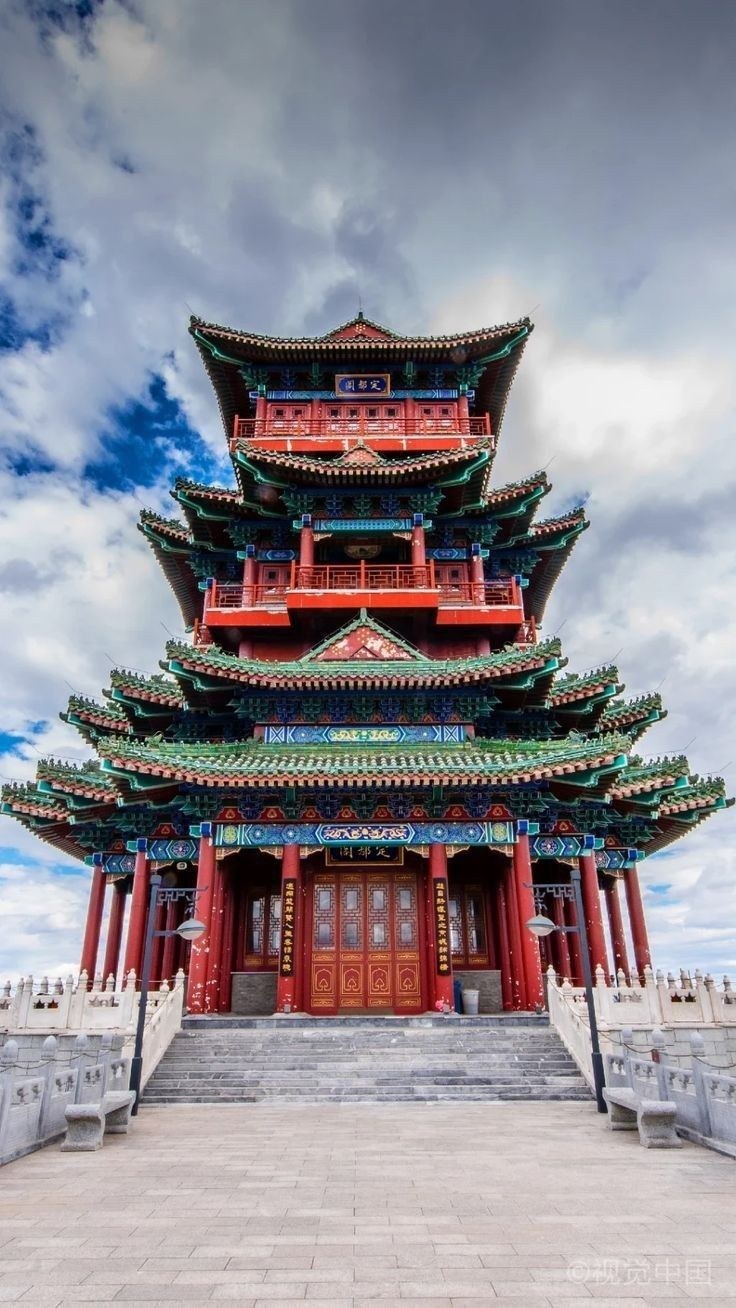
Wudang's Golden Hall settles onto the exact contour of Tianzhu Peak, grandeur achieved not by imposing a shape on the mountain but by refusing to fight it.
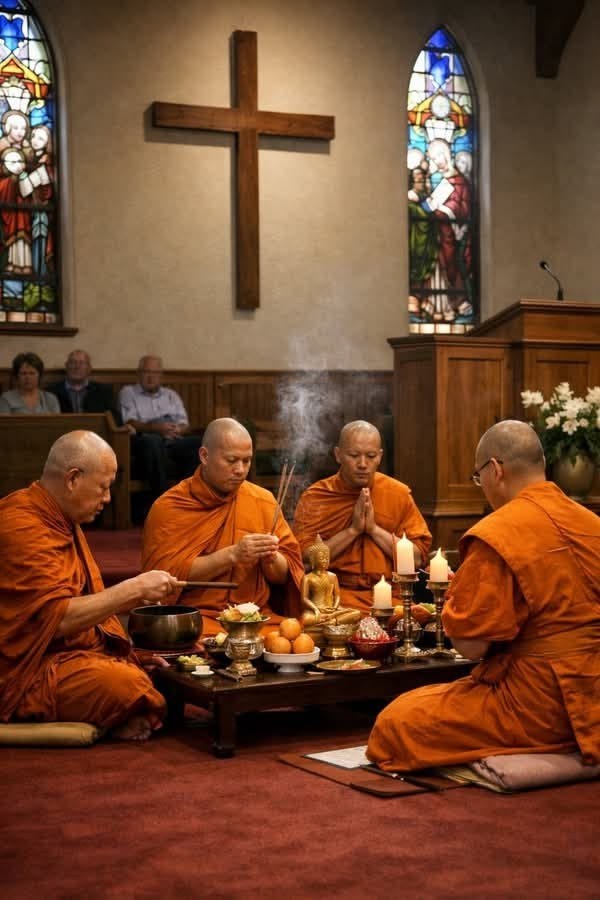
What the last three centuries built as separate sanctuaries occasionally still shares a single room: a Buddhist blessing offered beneath a Christian cross, incense rising in a nave built for an entirely different liturgy.
"Mount Meru, a golden dome, a mountain's own contour — three floor plans for the same conviction that something sacred deserves a shape."Prologue Reflection
None of these three builders ever sat in the same room to compare notes. Samye rose in the eighth century on the Tibetan plateau, modeled on an Indian original at Odantapuri; Hagia Sophia was raised in Constantinople under Justinian in the space of less than six years; Wudang's temple complex reached its present form under the Yongle Emperor in the early fifteenth century, seven hundred years and several thousand miles removed from either. No architect working on one ever saw the other two, and the resemblance between them was never a matter of copied blueprints. But the roads underneath these particular buildings were far busier, and carried a far more mixed traffic of faiths, than the average visitor assumes — and it is worth correcting that assumption before going any further. A mountain was the answer more often than any other — sometimes built, sometimes climbed, sometimes both at once. That is where this pilgrimage begins its own ascent, tracing not a single mountain but the roads that carried scripture, merchants, and missionaries together from a cave in Kucha to a cliff on the far side of a continent.
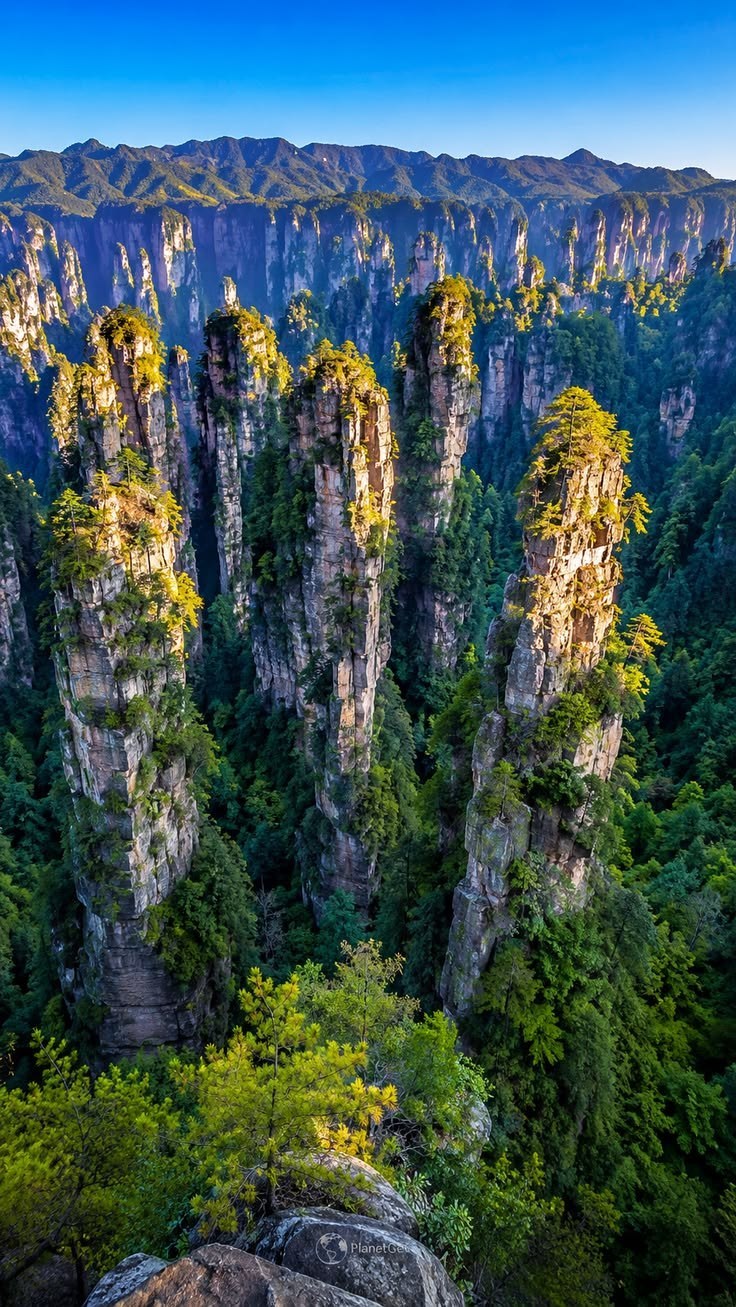
Long before any hall was raised on it, a peak like this had already done the work of drawing the eye upward.
Popular memory tends to flatten the Silk Road into a story about silk. The archive left behind tells a busier story: for a thousand years, a shifting network of caravan routes carried more religious traffic, earlier and in greater volume, than the neat "three separate streams" picture usually allows.
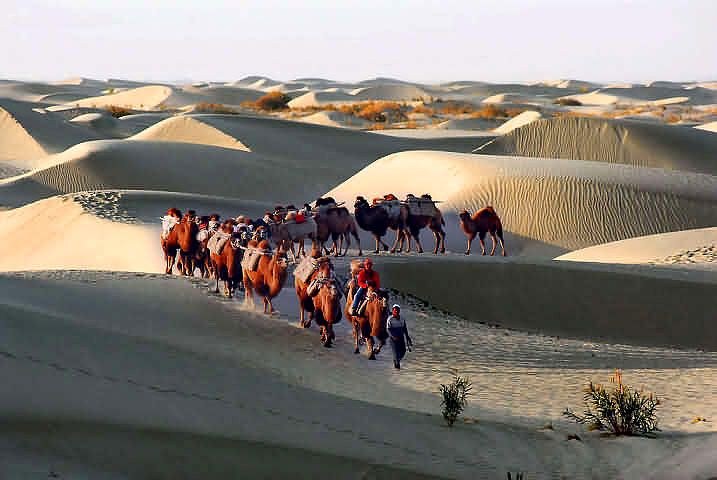
Buddhism travelled east along the Silk Road, and the tradition that reached Huiyuan at Mount Lu was already old by the time it arrived. The Pure Land sutras had taken shape in India by the first centuries of the Common Era, and the Kushan monk Lokak?ema was rendering them into Chinese at Luoyang as early as 147–189 CE — two full centuries before Huiyuan gathered his own company beneath a lotus pond in 402. What is often taught as a single, tidy point of origin is better understood as the tail end of a much longer transmission, one that Kumarajiva, born in Kucha and brought to Chang'an in 401 CE, continued through translation work of a clarity no predecessor had matched — carried on, at a distance never closed in person, through correspondence with Huiyuan himself.
Eastern Christianity's own timeline is even more commonly misstated. Alopen's arrival in Chang'an in 635 CE is often taught as Christianity's introduction to "the East," but Alopen was arriving at a capital, not founding a frontier. The Church of the East had already been an organized body in Persia for more than two centuries by then, formalized at the Council of Seleucia-Ctesiphon in 410 CE, and had been sending missions along these same caravan routes into Sogdiana, Merv, and the oasis cities of Central Asia well before the Tang dynasty ever heard of it. Alopen did not bring Christianity to the Silk Road. He brought it, at last, to the capital at the road's eastern end — the last major stop on a route it had already been travelling for generations. The Nestorian Stele, raised in 781 CE, records this in fluent Chinese beside a Syriac inscription, but the stele is a monument to an already-established community, not a birth certificate.
Taoism was never a visitor to this road; it was the philosophy already resident at its eastern end, absorbing and reinterpreting what arrived the way it always had.
The physical evidence for how mixed this traffic actually was survives in an unusually direct form. The manuscript cache sealed inside Cave 17 at Dunhuang's Mogao complex — walled shut sometime in the eleventh century and left undisturbed until its rediscovery in 1900 — held Buddhist sutras, Taoist texts, Manichaean and Zoroastrian material, and Chinese-language Jingjiao Christian scripture, the so-called Jesus Sutras, together in the same library. These were not scattered discoveries from different sites stitched into a narrative after the fact; they were shelved together, by people who lived and worked in a genuinely mixed religious environment and saw no contradiction in keeping each tradition's texts within reach of the others. Sogdian traders, who dominated the caravan economy across these same centuries, were routinely multilingual and moved between Zoroastrian, Buddhist, Manichaean, and Christian communities as a simple condition of doing business oasis to oasis. The picture this leaves is not one of three sealed traditions occasionally brushing past each other, but of a shared corridor of cities where a merchant, a monk, and a missionary might easily have shared the same caravanserai on the same night.

Scripture alongside silk, philosophy alongside spice — the wise man's road was never only a trade route.

At Chang'an, a translation bureau that shaped Buddhism in China for centuries, exchanging letters with Mount Lu across a distance never closed in person.

Eastern Christianity's own case, carved directly into stone at the Silk Road's eastern terminus, still standing in Xi'an today.
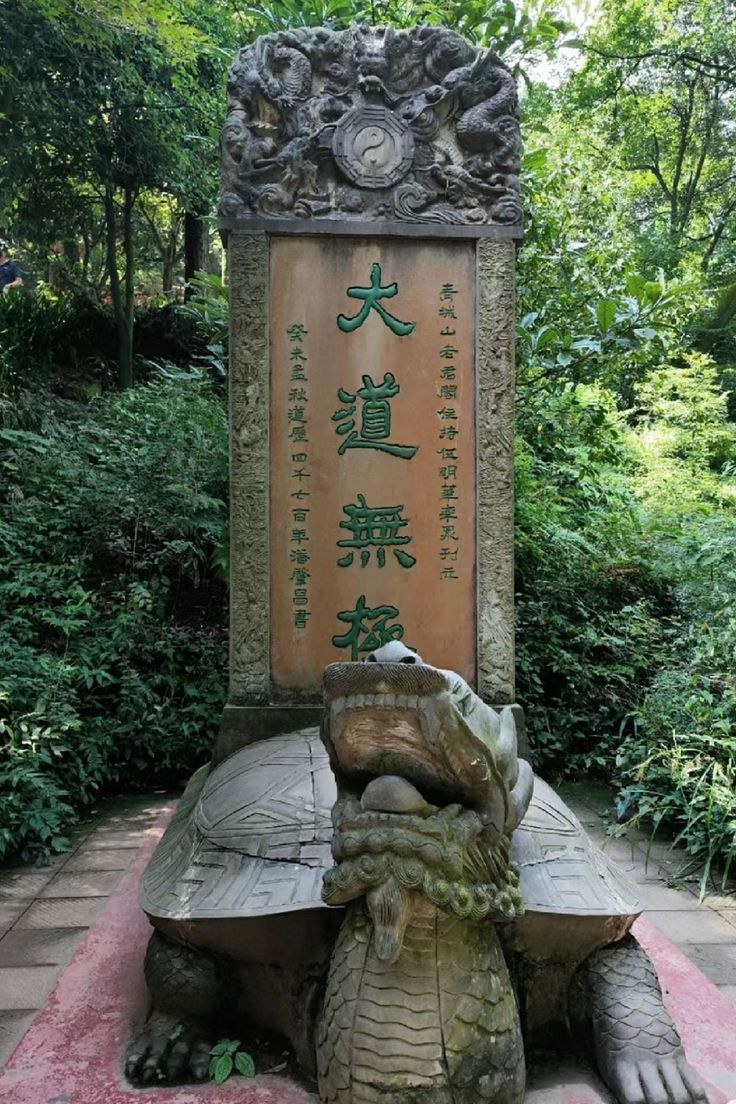
Taoist and Buddhist temples across China raised the same kind of monument for the same reason — a bixi-mounted stele, meant to outlast the hand that carved it, standing not far in spirit from Xi'an's Christian counterpart.

Long before silk, the same network moved frankincense and myrrh out of Arabia through Nabataean Petra — a western counterpart to Chang'an at the road's far end.

Between Chang'an and Persia, walled caravan cities kept merchants, monks, and missionaries alike fed, watered, and lodged for the next stretch of road.
Every one of these roads eventually narrowed. A caravan route wide enough for a hundred camels abreast in open desert becomes, at its destination, a single stone stair wide enough for one pilgrim at a time. The road that carried an idea across a continent is not the same road that carries a person the last few hundred steps to the door of the place that idea built. That final stretch is where this pilgrimage goes next.
Every tradition insists the arrival be earned slowly. Long pathways, gardens, gates, bridges, and courtyards gradually quiet the mind and invite contemplation.

At Donglin, the physical pilgrim climbs a thousand uneven stone steps through cedar and bamboo before the temple roof ever comes into view, mist over Mount Lu lifting unevenly rather than all at once.
Wudang keeps the same instinct in stone of a different colour. The Cloud Ridge Path switchbacks up sheer granite for hours before a pilgrim reaches the Golden Hall at the summit, each switchback a refusal of the shortest line.
Meteora took the same idea and made it vertical. The monasteries sit atop sheer sandstone pillars, and for centuries the only way up was a net or a basket, hauled by rope and windlass.
None of this difficulty is accidental, and none of it is really about security, although each of these approaches does double as one. A path that could be walked in five careless minutes would arrive at the gate carrying the same distracted mind that set out from the bottom of the mountain. Length becomes a kind of instrument here, tuned deliberately: not an obstacle placed between the pilgrim and the sacred, but the first lesson the sacred has to teach, delivered before a single word is spoken or a single image is seen. The body arrives changed by the climb, and only a body already changed is thought ready for what waits at the top.

Cedar and bamboo close in on either side long before the temple roof appears.

Switchbacks refuse the shortest line for hours before the summit is reached.

For centuries the only way up was a net or a basket, hauled by rope and windlass.
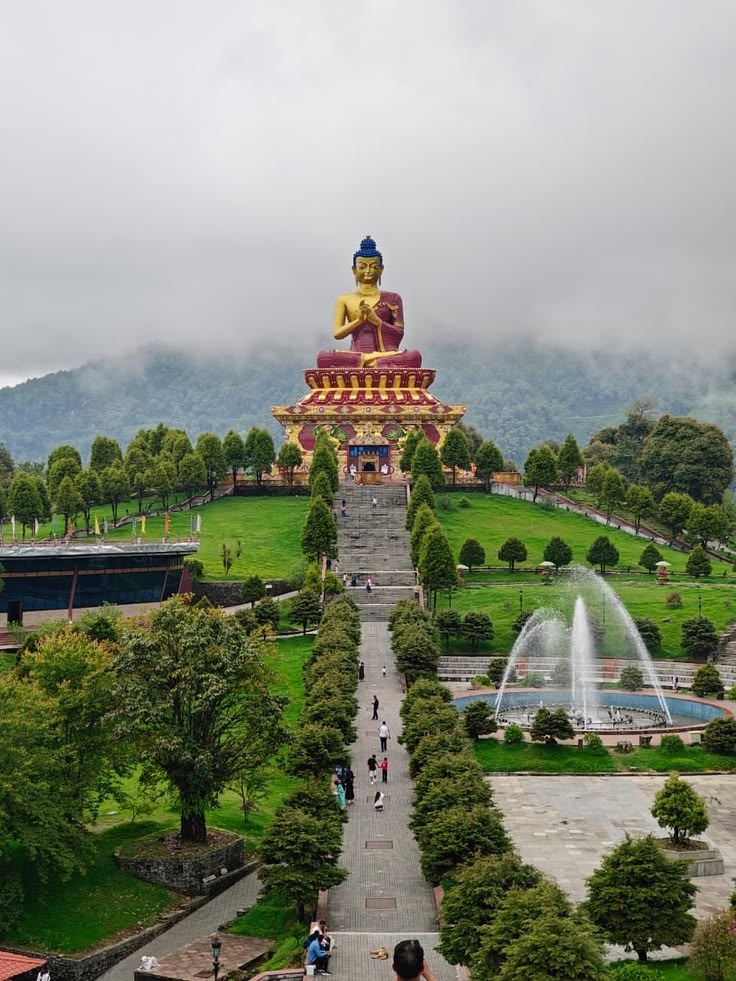
No switchback here, no cliff — only a straight walk long enough to be its own kind of difficulty, the figure at the far end never seeming to get any closer until, all at once, it does.
"A pilgrimage is not meant to be efficient. It is meant to be exactly slow enough to be noticed."Approach Reflection
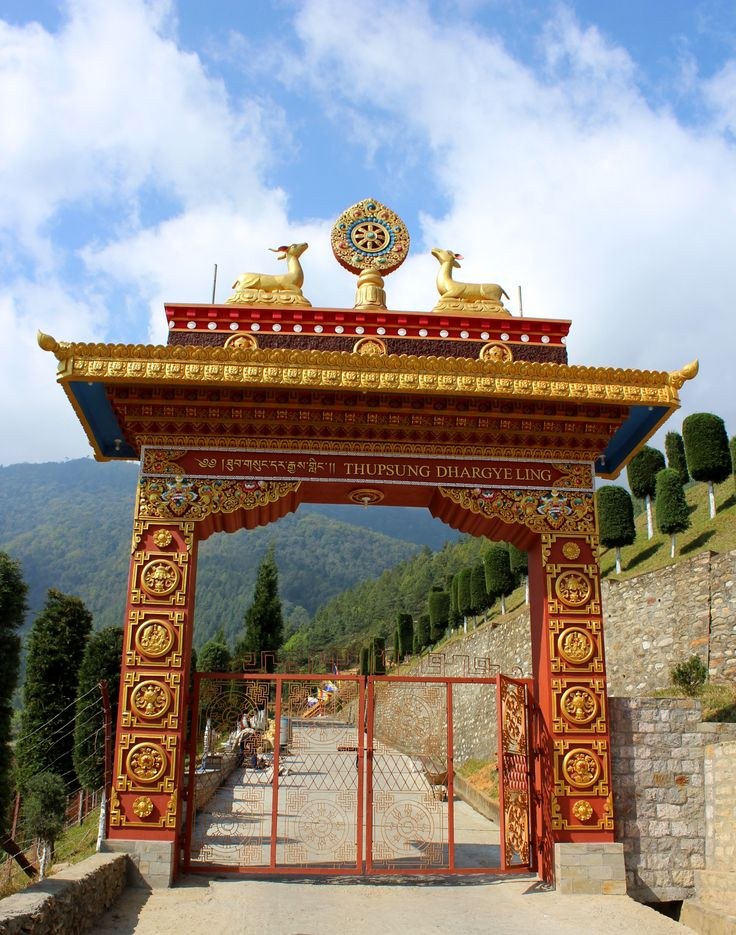

A vow gladly forgotten once, when conversation carried three friends across without noticing.

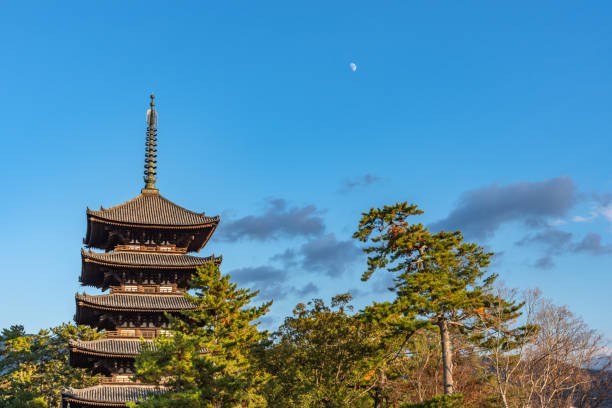
Wudang's Xuanyue Gate marks the boundary between the ordinary world below and the mountain's sacred domain above.

On Mount Athos, visitors were hauled up through a tower opening by rope and windlass, crossing the threshold only because someone already inside chose to let them up.
A threshold, unlike a wall, asks to be crossed rather than simply admired. What waits immediately past Tiger Brook's bridge, Wudang's Xuanyue Gate, and Simonopetra's rope-hauled tower is not yet the sanctuary itself — only its front door. The difference matters. A threshold marks a change of state; a gate is the first piece of architecture built to formalize that change, to give the crossing a shape a visitor can actually see and pass through.
A humble front door for a much larger house. The mountain gate at Donglin is unpainted timber and worn stone, promising nothing about the vast library of scripture and commentary waiting past it.

Ancient traditions often teach that every sacred gate opens both outward and inward. While the pilgrim physically enters a sanctuary, the greater invitation is an inward movement toward deeper understanding.
On Mount Athos, many monastery gates were built with a low lintel that forces every visitor, abbot and stranger alike, into an involuntary bow simply to pass through — a piece of architecture that does the work of instruction before a single word has been spoken.
A humble door, in all three traditions, is a kindness to whoever is not yet ready for what waits behind it.
The outward gate is crossed once. The inward one, evening after evening, has to be crossed again.
Past the gate, the road ends and the room begins. Where the founding vow is kept in three different materials, spoken aloud often enough that the room itself seems to have memorized it. The great hall at Donglin holds sixteen hundred years of a single repeated vow beneath gold-leafed altar doors.

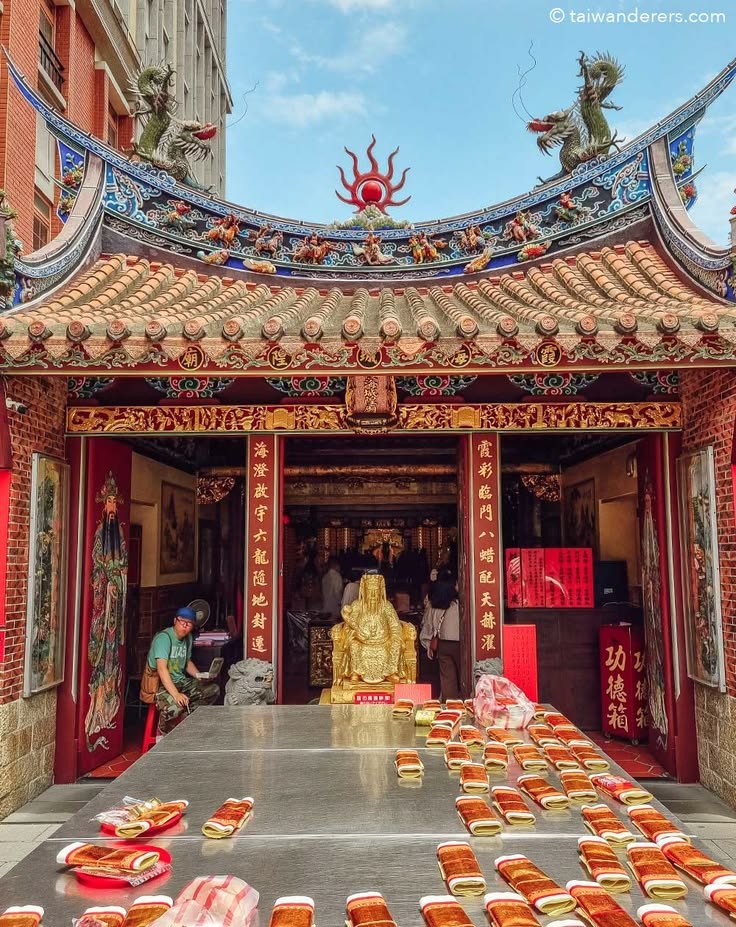
Gold-leafed doors closing on a vow first spoken beside a lotus pond at Mount Lu.

Bronze standing higher than stone, raised at the summit of Mount Wudang in 1416.

Walls darkened by a millennium of candle smoke, gold-ground icons covering floor to ceiling.
A vow kept in stone or bronze is still, in the moment it is renewed, a vow kept in sound. Donglin's monks chant the nianfo, the name of Amitabha Buddha, in unbroken repetition until individual voices disappear into one continuous tone. Wudang's ritual music follows its own notation, unique among Chinese religious traditions, built to draw the practitioner's breath and attention downward into stillness rather than outward into performance. On Mount Athos, the Divine Liturgy is sung nearly start to finish, Byzantine chant carrying the same handful of core melodies through services that predate the notation later invented to record them. A hall, in every one of these three cases, is built to hold a sound as much as it is built to hold a vow — and a sound, unlike an image, only exists while someone is still making it. That is part of why the vow has to be spoken again and again, rather than carved once and left to stand on its own.
"A vow does not require stone to be kept. It requires only that it be spoken again, in whatever material is at hand, before it is forgotten."Hall Reflection
A practice older than any temple built to house it. Long before any wall or roof marked out a holy place, people were already burning resin, bark, and dried herb over open fire and gathering at the column of smoke that rose from it.
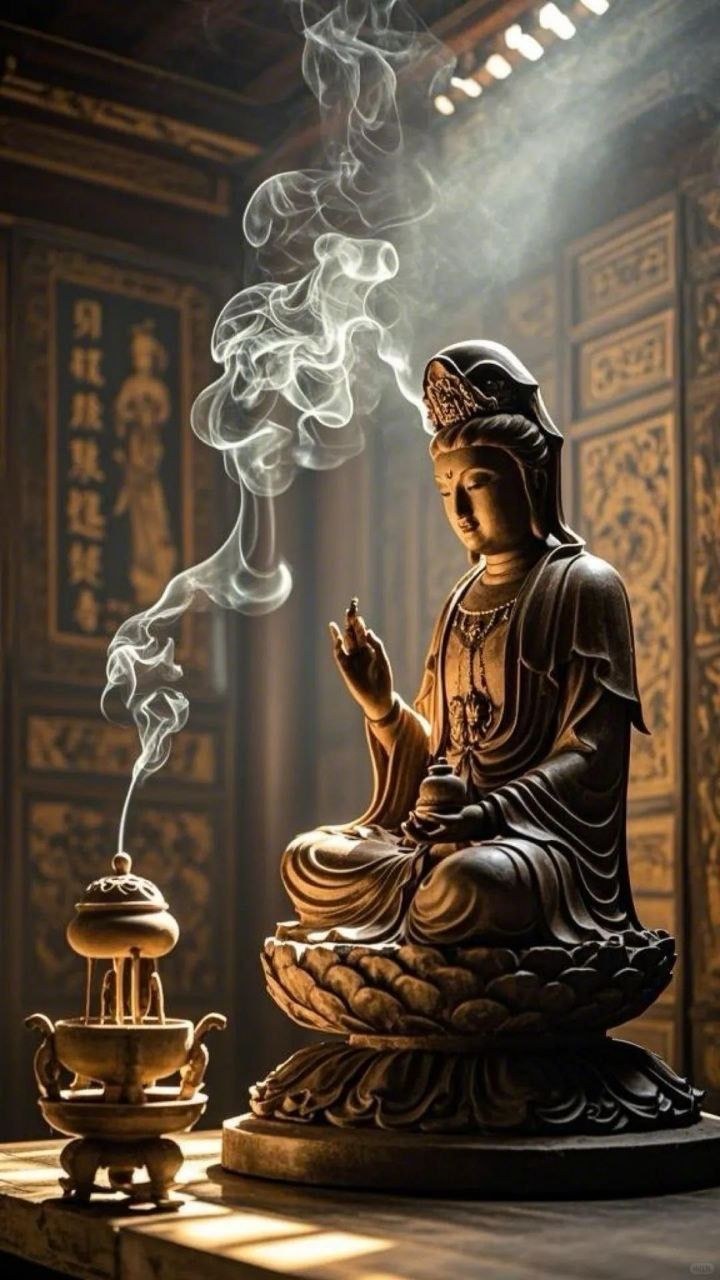
Incense did not arrive after the first temples were raised; it preceded them by a very long margin. Archaeological evidence of resin and plant matter burned in ritual contexts reaches back tens of thousands of years, well before fixed architecture of any kind. The smoke itself was the first sanctuary.
A growing body of research suggests that this "first sanctuary" was not purely symbolic. Frankincense, burned across the ancient Near East, Egypt, and the Mediterranean for millennia before it entered a Christian censer, carries a compound now known to ease the mind and lift the mood of anyone breathing its smoke, quietly vindicating a claim priests and pilgrims had already been making for thousands of years. Kyphi, the elaborate compounded incense burned in Egyptian temples at dusk, combined a dozen or more resins, wines, and plant extracts in recipes preserved on temple walls at Edfu and Philae, several of which modern science recognizes as psychoactive in their own right. Read against this evidence, the ancient insistence that certain smoke could open a worshipper's perception to the divine looks less like poetic metaphor and more like an early, empirical description of a real effect — sacred incense functioning, at least in some of its ancient formulations, as a genuine entheogen, a substance used deliberately to occasion an altered, god-facing state of consciousness rather than merely to perfume a room.
Eastern Christianity kept the instinct for sacred smoke while largely setting aside its psychoactive edge. The censer, swung by a priest or deacon during the Divine Liturgy, carries frankincense and myrrh — the same resins named among the Magi's gifts.
Whether met at Donglin, at Wudang, or before an Orthodox iconostasis, the sacred smoke was never only a fragrance. It was — and for a great many worshippers still is — the medium through which a prayer is understood to leave the one praying and enter something larger than they are.
A sung vow fades the instant a voice stops producing it; incense keeps rising for a while after the one who lit it has gone silent or walked away, which may be part of why so many traditions reach for it at exactly the moment a spoken prayer runs out of words. Sound carries a vow only as long as breath sustains it. Smoke carries whatever is left after the breath itself has nothing further to say.

Ritual incense burns in a vessel that predates the temple built around it.

Prayer made visible on Psalm 141: "let my prayer be set before you like incense."

A winding channel packed with incense, burning at a known rate so that smoke itself marked the hour.

An ordinary gesture repeated by ordinary people, unremarkable and essential in equal measure.
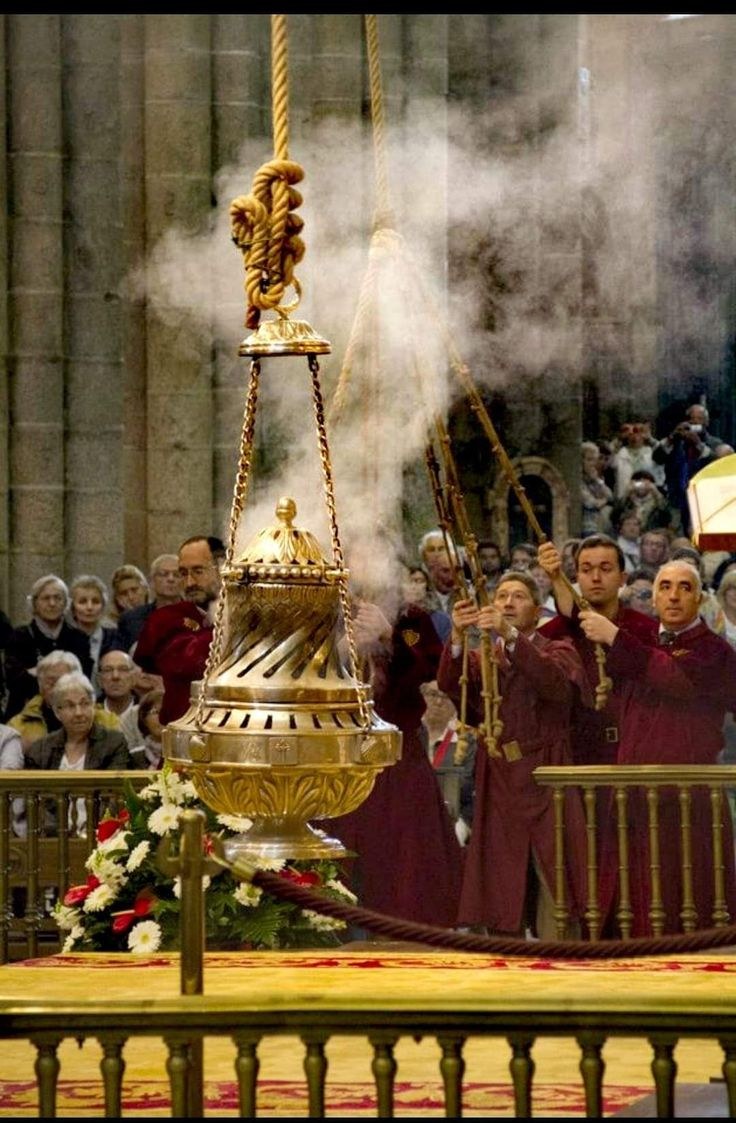
Where individual devotion becomes communal rite, a whole assembly gathered around one rising column.
Smoke, in the end, is not a fixed thing to look at — it dissolves the instant attention settles on it, which is exactly why so many sanctuaries pair it with something that will hold still. The column of scent that rises and disappears is met, on the far wall of nearly every one of these halls, by an image built to remain exactly where it is: painted, gilded, carved, or set in glass, waiting for whatever attention the incense has already loosened.
Where a tradition keeps its images, its instruments, and its light. Taoism's largest surviving mural cycle covers the walls of the Yongle Palace — a continuous procession of over two hundred deities.


Two hundred deities painted in a single continuous procession, counted among the largest religious murals anywhere in the world.

A scroll icon built to a precise geometric canon, each proportion carrying doctrinal weight a casual viewer would never notice.

Still the measure of the form, the standard against which later icons of the same subject are measured.
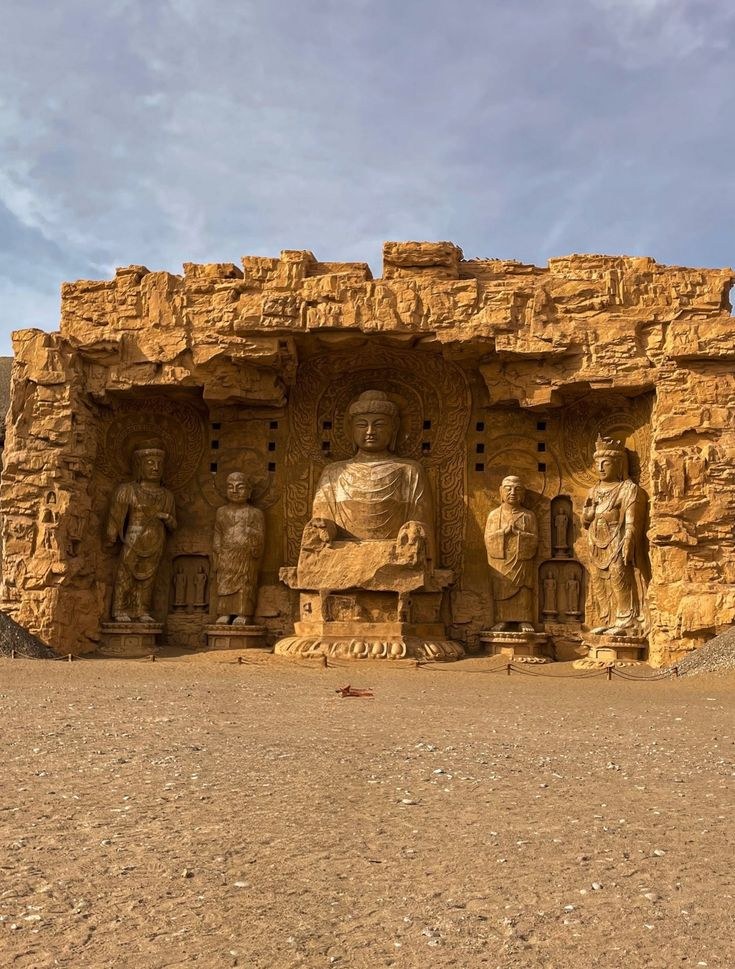
At Longmen, Yungang, and Dunhuang, sacred art was not hung on a wall but carved out of the mountain itself.
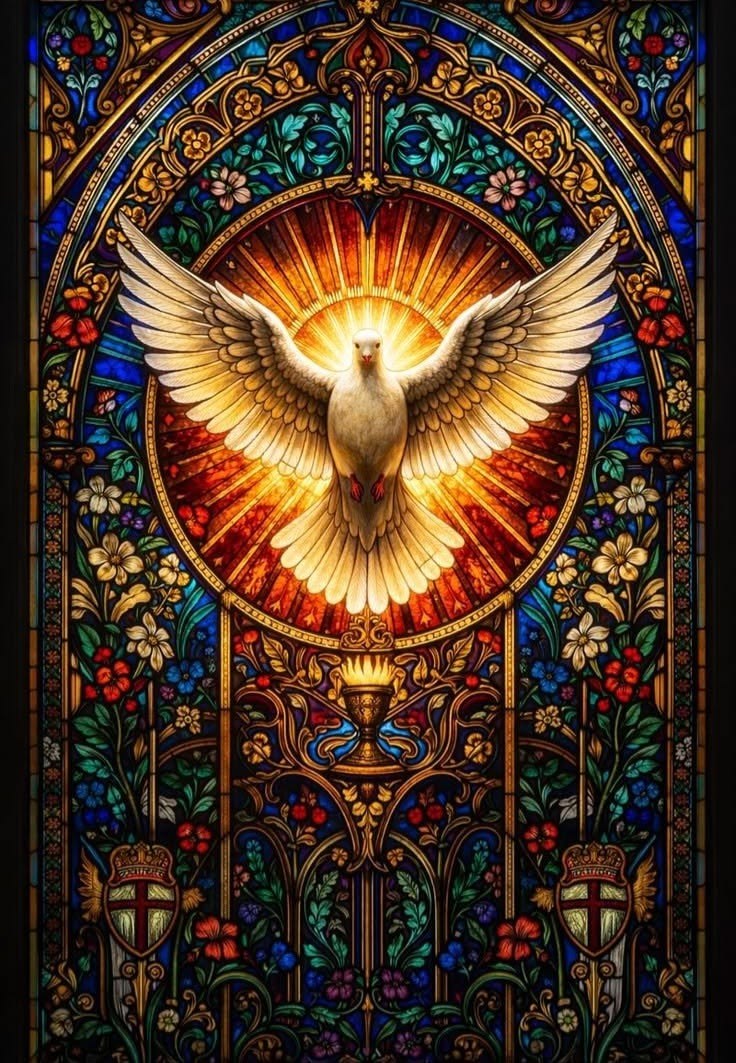
A different medium for the same instinct: sacred art made not to be looked at, but to be looked through.
Among the treasury's images, one figure recurs with a persistence worth pausing on. Guanyin — a bodhisattva who began, in earlier Indian and Central Asian depictions, as the distinctly masculine Avalokiteshvara — had by the Song dynasty become overwhelmingly feminine in Chinese devotional art: a figure of mercy, approached above all by mothers, the sick, and sailors caught far from shore. Eastern Christianity keeps its own compassionate face in the Theotokos, "God-bearer," whose icons occupy the place of highest honor in nearly every Orthodox church after Christ himself, interceded with as the one most likely to carry an ordinary petition somewhere it will be heard. Neither tradition derived its figure from the other; the resemblance is not a borrowing but a convergence, two very different theological systems independently deciding that mercy needed a face, and that the face mercy wears is, more often than not, a mother's.
A living library of botanical knowledge, tended rather than merely admired. Donglin's physical garden holds astragalus and atractylodes in raised beds behind a bamboo hedge.
Wudang keeps a parallel garden discipline in service of a different goal. Its resident priests have long cultivated medicinal herbs alongside the mountain's halls as the outer counterpart to inner alchemy — the same elixir sought within the body through breath and stillness also sought, more literally, in root and leaf grown on the mountain's own terraces.
On Mount Athos, the garden is inseparable from the monastic day itself. Each of Athos's twenty monasteries keeps its own terraced plot of vegetables, herbs, and vines, tended as part of the manual labour considered integral to monastic life.
Walked end to end, these gardens show the same instinct in three vocabularies: tend what is given, catalogue what is learned, and let nothing useful simply disappear.
Wudang's pairing of garden and inner alchemy points at something older still: the long, cross-cultural search for a body that does not simply wear out. Taoist practice has never drawn a hard line between the plant grown outside the body and the elixir cultivated within it — both are approached as work on the same problem, refining something raw into something durable. Longevity practice of this kind treats the body less as a vessel to be escaped than as a temple in its own right, one requiring the same patient maintenance as any building of stone or timber standing on the mountain above it.

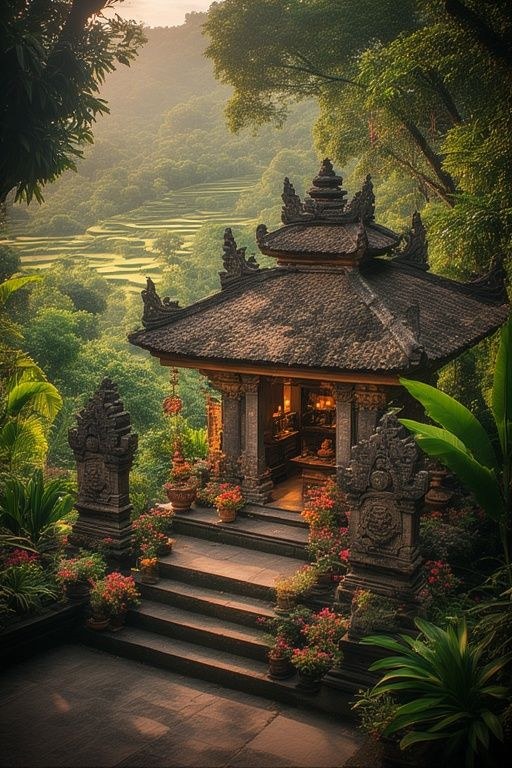
Raised beds of astragalus and atractylodes behind a bamboo hedge, tended by generations of monks.

The elixir sought in leaf and root, grown on the mountain's own slopes.

Tended as part of the monastic day, a small plot sustaining silence and self-sufficiency.

What the garden grows, the bench prepares — root and leaf turned into remedy through patience as much as knowledge.

The garden's simplest yield, taken slowly, is its own small act of contemplation.
A garden this carefully kept is rarely kept by one person alone for long. Raised beds, terraces, and vegetable plots of this size are community labor almost by definition — and what a garden like this ultimately produces, beyond root and leaf, is the daily occasion for people to work quietly beside one another. That is where this pilgrimage turns next: from what a sanctuary grows to who actually lives there.
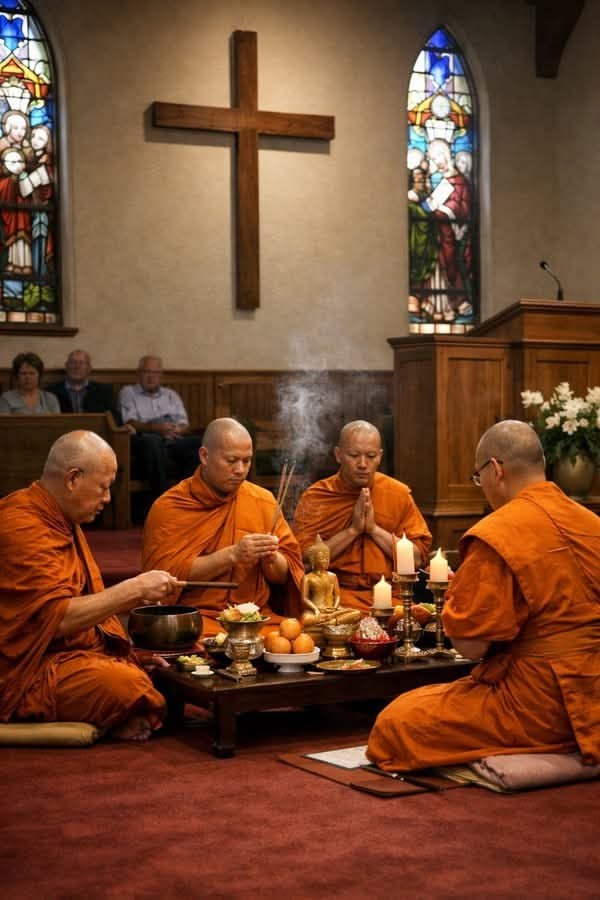

One of many loosely bound to the mountain by shared discipline and a shared calendar of major rites.

A household instead of a cave — the first structured communal Rule, born among the Desert Fathers.
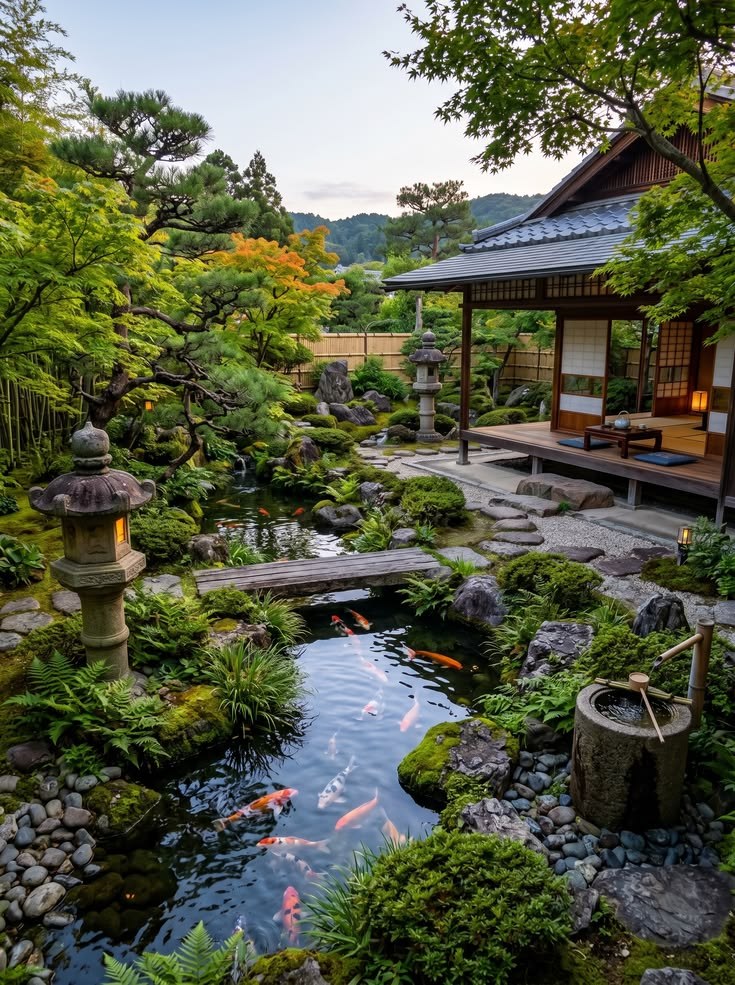
Mount Athos's twenty self-governing monasteries bound by a shared calendar and a common council.

A community that keeps itself, human and animal alike, without a single keeper assigning either creature a job.

Not every community wears a robe. Beneath many of these mountain sanctuaries sits an ordinary village that has supported the monastery, and been supported by it, for generations.
"A grove left alone long enough stops being tended and starts tending itself — moss over stone, lantern beside lantern, a path that has learned its own shape."Community Reflection
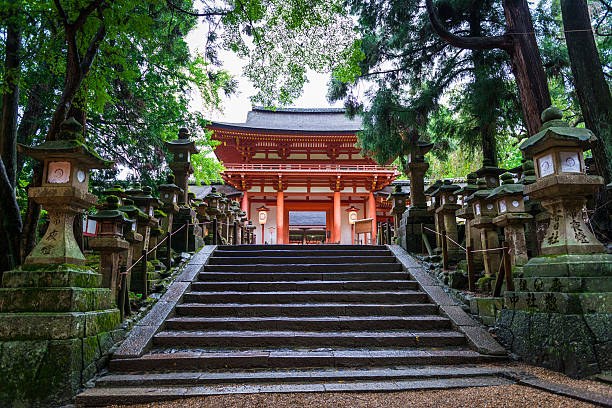
Stone lanterns worn soft by moss and centuries, still marking the way for whoever climbs next.

No single lantern is grand; the procession of them, unbroken through the trees, is what stays with a visitor.

No one assigned this creature a place here. It simply belongs, the way weasels and hawks belong at Donglin.
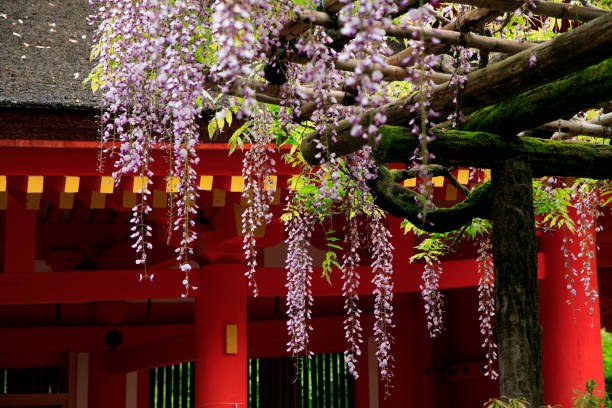
Left untended by design, a sacred grove still keeps a calendar — wisteria in its season, same as any garden.
A community this old eventually asks where it began, and the answer, in all three traditions, tends to be water rather than a date on a calendar. Every source text, like every tradition, begins at water. Every bowl of tea at Donglin begins at a spring no wider than a door.

Wudang keeps its own well at the center of a different kind of source-tracing. Taoist inner alchemy speaks of an elixir cultivated within the body as a well or pool — the cinnabar field, tended through breath and stillness the way a mountain well is tended through patience, so that what is drawn up from it is never manufactured, only allowed to rise.
Several of the monasteries on Mount Athos keep a hagiasma of their own — a spring set apart as holy, most often tied to the memory of an appearance of the Theotokos or the intercession of a particular saint. Pilgrims still draw water from these springs today.
A spring is a strange kind of origin point, in that it is never actually where anything begins. The water rising into daylight at Donglin's spring, in Wudang's cinnabar field, in an Athonite hagiasma has already traveled a long way underground, through rock no pilgrim will ever see, before it reaches the one place a person can finally kneel and drink. What a tradition calls its source is usually only the first point at which something much older becomes visible.
"A scripture, like a spring, is only ever a vessel. The water is always older than the cup that carries it."Wellspring Reflection

What every one of these springs eventually feeds, if left undisturbed long enough, is a single unremarkable flower — the same one a mixed company at Mount Lu once knelt beside to make their vow.
If a wellspring is where a tradition's water first becomes visible, a summit is where the same tradition's longing finally has nowhere higher left to point. The pilgrimage's last chapter climbs there now — or rather, as every tradition gathered here insists, walks its circumference instead.
Every great tradition, it turns out, eventually points at a summit. Mount Kailash, rising alone in the far western reaches of Tibet, may be the clearest case of four traditions agreeing on the same peak at once.

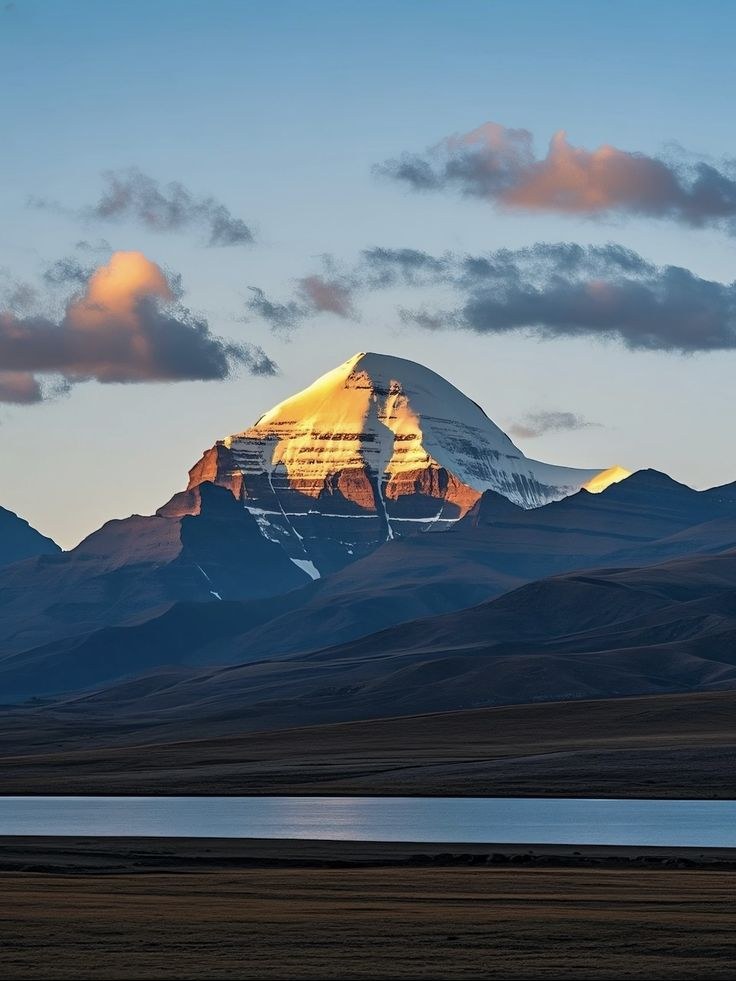
Climbed by no one, circled by everyone. A peak that four traditions agree on without any of them needing to yield.

A thirty-two-mile walk around the base, so that the walking itself becomes the point rather than the summit.
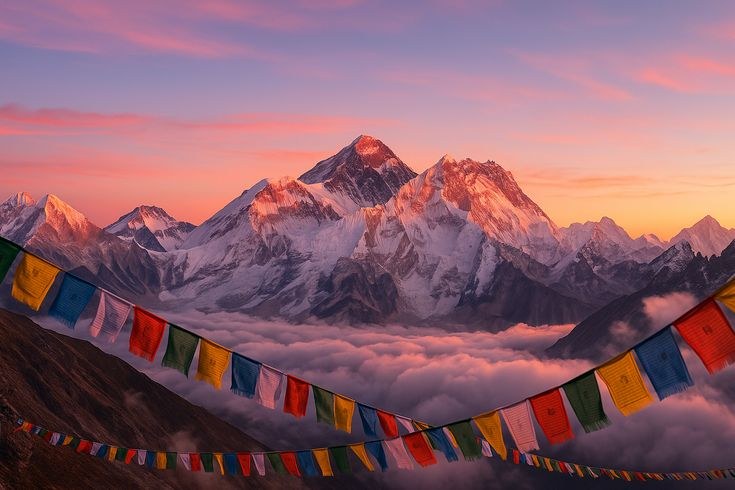
Uluru, Fuji, Olympus, Croagh Patrick, and the three streams of this pilgrimage — one instinct held in common across every culture.
"Some mountains are approached to be conquered. This one is approached to be walked around, slowly, until the walking itself becomes the point."Summit Reflection
It is worth noticing what this pilgrimage has actually been walking toward, now that the walking is nearly finished. Not a doctrine held in common — Shiva's seat, Chakrasamvara's abode, a tirthankara's liberation, and the vow spoken beneath Mount Lu remain four genuinely different claims, none of them collapsed into the others by standing nearby. What is held in common is a posture: circle rather than seize, tend rather than exhaust, approach rather than storm. Kailash simply makes visible, at continental scale, the same instinct a thousand stone steps at Donglin made visible at the scale of one pair of legs.
None of these stations claim to replace Donglin, or Mount Lu, or the cliffside halls of Wudang, or Meteora and the twenty monasteries of Athos. A screen cannot carry the cold of a mountain spring or the weight of incense smoke settling at eye level. What it can carry is the same vow, held across three streams: the same slow approach, the same threshold, the same hall built around one repeated intention.
The question asked at the very start of this pilgrimage was why three traditions, sharing more caravan road, more mixed cities, and more genuine centuries of contact than the popular telling usually allows, still built such distinct sanctuaries out of that shared ground. Having walked the distance between a Dunhuang library cave holding four faiths' scripture side by side and a mountain no one has ever climbed, an answer of sorts is available now, though it is not a tidy one. The three streams gathered here never converged into a single river, and this pilgrimage was never built to suggest they should, or to pretend the contact between them was thinner than the record shows. What the record actually supports is something more interesting than either extreme: real roads, real neighbors, real manuscripts shelved together — and, alongside all of that traffic, three traditions that still chose, deliberately, to remain themselves. Slowness before arrival. A threshold honored rather than rushed. A vow renewed in sound because stone alone could not be trusted to remember it. Smoke and water offered up precisely because neither can be kept. A summit approached by walking around it, not over it.
A mirror is not the mountain. But a mirror placed carefully enough can still show a seeker, standing far from any real ridge, exactly where to look — and, for those who go on to cross a real threshold, exactly where the White Lotus Society's own three streams still flow from one source: a lotus pond at the foot of Mount Lu, where a mixed company of monks, officials, and poets once bound themselves to a vow, and found, centuries later, that the vow had room enough in it for more voices than they first imagined.
— The Virtual Temple of the White Lotus Society, Golden Flower Abbey