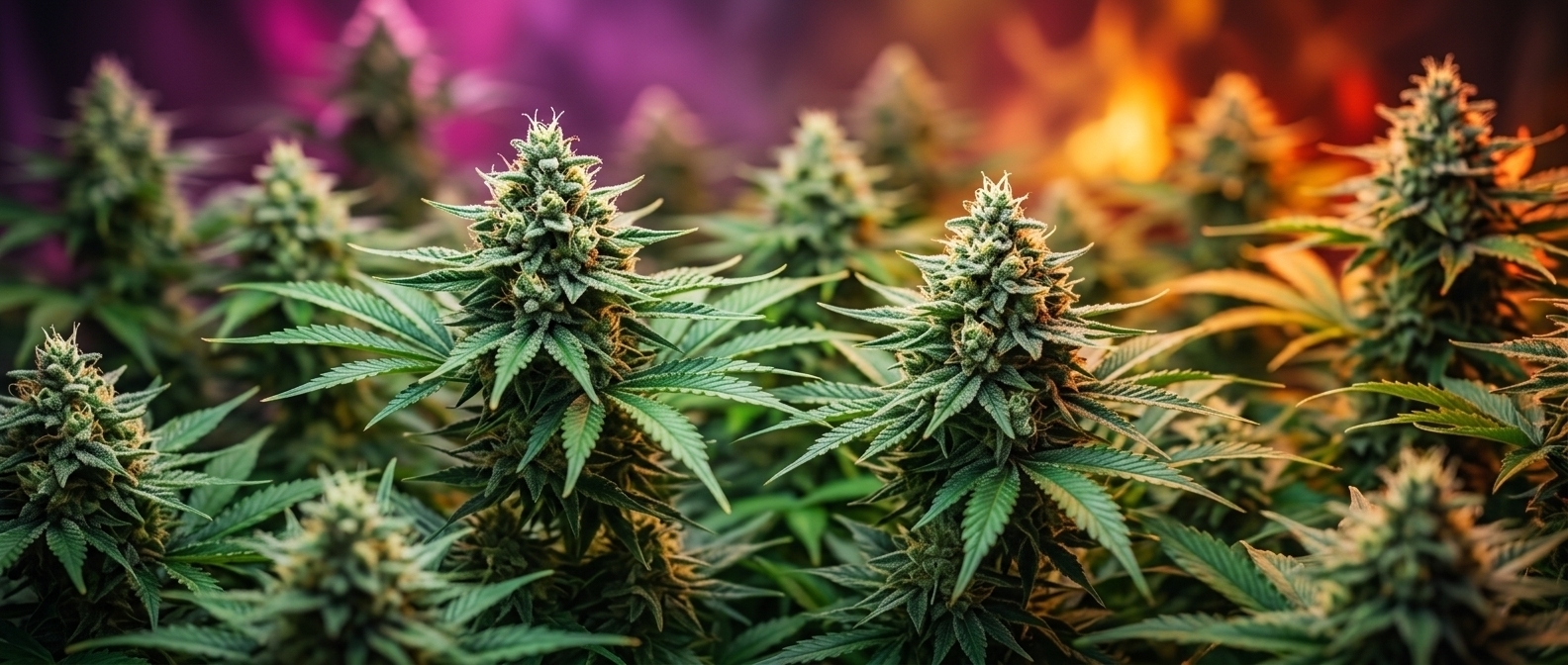
Cannabis Botany & Plant Science
Recommended: botanical illustration or side-by-side morphology comparison
Recommended: botanical illustration or side-by-side morphology comparison
Cannabis is one of humanity's oldest cultivated plants — archaeological evidence places its use in textile, food, and medicinal contexts at least 6,000 years ago in Central Asia — yet scientifically it remains one of the most complex and least completely understood plants in cultivation. A flowering annual in the family Cannabaceae (closely related to hops, Humulus lupulus, and hackberry trees), cannabis has evolved an unparalleled array of secondary metabolites — the cannabinoids and terpenes that define its therapeutic and recreational properties — that it appears to have developed primarily as chemical defences against UV radiation, insect herbivory, and pathogen attack at high altitudes. Understanding the plant's biology — its anatomy, physiology, biochemistry, and life strategy — is the indispensable foundation of expert cultivation.
The genus Cannabis is monotypic — a single species, Cannabis sativa L., first formally described by Carl Linnaeus in 1753, though Jean-Baptiste Lamarck described a second species, Cannabis indica, in 1785 based on specimens from India. The taxonomic debate between "one species" and "two or three species" camps remains unresolved, but for cultivators, the practical distinction rests on the three major ecotypic groups most taxonomists recognise: narrow-leaf drug type (the tall, narrow-leafed, long-flowering equatorial ecotype colloquially called "sativa"), broad-leaf drug type (the shorter, broader-leafed, faster-finishing mountain ecotype colloquially called "indica"), and Cannabis ruderalis (the small, autoflowering, low-THC ecotype native to northern latitudes from Russia to Eastern Europe). The vast majority of modern commercial cultivars are complex hybrids drawing from multiple ecotypes.
Complete Plant Anatomy
A cannabis plant's above-ground architecture consists of: the main stem (the primary structural axis emerging from the growing medium); nodes (the points along the stem where branches diverge — each node produces one pair of branches in alternating-opposite and then alternate phyllotaxis as the plant matures); internodes (the stem segments between nodes, whose length is a critical indicator of light intensity adequacy); branches (lateral shoots emerging from nodes, which in trained plants can become primary colas); fan leaves (the large palmate leaves responsible for the majority of photosynthesis, with 3–13 serrated leaflets depending on ecotype and developmental stage); sugar leaves (the smaller, trichome-rich leaves that emerge from within the flower cluster); and the flowers themselves.
The cola is the primary flower cluster at the apex of the main stem or a major branch — the central growing tip where all floral development concentrates. During flowering, the cola grows denser and larger as calyxes stack upon one another, eventually forming a compact, resin-coated mass. The calyx is the fundamental unit of female flower development: a teardrop-shaped structure containing the developing ovary, from which two delicate white pistils (stigmas) extend to capture pollen. Each calyx contains a small trichome population that increases dramatically as flowering matures. The pistil is the white or cream-colored hair extending from the calyx — its colour change from white to orange/red/brown indicates advancing maturity and is used alongside trichome assessment in harvest timing.
Trichome close-up
60-100x magnification
showing clear/cloudy/amber
Trichome close-up
60-100x magnification
showing clear/cloudy/amber
Trichome Anatomy & Function
Trichomes are microscopic glandular secretory structures that manufacture and store the resin containing cannabinoids, terpenes, and flavonoids. Three biologically distinct trichome types are present on cannabis: Capitate-stalked trichomes are the largest (50–100 micrometres tall), most numerous on flowering material, and the primary site of cannabinoid and terpene biosynthesis. They consist of a multicellular stalk topped by a secretory disc of 8–16 cells and a bulbous head (the "globe") filled with resin. Capitate-sessile trichomes are smaller and lack a distinct stalk, sitting flush with the epidermal surface. They occur across the entire plant surface but have lower cannabinoid density. Bulbous trichomes are the smallest type (10–15 micrometres), single-celled, and of minor pharmacological significance.
Resin accumulates in the sub-cuticular space of the trichome head over the plant's lifetime, increasing dramatically in density during the mid-to-late flowering phase. At peak maturity, the resin is under significant internal pressure — which is why handling fresh cannabis releases so much aroma. When exposed to UV-B radiation, friction, or oxidation, trichomes degrade: the once-clear resin first becomes milky white (indicating peak THC/terpene content) and then progressively amber as THC oxidises to CBN (cannabinol), a mildly sedating, less psychoactive compound. This trichome colour progression is the most reliable indicator of harvest timing available to the cultivator.
Root System
The cannabis root system is typically a taproot system (a primary root with lateral secondary and tertiary roots branching outward) in soil-grown plants started from seed. Clones develop a fibrous root system without a taproot. Roots perform four critical functions: water and mineral uptake (primarily in the fine root hair zone), oxygen uptake from the growing medium air spaces (roots require oxygen and produce CO₂ — which is why waterlogging and root-zone compaction are so damaging), mechanical anchoring of the plant, and hormonal signalling (roots produce and transmit cytokinins and abscisic acid that influence shoot growth and stress responses). Root health is frequently underestimated as a yield determinant: in tests comparing identically-grown plants with different root volumes, larger root masses consistently produce larger aerial plants.
Cannabinoid Biosynthesis
Cannabis produces over 120 identified phytocannabinoids through a specific biosynthetic pathway beginning with olivetolic acid and geranyl pyrophosphate combining to form CBGA (cannabigerolic acid) — the precursor from which all other cannabinoids derive through the action of distinct synthase enzymes. THCA synthase converts CBGA to THCA (tetrahydrocannabinolic acid), which is the acid form present in fresh cannabis — not psychoactive until decarboxylation (heat converts THCA → THC by releasing CO₂). CBDA synthase converts CBGA to CBDA (cannabidiolic acid), the precursor of CBD. CBCA synthase produces CBCA (cannabichromenic acid, precursor of CBC). The relative expression of these synthase enzymes — which is genetically determined — produces the characteristic cannabinoid ratio of each cultivar.
THC (Δ9-tetrahydrocannabinol) is the primary psychoactive compound, acting primarily on CB1 receptors in the central nervous system. CBD (cannabidiol) is non-intoxicating, acts on numerous receptor systems (not primarily CB1 or CB2), and modulates THC's effects — reducing anxiety, counteracting short-term memory effects, and extending the duration of action. CBG (cannabigerol) is the "stem cell" cannabinoid and the first to accumulate in young plants before synthase activity converts it to THC, CBD, and others. CBN (cannabinol) is a degradation product of THC with moderate sedating activity and no psychoactivity at typical concentrations. THCV (tetrahydrocannabivarin) is a psychoactive compound with shorter duration and appetite-suppressing effects, particularly concentrated in African landrace varieties.
The Terpene System
Cannabis produces over 200 identified terpenes — volatile aromatic compounds that define each variety's distinctive smell and contribute significantly to its physiological effects. Terpenes are synthesised in trichomes alongside cannabinoids and are produced through the same general isoprenoid pathway. Key terpenes and their documented effects: Myrcene (mango, earthy, musky) — the most abundant terpene in most modern cannabis varieties, associated with sedation, muscle relaxation, and potentiating THC absorption across the blood-brain barrier. Limonene (citrus, lemon, orange) — associated with elevated mood, anti-anxiety, and anti-depressant effects; prominent in Lemon Haze and Super Lemon Haze. Caryophyllene (black pepper, clove, spicy) — uniquely, caryophyllene directly activates CB2 receptors (making it technically a cannabinoid as well as a terpene); associated with anti-inflammatory effects. Linalool (lavender, floral) — associated with calming, anti-anxiety, and anticonvulsant effects. Pinene (pine, forest) — a bronchodilator; may counteract short-term memory effects of THC; prominent in many OG Kush lineages. Terpinolene (floral, herbal, complex) — associated with sedation; prominent in Jack Herer and related varieties.
Trichome colour assessment requires proper magnification: 60–100x with a jeweller's loupe or handheld microscope, assessed under consistent, bright side-lighting rather than overhead light (which makes all trichomes appear clear). Clear trichomes = immature, incomplete cannabinoid synthesis. Milky white/cloudy = peak THC accumulation, most psychoactive effect. Amber = THC degrading to CBN, increasingly sedating. Most cultivators aim for a harvest window of 5–20% amber trichomes for a balanced effect — though this is a preference guide, not a fixed rule. Check multiple bud sites from different parts of the plant as maturity is uneven.
| Cannabinoid | Precursor (acid form) | Receptor target | Primary effects | Typical % in modern flower |
|---|---|---|---|---|
| THC | THCA | CB1 (primary), CB2 | Psychoactive, analgesic, anti-nausea, appetite stimulant | 15–30% |
| CBD | CBDA | Multiple (non-CB1) | Anti-inflammatory, anxiolytic, anticonvulsant | 0.1–20% |
| CBG | CBGA (stem cell) | CB1 & CB2 (partial) | Anti-inflammatory, antibacterial, neuroprotective | 0.1–2% |
| CBN | THC degradation | CB1 (weak) | Mildly sedating, increases in aged/oxidised material | 0–1% |
| THCV | THCVA | CB1 (antagonist at low dose) | Appetite suppression, energy, possible anti-diabetic | 0.1–1% |
| CBC | CBCA | Non-CB1/CB2 | Anti-inflammatory, neurogenesis (with CBD) | 0.1–1% |
Genetics, Seeds, Strains & Selection
Recommended: close-up of dark, firm, healthy cannabis seeds or seed bank packaging
Recommended: close-up of dark, firm, healthy cannabis seeds or seed bank packaging
Every cultivation cycle begins with a genetic choice that constrains every decision that follows. The cannabis plant you grow is fundamentally limited by and fundamentally shaped by the genes it carries — its maximum potential yield, cannabinoid and terpene profile, pest resistance, structural morphology, and response to environmental inputs are all genetically determined within ranges that cultivation technique can only maximise or squander, never fundamentally exceed. Selecting genetics with conscious intention — matched to your specific grow space, climate, experience level, and desired output — is the single highest-leverage decision in cannabis cultivation, and it is typically made before a single dollar is spent on equipment.
Understanding Seed Types
Regular seeds are produced by open pollination between a male and female plant — the product of natural sexual reproduction. They produce approximately 50% male and 50% female offspring. Regular seeds are valued by breeders for their genetic diversity, stability under selection pressure, and the ability to produce viable pollen for breeding work. For most home growers, however, the requirement to identify and remove male plants (which can pollinate the entire garden if undetected) makes regular seeds more complex to manage than the alternatives.
Feminised seeds are produced by inducing a female plant to produce male pollen (typically through treatment with colloidal silver, gibberellic acid, or the rodelization method of stress-induced hermaphroditism) and crossing that pollen with another female plant. The resulting seeds carry only XX chromosomes and produce essentially 100% female plants. Feminised seeds account for the vast majority of the commercial seed market and are the standard choice for home growers seeking simplicity and reliability. A legitimate concern about feminised seeds is their slightly elevated tendency toward hermaphroditism under extreme stress compared to regular-seed females, though this is largely a non-issue with quality genetics from reputable breeders.
Autoflowering seeds incorporate Cannabis ruderalis genetics that cause the plant to initiate flowering based on chronological age (typically 3–5 weeks from germination) rather than changes in photoperiod. This produces several significant advantages: total seed-to-harvest time of 70–90 days for most varieties (versus 16–24+ weeks for photoperiod plants); compact plant size (typically 40–80cm) well-suited to small spaces, balconies, and guerrilla outdoor grows; the ability to run multiple harvests per year outdoors without synchronising with natural day length changes; and simplified light management (a fixed 18/6 or 20/4 schedule works throughout the entire lifecycle). Modern autoflowering genetics — particularly from dedicated breeding programmes that have spent years backcrossing ruderalis traits into high-quality drug-type genetics — now regularly produce yields and quality that rival photoperiod plants in the same timeframe, a significant improvement over early autos.
Seed type comparison or
germination sequence
Seed type comparison or
germination sequence
Reading Seed Genetics: Hybrid Notation
Commercial cannabis genetics are expressed in a specific notation system that reveals breeding history. F1 (First Filial Generation) is the direct cross of two distinct parent lines — F1 hybrids typically express maximum "hybrid vigour" (heterosis), producing fast-growing, robust plants that often outperform either parent. However, F1 seeds do not breed true — planting F1 seeds produces highly variable offspring. F2 and beyond are the result of crossing F1 plants together, beginning the process of trait stabilisation but producing increasingly variable phenotypes until multiple generations of selection produce a stable "true-breeding" line. Backcross (BX or BC) genetics are produced by crossing an F1 back to one of its parent lines — typically used to preserve specific desirable traits from one parent while reducing the other parent's contribution. A BX3 (backcross generation 3) variety has been backcrossed three times and carries a very high proportion of one parent's genetics.
Selecting the Right Strain for Your Setup
Before consulting any strain database or seed bank catalogue, honest assessment of four factors determines which genetics will succeed in your environment. Available space: a 0.6m × 0.6m tent with a 200W LED has dramatically different requirements than a 4m × 4m commercial room or an outdoor raised bed. Indica-dominant varieties finish shorter and earlier; sativa-dominant varieties can stretch 200–300% during early flowering and require space management. Light cycle control: outdoor or mixed-light growers who cannot fully control the photoperiod should strongly consider autoflowering varieties that flower regardless of day length. Climate: outdoor growers in northern latitudes need early-finishing, mould-resistant varieties that can complete before autumn rains; subtropical growers have much more flexibility. Experience level: beginners benefit enormously from "forgiving" genetics — varieties like Northern Lights, Critical Kush, Critical Mass, or White Widow that tolerate imperfect pH, occasional overwatering, and moderate temperature fluctuations while still delivering strong results. High-THC exotic varieties often demand precision growing to express their potential.
| Seed Type | Flowering trigger | Seed to harvest | Typical height (indoor) | Best for | Breeder control |
|---|---|---|---|---|---|
| Regular photoperiod | 12/12 light schedule | 20–30 weeks | 60–200cm | Breeding, mother plants | Full height/timing control |
| Feminised photoperiod | 12/12 light schedule | 16–28 weeks | 60–200cm | Most indoor grows | Full height/timing control |
| Autoflowering feminised | Age (3–5 weeks) | 10–14 weeks | 40–100cm | Small spaces, outdoors, beginners | No light schedule needed |
| CBD-dominant feminised | 12/12 light schedule | 16–24 weeks | 60–150cm | Medicinal use, low psychoactivity | As per photoperiod |
Clones vs Seeds
The alternative to growing from seed is growing from clones — rooted cuttings taken from a vegetating or lightly flowering mother plant. Clones offer several significant advantages over seeds: genetic identity (every clone from a given mother is an exact genetic copy, eliminating phenotypic variability), guaranteed sex (clones from female mothers are always female), elimination of the seedling stage (saving 2–3 weeks), and the ability to preserve a specific phenotype indefinitely through the maintenance of a mother plant. The disadvantages: clones do not develop a taproot (only fibrous roots), making them potentially more vulnerable to root diseases; they can carry pests, diseases, and viroids (including the dreaded Hop Latent Viroid) from their source plant; and maintaining a mother plant requires dedicated growing space and effort. The decision between seeds and clones is largely determined by access to a trusted clone source and available grow space.
Hop Latent Viroid is an RNA pathogen that infects cannabis and suppresses yields by 50–70% while reducing potency — symptoms ("dudding") include stunted growth, brittle stems, unusually small leaves, reduced trichome development, and poor resin production. HLVd spreads through contaminated cutting tools, infected clones, and potentially seeds. It cannot be cured. Prevention: sterilise cutting tools between every plant with 70% isopropyl alcohol or 10% bleach solution; source clones only from tested, viroid-free facilities; and if "dudding" symptoms appear in any plant, remove it immediately.
Grow Environments: Indoor, Outdoor & Greenhouse
Recommended: well-organised indoor grow space or productive outdoor garden
Recommended: well-organised indoor grow space or productive outdoor garden
The growing environment defines the boundaries within which all other cultivation decisions operate. Indoor, outdoor, and greenhouse growing are not merely different approaches to the same problem — they are fundamentally different forms of cultivation with different constraints, different skill requirements, different economics, and different relationships between grower and plant. Expert cultivation begins with a clear-eyed assessment of which environment your specific situation, climate, resources, and goals favour, and then an equally clear-eyed commitment to mastering the specific requirements of that environment.
Indoor Cultivation
Indoor cultivation offers the cultivator complete control over every environmental variable — light spectrum and intensity, temperature, humidity, CO₂ concentration, airflow, and day length. This control is simultaneously indoor growing's greatest advantage and its greatest responsibility: every environmental failure is the grower's fault, and the environment must be actively managed at all times. The practical requirements for a well-designed indoor grow space are: light-proofed space (critical for photoperiod plants during dark periods); sealed or ventilated environment (adequate fresh air exchange to maintain CO₂ levels and remove heat and humidity); temperature management (typically achieved through a combination of extraction fans, air conditioning, and dehumidification); and adequate electrical capacity (lighting, fans, environmental controllers, and supplemental CO₂ systems may require dedicated circuits).
Indoor growing economics: a home-scale indoor grow (0.6–1.2m² under 200–600W LED) requires an upfront investment of $500–$2,000 for a complete setup with quality genetics, and ongoing costs of electricity ($30–$120/month depending on setup size, location, and electricity rate), nutrients, and growing medium. The economics improve significantly at larger scales where fixed costs are spread over more plants.
Grow tent interior or
ventilation diagram
Grow tent interior or
ventilation diagram
Grow Tent Selection & Setup
The grow tent is the standard containment solution for home indoor cultivation, offering a light-proof, reflective-interior, ducted-port-equipped enclosure at accessible price points. Key selection criteria: frame construction — 19mm or 25mm metal poles with crossbar support capable of hanging 15–50kg of lighting equipment; canvas thickness — 600D–1680D polyester canvas for effective light-proofing (thinner canvas admits light through seams and zippers, disrupting photoperiod); interior reflectivity — highly reflective silver Mylar interior; ducting ports — multiple appropriately-sized ports for intake, extraction, and power cords. Common tent footprints: 0.6m × 0.6m (ideal for 1–4 small autoflowering plants or 1–2 photoperiod plants); 1.2m × 1.2m (the most popular home grow size, accommodating 4–9 plants under 400–600W); 1.2m × 2.4m (for a two-stage perpetual harvest setup).
Outdoor Cultivation
Outdoor cultivation is the most natural, most energy-efficient, and potentially highest-yielding growing method — a single outdoor photoperiod plant given a full growing season and adequate space can produce 500g–2kg of dried flower, something no comparably-priced indoor setup can approach in total weight. The sun delivers free full-spectrum light at intensities (up to 100,000 lux / 2,000 µmol/m²/s) that no artificial lighting system can cost-effectively replicate, and outdoor plants develop root systems that dwarf their indoor equivalents, accessing nutrients and water from a much larger volume of growing medium.
The primary constraints on outdoor cultivation are legal (jurisdiction-dependent), climate-dependent, and security-dependent. Photoperiod varieties grown outdoors in temperate climates typically begin flowering naturally as day length shortens below approximately 14–15 hours in late summer (around the summer solstice reversal), finishing harvest in October–November in the northern hemisphere and April–May in the southern hemisphere. Early-finishing indica-dominant varieties or autoflowering varieties mitigate the risk of early-autumn weather affecting the harvest.
Greenhouse Cultivation
The greenhouse represents the optimal synthesis of indoor control and outdoor efficiency: it provides free solar energy (eliminating the primary operating cost of indoor growing), extends the outdoor growing season through passive heat retention, and provides protection from rain, wind, and airborne pests that compromise outdoor quality. Advanced greenhouse cultivation adds supplemental artificial lighting to extend the photoperiod during the natural day-shortening of late summer (preventing premature flower initiation) and light deprivation (blackout curtains) systems to force early flowering and harvest timing regardless of natural day length. Commercial cannabis greenhouse production is the fastest-growing segment of the legal cannabis market precisely because it combines production efficiency with quality control.
| Environment | Control level | Startup cost | Operating cost | Max yield per m² | Best for |
|---|---|---|---|---|---|
| Indoor (LED) | Complete | $800–$3,000 | High (electricity) | 500–1,000g | Year-round, quality control, all climates |
| Outdoor (ground) | Limited (weather-dependent) | $50–$500 | Very low | 500–5,000g/plant | Warm climates, maximum yield, low cost |
| Greenhouse (passive) | Moderate | $300–$2,000 | Low | 500–2,000g | Season extension, rain protection |
| Greenhouse (light dep) | High | $2,000–$10,000 | Low–medium | 500–3,000g | Multiple harvests, year-round production |
Lighting Science & Technology
Recommended: quality LED grow light in operation or quantum meter PPFD reading
Recommended: quality LED grow light in operation or quantum meter PPFD reading
Light is the most critical environmental input in cannabis cultivation — the energy source that drives every metabolic process in the plant, the timing signal that controls flowering in photoperiod varieties, and the single variable most directly correlated with yield in controlled indoor environments. Understanding lighting science — not just which light to buy, but the underlying physics of how plants use light — is what separates growers who can diagnose and solve lighting problems from those who simply follow manufacturer specifications and hope for the best.
The Language of Light: PAR, PPFD, and DLI
PAR (Photosynthetically Active Radiation) describes the wavelength range of light (400–700nm) that chlorophyll and other plant photopigments absorb and use to drive photosynthesis. Not all light in this range is used equally: chlorophyll a and b have peak absorption at approximately 430nm (blue) and 680nm (red), with relative absorbance dipping in the green (500–550nm) range — though green light penetrates deeper into the canopy and is used by lower leaves more efficiently than commonly assumed.
PPFD (Photosynthetic Photon Flux Density) measures the number of photosynthetically active photons arriving at a specific surface area per unit time, expressed as micromoles of photons per square metre per second (µmol/m²/s). This is the measurement you take with a quantum sensor at canopy level to determine whether your plants are receiving adequate light intensity. PPFD is what matters for plant growth — not watts, not lux, not lumens. A 600W HPS lamp and a 320W quantum board LED can deliver identical PPFD at the canopy despite the difference in power draw, because efficiency (µmol/J) varies dramatically between light technologies.
DLI (Daily Light Integral) is the total accumulation of PPFD over a full 24-hour period, expressed as moles of photons per square metre per day (mol/m²/day). DLI = PPFD × photoperiod in hours × 0.0036. Cannabis requires between 20 and 40 mol/m²/day for productive growth across growth stages — with seedlings at the lower end (15–20 mol/m²/day) and flowering plants at the upper end (35–45 mol/m²/day). DLI is the most useful concept for comparing lighting setups and understanding the relationship between light intensity and photoperiod length.
PAR spectrum graph or
LED vs HPS comparison
PAR spectrum graph or
LED vs HPS comparison
Light Technologies Compared
HPS (High-Pressure Sodium) was the industry standard for indoor cannabis cultivation from the 1990s through approximately 2015. HPS produces a warm-spectrum (yellow/orange) light with excellent PPFD output at acceptable cost, and decades of cultivation experience have been accumulated with HPS systems. Primary disadvantages: significant heat output (a 600W HPS generates approximately 2,000 BTU/hour of heat that must be managed by HVAC), relatively low energy efficiency (typically 1.0–1.7 µmol/J), heavy, and bulb replacement required every 1–2 years. HPS remains a viable choice in cold climates where its heat output is beneficial and electricity costs are low.
CMH/LEC (Ceramic Metal Halide / Light Emitting Ceramic) is an intermediate technology that produces a fuller spectrum than HPS — including UV-B output at wavelengths (280–315nm) that stimulate trichome production — at similar efficiency to HPS but with superior spectral quality. CMH is particularly popular for vegetative growth and as a supplement to other primary lighting. A 315W CMH fixture in a 1.2m × 1.2m tent delivers excellent results across all growth stages with less heat than equivalent HPS.
LED (Light Emitting Diode) technology has undergone revolutionary improvement since approximately 2016. Modern quantum board LEDs (notably Samsung LM301B/H, LM561C diodes and equivalent) deliver efficiency ratings of 2.5–3.0+ µmol/J — roughly double the efficiency of HPS — in a compact, low-heat, long-lifespan (50,000+ hour rated) form factor with a full spectrum including blue, green, red, and far-red wavelengths. High-quality LEDs (from companies like HLG, Spider Farmer, Mars Hydro Pro series, ChilLED, Gavita) now produce the highest commercial cannabis quality and are the standard recommendation for new indoor setups. Budget LEDs with inferior diodes and drivers deliver inferior results despite similar specifications — buy from reputable manufacturers with validated PPFD maps.
Far-red light (700–800nm, beyond the PAR range) merits specific mention because of the Emerson Enhancement Effect: supplemental far-red in combination with red (660nm) light produces a synergistic increase in photosynthetic efficiency — the combined effect is greater than the sum of the parts. Additionally, far-red light at the end of the photoperiod (the "End of Day Far Red" or EOFR protocol — 15–20 minutes of pure far-red before lights out) accelerates phytochrome conversion and allows plants to behave as if the dark period were longer, potentially improving flowering initiation and resin production. Most modern full-spectrum LEDs include some far-red; dedicated far-red bars can be added to existing setups.
PPFD Targets by Growth Stage
Light Schedule & Photoperiodism
Cannabis photoperiodism is controlled by phytochrome — a light-sensitive protein that exists in two interconvertible forms: Pr (absorbs red light, ~660nm, converted to Pfr) and Pfr (absorbs far-red, ~730nm, converted back to Pr). Pfr is the "day signal" form; when Pfr levels remain high (as during long days with abundant red light), cannabis remains in vegetative growth. As dark periods lengthen and Pfr gradually converts back to Pr during the night, the plant's flowering mechanism becomes active. In nature, the critical photoperiod for most Cannabis sativa varieties is approximately 14–16 hours of daylight — once day length falls below this threshold, flowering initiates. Indoors, this is controlled precisely: 18–20 hours of light during vegetative growth, then a switch to 12 hours of light / 12 hours of darkness to force flowering. Even a brief light leak during the dark period can reset the phytochrome system and interrupt or delay flowering — why light-proofed grow spaces are non-negotiable for photoperiod cultivation.
Formula: DLI = PPFD (µmol/m²/s) x hours of light x 0.0036. Example: 800 µmol/m²/s for 18 hours = 800 x 18 x 0.0036 = 51.8 mol/m²/day (excellent for vegetative). Same PPFD for 12 hours = 34.6 mol/m²/day (good for flowering). Target: 20–30 mol/m²/day vegetative, 35–45 mol/m²/day flowering. You can achieve the same DLI with lower PPFD and longer hours, or higher PPFD and shorter hours — flexibility that matters when managing heat.
VPD, Climate Control & Air Management
Recommended: VPD reference chart showing optimal zones by growth stage, or digital environmental controller
Recommended: VPD reference chart showing optimal zones by growth stage, or digital environmental controller
Vapour Pressure Deficit — VPD — is the difference between the maximum amount of water vapour the air could hold at a given temperature (saturation vapour pressure) and the amount it actually holds (actual vapour pressure). This seemingly technical meteorological concept is, in practice, the most predictive single measurement of whether your plants' stomata are open and transpiring efficiently, which directly determines the rate of nutrient uptake, gas exchange (CO₂ in, O₂ out), and cooling — and therefore growth rate. More than any other environmental variable, mastering VPD distinguishes high-performing modern cultivation from traditional temperature-and-humidity management.
Why VPD Matters: The Stomatal Connection
Stomata — the microscopic pores on leaf surfaces, primarily undersides — are the interface between the plant's internal atmosphere and the external environment. They open to allow CO₂ in for photosynthesis and water vapour out through transpiration; they close to conserve water when the plant is stressed. The opening and closing behaviour of stomata is directly regulated by VPD: when VPD is in the optimal range, stomata maintain an appropriate degree of openness that allows maximum gas exchange and transpiration while maintaining plant turgor (water pressure). When VPD is too low (air is too humid relative to temperature), transpiration slows, nutrients are not drawn upward through the xylem efficiently, and the risk of fungal disease increases. When VPD is too high (air is too dry relative to temperature), the plant reduces stomatal aperture to prevent wilting, reducing CO₂ absorption, photosynthesis, and growth rate simultaneously.
Temperature Management
Cannabis grows optimally within a canopy temperature range of 22–28°C during the light period. Above 30°C, enzymatic activity begins to degrade, terpene volatilisation accelerates (reducing aroma and potency in finished product), and plant stress responses (including heat-induced hermaphroditism in susceptible varieties) become active. Below 15°C, metabolic processes slow dramatically, nutrient uptake from cold growing medium decreases (particularly phosphorus), and autoflowering and tropical-origin varieties may show cold stress symptoms. The day-night temperature differential (DIF) is an important but often overlooked variable: a moderate temperature drop of 5–10°C from light-period to dark-period temperature is associated with improved terpene accumulation and denser bud structure in the late flowering phase — a principle derived from the natural mountain environments where many indica genetics originated.
In LED-lit grows, the grow space may require active heating rather than cooling during cold months — a complete reversal of HPS-era thermal management. LED lights generate significantly less heat per watt consumed, which is both their advantage (less HVAC required in warm climates) and their limitation (insufficient heat generation in cold climates, requiring supplemental heating to maintain optimal root zone temperatures).
Environmental controller
or dehumidifier setup
Environmental controller
or dehumidifier setup
Humidity Control & Airflow
Relative humidity management is the primary tool for VPD control alongside temperature. Target humidity zones: Clones and seedlings: 65–80% RH (high humidity reduces transpiration stress during establishment); Vegetative: 50–70% RH; Early flower: 45–60% RH; Mid flower: 40–50% RH; Late flower: 35–45% RH (critical — botrytis initiates explosively in humid late-flowering conditions). Managing RH in sealed grow spaces requires both dehumidification capacity (correctly sized for the plant transpiration load and reservoir sizes in the space) and adequate airflow to prevent stagnant humid pockets where mould initiates.
Airflow management serves multiple functions: it supplies fresh CO₂-rich air to canopy surfaces, removes the warm, humid air released by transpiration and photosynthesis, prevents temperature and humidity stratification (warm humid air rises; without circulation, the canopy environment can differ significantly from environmental sensors mounted lower in the space), and provides mild mechanical stress (stem flex from airflow actually stimulates cell wall thickening, producing stronger branches — a phenomenon called thigmomorphogenesis). In practical terms: oscillating fans should be positioned to move air across the entire canopy without directly blasting any single plant; extraction fan capacity should provide a complete air exchange every 1–3 minutes in a sealed space.
COâ‚‚ Enrichment
Atmospheric CO₂ concentration is approximately 420ppm (parts per million) — the concentration at which cannabis has evolved and which is the baseline for all standard growing recommendations. Supplemental CO₂ enrichment to 800–1,500ppm is a proven yield-enhancing strategy in sealed, fully climate-controlled grow spaces: at elevated CO₂, cannabis can absorb and fix more carbon through photosynthesis per unit of light, effectively increasing the plant's photosynthetic efficiency. The catch: CO₂ enrichment is only beneficial when light intensity is simultaneously elevated — at standard PPFD levels, CO₂ enrichment provides no measurable benefit because light, not CO₂, is the limiting factor. CO₂ enrichment makes sense only when PPFD is already at or above 800–1,000 µmol/m²/s, the space is sealed (otherwise CO₂ is immediately vented out), and temperature is properly managed (elevated CO₂ is associated with slightly increased optimal temperature, 26–30°C).
VPD (kPa) = SVP × (1 – RH/100), where SVP (saturation vapour pressure at leaf temperature) = 0.6108 × e^(17.27 × T / (T + 237.3)). In practice, use a VPD chart or mobile app rather than calculating manually. Measure leaf temperature (not air temperature) for accuracy — leaf temperature under high-intensity lighting can be 1–3°C higher than ambient air temperature. A combined temperature/humidity sensor at canopy level provides the most accurate VPD reading.
Germination & The Seedling Stage
Recommended: 3-stage photo showing radicle emergence, seedling breaking soil, and first true leaves
Recommended: 3-stage photo showing radicle emergence, seedling breaking soil, and first true leaves
Germination is the awakening of a dormant seed — the activation of metabolic machinery that has been suspended since the seed matured on the parent plant. Within the seed lies the entire genetic blueprint of the adult plant, a supply of stored endosperm energy (primarily oils and proteins), and a sophisticated sensor system that can detect temperature, moisture, and light to determine when conditions are appropriate for growth. The cultivator's role during germination is simply to provide those conditions — warmth, moisture, darkness for root development — and then to get out of the way while the plant's own programming drives the process.
Germination Biology
When a viable cannabis seed absorbs sufficient moisture, cellular rehydration reactivates dormant enzymes. Gibberellin hormones signal the aleurone layer (the seed's nutritional reserve interface) to release amylase and protease enzymes that break down stored starches and proteins into sugars and amino acids for the embryo. The embryonic root (radicle) is the first structure to emerge, penetrating the seed coat and growing downward (gravitropism) while the embryonic shoot (hypocotyl) grows upward toward light (phototropism). The seed coat splits and the folded cotyledons (seed leaves) emerge above soil level, unfurl, and begin photosynthesis — providing the first independent energy input that supplements the declining endosperm reserve. The first "true leaves" (the first serrated leaves) emerge from the growing tip (apical meristem) between the cotyledons typically 5–7 days after soil emergence.
Germination Methods in Detail
The paper towel method is the most popular and most easily monitored approach. Moisten a paper towel (not soaking — squeeze out excess water until it no longer drips; wet paper towels cause seed suffocation and rot), place seeds on one half of the towel, fold the other half over to cover them, and place on a plate. Cover with a second inverted plate or cling film to maintain moisture. Maintain temperature 22–28°C — a propagation heat mat set to 25°C is ideal. Check every 12–24 hours. Germination typically occurs within 24–96 hours for fresh, quality seeds; older seeds may take 5–7 days. Transfer immediately when the taproot reaches 3–5mm — do not allow it to extend to 10mm+ as it becomes very fragile and easily damaged during transfer.
The direct soil germination method involves placing seeds 1–1.5cm deep in a moist, pre-moistened seedling mix in a small container. Press a pencil into the mix to create a precise depth hole, place the seed, and lightly cover. The advantage of this method: no transfer stress, as the taproot can grow freely from the first moment of emergence. Disadvantage: you cannot monitor germination progress. Keep the seedling mix consistently moist but not saturated; a spray bottle for the first week prevents overwatering. Cover with clear plastic to maintain humidity until shoots emerge.
Starter cubes and plugs — pre-formed rockwool cubes, peat plugs, or rapid rooter plugs — are the professional propagation standard because they provide the ideal combination of moisture retention and aeration for germination and early root development. Pre-soak rockwool in pH 5.5 water for 30 minutes before use (rockwool is naturally alkaline at pH 7–8 and requires pre-conditioning). Insert seed 1cm deep, close the top, and maintain in a propagation dome at 23–26°C. Starter cubes transplant seamlessly into any growing medium when the root tips become visible at the cube's bottom.
Healthy seedlings
7–14 days old
Healthy seedlings
7–14 days old
Seedling Stage Management
The seedling stage spans from cotyledon emergence through the development of 4–5 pairs of true fan leaves — typically 2–3 weeks. The seedling is the most vulnerable phase: root system is minimal, the plant cannot yet compensate for environmental stress through stomatal regulation, and all growth depends on a small volume of growing medium moisture and nutrition. Critical management points: maintain 65–75% RH and 22–26°C; use light intensity of 150–300 µmol/m²/s at 45–60cm from a modest LED or T5 fluorescent (never a powerful HPS or high-intensity LED directly overhead — light burn causes cotyledon bleaching and growth suppression); water only when the top centimetre of medium feels dry to the touch; add no additional nutrients for the first 10–14 days (seedling mixes contain sufficient nutrition for 2–3 weeks); ensure gentle airflow but no direct blast.
Overwatering is the most common seedling killer — the symptoms (wilting, yellowing, drooping) are identical to underwatering, leading growers to add more water and compound the problem. A properly watered seedling container should feel noticeably lighter than a freshly watered one before you water again. Lift the container to assess moisture — a surprisingly reliable technique called "lift-and-feel."
Damping off is a fungal complex (primarily Pythium ultimum, Fusarium solani, Rhizoctonia solani) that causes stems to pinch, collapse, and fall at soil level. It cannot be reversed — affected plants die within 24–48 hours of symptom appearance. Caused exclusively by excessive moisture combined with poor airflow. Prevention: use a well-draining seedling mix; water minimally; maintain gentle airflow from day one; do not use garden soil (harbours pathogens); and avoid deep plastic saucers that pool standing water under containers. Treating seedling mix with Trichoderma spp. before use provides biological protection against Pythium and Fusarium.
The Vegetative Stage
Recommended: bushy, deep green plants with tight internodes and full fan leaf development
Recommended: bushy, deep green plants with tight internodes and full fan leaf development
The vegetative stage is the period of structural construction — the phase during which cannabis builds the root system, main stem, branches, and leaf canopy that will determine the structural framework available to support flowers in the next phase. For photoperiod varieties, vegetative duration is entirely under the grower's control: from two weeks (for tiny, quick-cycled Sea of Green plants) to sixteen or more weeks (for large, heavily-branched outdoor plants or mother plants maintained indefinitely). This control is one of indoor cannabis cultivation's great advantages — the grower can precisely dial in plant size to match available space and light footprint.
Vegetative Phase Biology
During vegetative growth, the apical meristem (growing tip) is the source of all new cell production — it divides continuously, generating new tissue that is pushed downward into the elongating stem and branches and upward into the developing leaf primordia. The rate of node production (internode formation frequency) is partly genetic and partly environmentally determined: plants growing at optimal temperature (24–26°C) under adequate light (400–700 µmol/m²/s) and CO₂ will produce a new node every 2–3 days. Light intensity directly determines internode length: insufficient PPFD causes internodal stretching (etiolation) as the plant extends its stem seeking light — tall, spindly plants with 5–10cm between nodes signal inadequate light. Tight, compact internodal spacing (1–3cm) indicates the plant is receiving optimal light intensity.
Root zone activity during vegetative growth is equally important and equally dramatic: the root system doubles in volume roughly every 5–7 days in optimally watered cannabis. Root tip extension is continuous; exfoliated dead root cells feed mycorrhizal fungi in soil grows; root exudates (sugars, amino acids, organic acids) build a complex rhizosphere microbiome in living soil systems. This root-zone activity is the biological foundation of all above-ground growth — which is why any root zone stress (overwatering, underwatering, pH extremes, root disease) immediately manifests as reduced vegetative growth rate and quality.
Lighting During Vegetative Growth
Maintain an 18/6 (18 hours light, 6 hours dark) or 20/4 light schedule for photoperiod varieties during vegetative growth. This provides sufficient daily light integral (DLI) for rapid growth while allowing a true dark period for dark respiration and meristematic repair processes. Some growers use 24/0 (continuous light) for vegetative growth; while plants tolerate this, research and extensive practical experience suggests that a 6-hour dark period produces slightly faster growth and more robust health than continuous illumination, likely due to dark-period respiratory processes. For autoflowering varieties, an 18/6 schedule maintained throughout the entire lifecycle is the near-universal recommendation.
Pre-flower comparison:
male vs female close-up
Pre-flower comparison:
male vs female close-up
Nutrient Management in Veg
Vegetative cannabis has a high demand for nitrogen (N) — the macronutrient most directly responsible for chlorophyll production, enzymatic activity, and leafy green growth. A standard vegetative nutrient profile targets an NPK ratio of approximately 3:1:2 — high nitrogen, moderate phosphorus, moderate potassium. Nitrogen deficiency during vegetative growth causes progressive yellowing from the bottom of the plant upward (older leaves yellow and drop first, as nitrogen is mobile and is reallocated from older tissue to younger growth as deficiency develops). Secondary macronutrients calcium and magnesium are critically important: calcium deficiency causes twisted new growth and brown tip necrosis; magnesium deficiency causes interveinal chlorosis (yellowing between leaf veins) beginning on lower/older leaves. Both are common in soft-water regions and in coco coir grows where these elements must be supplemented.
Feed pH management is equally critical: cannabis absorbs nutrients through a series of active and passive transport processes that function within specific pH ranges. For soil grows, maintain feed water pH between 6.0–7.0 (optimum 6.2–6.8); for coco coir and hydroponic systems, maintain pH between 5.5–6.5 (optimum 5.8–6.2). Outside these ranges, specific nutrient ions become chemically unavailable regardless of their concentration in solution — a phenomenon called nutrient lockout. More cannabis problems are caused by pH mismanagement than by any other single factor.
Sexing Regular-Seed Plants
For regular (non-feminised) seeds, pre-flower sex determination is typically possible 4–6 weeks after germination without needing to switch to a 12/12 light schedule. Pre-flowers appear at the nodes — the junctions where branches meet the main stem — and are most easily identified at nodes 4–6 counting from the base. Female pre-flowers are characterised by two delicate white pistil hairs emerging from a small, pointed calyx structure; male pre-flowers appear as small, spherical, smooth pollen sacs on a short stalk, often arranged in small clusters. The distinction becomes easier to read with a 10–30x jeweller's loupe. Remove confirmed male plants immediately — even before pollen sacs open, their presence should be eliminated. A single male can pollinate an entire garden's female plants within minutes of pollen sac opening, converting a sinsemilla (seedless) harvest into a seeded one with dramatically reduced potency and marketable yield.
pH of feed water: 6.2–6.8 soil / 5.8–6.2 coco/hydro. EC of nutrient solution: 0.8–1.4 mS/cm (increase gradually through veg). PPFD at canopy: 400–700 µmol/m²/s. Temperature: 22–28°C light period, 18–22°C dark period. RH: 50–70% (target VPD 0.8–1.2 kPa). Light schedule: 18/6 or 20/4. Feed nitrogen-forward nutrients 2–3x per week. Begin training when plant has 4–6 nodes. Identify and remove males by week 5–6 (regular seeds). Check root zone health: lift containers to assess hydration, inspect for root discolouration.
Training Techniques: Maximising Your Light
Recommended: LST tie-downs showing horizontal canopy development, or SCROG screen filled
Recommended: LST tie-downs showing horizontal canopy development, or SCROG screen filled
Cannabis grows naturally in a conical "Christmas tree" form — a dominant apical cola at the top of the main stem with progressively smaller secondary buds tapering toward the base. This natural morphology is optimised for seed dispersal in the wild (the tall central flower structure disperses pollen and seeds effectively) but is profoundly inefficient for cultivation under artificial lighting, where the light intensity drops off sharply with distance from the source and the lower branches receive far less than their potential. Training techniques interrupt this apical dominance and redistribute growth hormones to develop multiple equivalent colas across an even, flat canopy that maximises productive surface area under the light footprint.
Low-Stress Training (LST) — Complete Method
LST involves bending and securing branches horizontally without breaking them, creating a flat canopy where previously lower growth sites are now level with the main cola and receive equal light. Begin LST when the plant has 4–6 nodes — soft plant ties, soft wire plant twists, or purpose-made LST clips are attached to branches and anchored to the pot rim or a support frame. The main stem is gently bent to horizontal, then secondary branches are similarly bent outward. As new growth emerges from the bent stem, it grows vertically toward the light — and these new vertical shoots become the plant's new main colas. Continue redirecting new growth throughout vegetative growth, filling the available footprint. LST is appropriate for all plant types including autoflowering varieties (which cannot tolerate high-stress techniques within their compressed time window).
Topping before and after
or two-shoot regrowth
Topping before and after
or two-shoot regrowth
High-Stress Techniques: Topping, FIM & Manifolding
Topping is the surgical removal of the apical meristem (the growing tip at the top of the main stem or a branch) using clean, sharp scissors or a scalpel. Removing this dominant growth site removes the primary source of auxin (indole-3-acetic acid) that normally suppresses lateral growth. The two growth sites immediately below the cut — which were previously suppressed by auxin flow from above — now develop without inhibition and quickly become two new dominant growth shoots of equal vigour. Each of these can be topped again at 4–6 nodes to produce 4 colas; again to produce 8; and so on. A fully topped, manifolded plant with 8–16 colas of equivalent size fills a grow space dramatically more efficiently than an untrained plant.
FIM (derived from "F*** I Missed" — the technique was reportedly discovered accidentally) involves pinching or cutting approximately 75% of the new growth tip, leaving a small portion of the apical meristem intact. Rather than cleanly producing two new shoots like topping, FIM often produces 3–5 new shoots, though with more variability in outcome. Recovery time is slightly faster than for clean topping.
Manifolding (also called main-lining) is a structured training methodology that creates a symmetrical, evenly-branched plant architecture by systematically topping and LST-bending plants through a series of precise steps. The process starts by topping above the 3rd node, removing all growth below that node, and LST-ing the two new shoots horizontally at 180 degrees from each other. Each of these is topped again at 3 nodes to produce 4 equally-positioned shoots; these are again topped to produce 8. The result after 3–4 manifolding steps is a plant with 8–16 colas of perfectly equal vigour, arranged symmetrically around a central hub with an even canopy. Manifolded plants require additional vegetative time but produce dramatically more uniform flowering and superior yield distribution.
Screen of Green (SCROG) in Detail
SCROG is among the most yield-effective training strategies available to the home grower. A horizontal mesh screen (typically 5cm × 5cm squares, positioned 20–40cm above the growing medium) is set up above the plants during vegetative growth. As branches grow through the screen, they are directed horizontally into adjacent empty screen squares. The plant's vertical growth is continuously redirected horizontally as it reaches the screen — every part of the screen surface becomes occupied by productive growth tip, creating an absolutely flat canopy surface that the overhead light illuminates with near-perfect uniformity. Once the screen is 70–80% filled during vegetative growth, the light schedule is switched to 12/12 to initiate flowering. The transition from vegetative to flowering causes significant upward growth (the "stretch" phase, which can be 50–150% of vegetative height in sativa-dominant varieties), filling the remaining screen space with flowering sites. SCROG works particularly well with high-intensity LED lighting, which delivers the most uniform PPFD distribution across a flat canopy surface.
Defoliation Strategy
Strategic defoliation — the removal of specific fan leaves during vegetative and early flowering growth — is a technique that divides the cannabis cultivation community but has strong empirical support when performed correctly. The principle: large fan leaves shade lower canopy growth sites, reducing the PPFD those sites receive and limiting their productive potential. Removing carefully selected leaves improves light penetration to lower canopy bud sites, improves airflow (reducing mould risk), and redirects the plant's metabolic energy from maintaining non-productive leaf surface area toward flower development. Strategic defoliation should be: performed only on healthy plants with sufficient leaf tissue to spare; limited to 20–30% of leaf material at any one time; followed by 5–7 days of recovery time before additional defoliation; never performed within 3 weeks of harvest (stress responses at this stage can negatively affect trichome development).
| Technique | Stress level | Best for | Recovery time | Yield impact | Suitable for autos? |
|---|---|---|---|---|---|
| LST | Low | All strains, all sizes | None | +20–40% | Yes |
| Topping | Medium | Photoperiod in veg | 4–7 days | +30–60% | Not recommended |
| FIM | Medium | Photoperiod in veg | 3–5 days | +25–55% | Not recommended |
| Manifolding | Medium–High | Photoperiod, extended veg | 7–14 days | +50–80% | No |
| SCROG | Low (ongoing) | Indoor, 1–4 photoperiod plants | None | +50–100% | Possible but complex |
| SoG (Sea of Green) | Low | Clone operations, short veg | None | +30–60%/m² | Excellent |
| Lollipopping | Medium | Combined with other methods | 3–5 days | +15–30% | Light version only |
The Flowering Stage
Recommended: week 2–3 flower photo showing pistil development and initial cola formation
Recommended: week 2–3 flower photo showing pistil development and initial cola formation
The flowering stage is the culmination of all preceding cultivation effort — the phase during which the plant produces the terpene-rich, cannabinoid-dense flower clusters that are the primary product of cannabis cultivation. Understanding the biochemistry of flowering, the distinct phases within the overall flowering period, and the specific environmental and nutritional management each phase requires is what separates growers who consistently achieve excellent results from those who lose quality in the final crucial weeks.
Initiating Flowering: The 12/12 Switch
For photoperiod varieties grown indoors, flowering is initiated by switching the light schedule from 18/6 (or 20/4) to 12 hours of light and 12 hours of uninterrupted darkness. The plant detects this change through the phytochrome system: the lengthening dark period shifts phytochrome equilibrium toward the Pr form, which the plant interprets as a signal that winter is approaching and reproduction must begin. Flowering typically shows first visible signs (tiny white pistil hairs at nodes) 7–14 days after the 12/12 switch, depending on genetics (sativa-dominant varieties take longer to show than indica-dominant). Ensure complete light-proofing during the dark period — even a brief light leak (from a timer LED, a poorly-sealed zip, or reflected exterior light) can delay flowering or cause hermaphroditism.
The Stretch Phase (Weeks 1–3)
The "stretch" is a period of rapid vertical growth during the first 2–4 weeks of flowering as the plant responds to the hormonal signals of reproductive initiation. Internodal elongation accelerates dramatically as the plant reaches upward to position its flower sites for pollination. Indica-dominant varieties typically stretch 25–50% of their vegetative height; sativa-dominant varieties can stretch 100–200% or more, doubling or tripling in height after the 12/12 switch. Managing stretch in small indoor spaces requires either choosing appropriate genetics (indica-dominant, compact hybrids), switching to 12/12 earlier when the plant has less vegetative height, supercropping (controlled stem bending) during the stretch, or SCROG to manage the horizontal growth of the stretching tops.
Mid-flower bud development
weeks 4–6
Mid-flower bud development
weeks 4–6
Flowering Phases & Nutrient Management
The flowering period has three distinct phases with different nutritional requirements. Early flower (weeks 1–3): the plant is still growing structurally and developing initial flower sites. Nitrogen demand decreases but remains significant; phosphorus demand increases as flower sites develop. Maintain nitrogen in the feed but at 30–40% reduced levels from peak veg; increase phosphorus and potassium. EC: 1.4–1.8 mS/cm for most varieties.
Mid flower (weeks 4–7): the most critical phase — bud sites are swelling rapidly, trichome production is accelerating, and the plant's nutritional demand is at its highest. Transition completely to a bloom-oriented feed: low nitrogen (less than 15% of total N-P-K), high phosphorus and potassium. Increase calcium and magnesium supplementation to support the metabolic intensity of rapid cell division and resin synthesis. Increase PPFD toward maximum (800–1,100 µmol/m²/s). Reduce humidity below 50% RH. EC: 1.6–2.2 mS/cm.
Late flower / ripening (weeks 8–harvest): bud development is largely complete; trichome maturation and terpenoid accumulation are the primary biological processes. Begin reducing nitrogen to near-zero ("flushing" advocates recommend reducing all nutrient input; the scientific evidence for flushing improving final product quality is contested, but a gradual reduction of nitrogen specifically is broadly supported). Reduce EC to 1.2–1.6 mS/cm. Reduce RH below 45%. Begin trichome assessment to monitor for harvest window.
The Flushing Debate
Flushing — irrigating only with plain, pH-adjusted water (no nutrients) for the final 1–2 weeks of flowering — is one of the most contentious practices in cannabis cultivation. Proponents argue that flushing allows plants to metabolise and translocate accumulated mineral salts from tissues, resulting in a smoother, cleaner-tasting smoke. Critics (and an increasing body of peer-reviewed research) argue that the plant cannot "flush" previously-fixed mineral nutrients from tissues in any meaningful timeframe, and that the sensory improvement attributed to flushing is actually the result of the gradual yellowing and senescence of leaves that occurs when nitrogen-deficient plants approach harvest naturally. The most scientifically defensible position: a gradual reduction of EC rather than an abrupt cessation of all nutrition is physiologically sound and aligns with the plant's naturally declining nutritional demand near harvest.
| Flowering Phase | Duration | Key processes | NPK priority | EC target | RH target |
|---|---|---|---|---|---|
| Transition / stretch | Weeks 1–3 | Internode elongation, first pistils | N:P:K = 2:2:2 (balanced) | 1.2–1.6 | 50–60% |
| Early bud development | Weeks 3–5 | Calyx development, initial swelling | N:P:K = 1:3:3 (bloom) | 1.4–1.8 | 45–55% |
| Peak bloom | Weeks 5–7 | Rapid swelling, trichome proliferation | N:P:K = 0.5:3:4 (peak bloom) | 1.6–2.2 | 40–50% |
| Ripening | Week 8+ to harvest | Trichome maturation, terpene accumulation | N:P:K = 0:2:4 (late bloom) | 1.2–1.6 | 35–45% |
Hermaphroditism — the development of male pollen sacs on female plants — is the grower's worst nightmare in a sinsemilla garden. It is primarily triggered by: light leaks during the dark period (even brief); extreme temperature fluctuations (above 30°C or below 10°C for extended periods); severe nutrient deficiency or toxicity; severe root zone stress (extreme drought or flooding); physical stress (broken stems, severe pest damage). Genetics matter: some varieties are inherently more prone to hermaphroditism than others — select varieties specifically bred for stability, particularly for feminised photoperiod grows. Inspect plants weekly under a loupe during flowering for tiny pollen sacs hiding within bud sites.
Harvest & Ripeness Assessment
Recommended: mature cola with visible trichome frost, and inset showing amber/cloudy trichomes under loupe
Recommended: mature cola with visible trichome frost, and inset showing amber/cloudy trichomes under loupe
Harvest timing is among the most consequential decisions in the entire growing process — executed too early, weeks of potential cannabinoid and terpene development are sacrificed; executed too late, THC degrades to CBN, terpenes volatilise and oxidise, and the finished product's character shifts toward the sedating, couch-lock profile of oxidised material. A thorough understanding of the multiple ripeness indicators — trichome development, pistil colour change, calyx swelling, and the plant's overall appearance — allows confident harvest decisions that are grounded in the plant's actual biology rather than arbitrary "week 8" calendar dates.
Trichome Assessment: The Gold Standard
Trichome colour assessment under magnification provides the most reliable, most precise, and most scientifically grounded indicator of harvest readiness. Use a 60–100x optical loupe or a USB digital microscope for clear, stable images. Assess trichomes on the primary buds (not sugar leaves, which mature earlier, and not on lower popcorn buds, which mature later) under consistent side-lighting. Three trichome states with distinct cannabinoid profiles: Clear/translucent trichomes indicate incomplete cannabinoid synthesis — the resin head is still accumulating THCA and terpene precursors. Harvesting at this stage sacrifices substantial potency. Milky/cloudy white trichomes indicate peak THCA concentration — the resin heads are full to maximum capacity and the plant is at or near its maximum psychoactive potential. The effect profile at predominantly milky trichomes is typically more cerebral, energetic, and "heady." Amber trichomes indicate that THCA is degrading to CBN through oxidation — the amber colour comes from the chemical change within the resin head. The effect profile shifts toward heavier, more sedating, body-centred effects as CBN percentage increases.
Most growers harvest when trichomes show a combination of milky and amber, calibrated to personal preference: 80–90% milky, 10–20% amber produces an effect profile that is predominantly psychoactive with some sedating body component; 50–60% milky, 40–50% amber produces a heavier, more sedating product. There is no universally "correct" ratio — it is a preference decision within the plant's available window.
Pistil colour progression
white to orange/red/brown
Pistil colour progression
white to orange/red/brown
Secondary Ripeness Indicators
Trichome assessment should be supported by observation of secondary indicators. Pistil colour change: the white stigmas that initially extend from each calyx gradually change colour from white to orange, red, or brown as they complete their function and begin to die back. A general guideline: when 70–80% of visible pistils have changed colour, the plant is approaching harvest readiness. This is less precise than trichome assessment but more visible without magnification and useful for preliminary assessment. Calyx swelling: individual calyxes swell progressively through flowering as the false seed pods develop (never pollinated in sinsemilla) — maximum calyx swelling indicates the plant has reached the peak of its developmental trajectory. Leaf yellowing and senescence: natural yellowing of fan leaves in late flower is normal — the plant reallocates nutrients from foliage to flower development. This senescence, combined with the above indicators, confirms the plant is completing its lifecycle. Aroma peak: terpene synthesis peaks at maturity and then gradually diminishes through volatilisation and oxidation — the most intense, complex aroma typically corresponds to the optimal harvest window.
Harvest Technique
Prepare your harvest workspace before beginning: clean work surface, sharp sanitised scissors or pruning shears, hanging racks or strings for drying, containers for trim material, and latex or nitrile gloves (essential — fresh cannabis resin is extremely sticky and will cover unprotected hands in aromatic resin that is very difficult to remove). Harvest options: Whole-plant harvest — cut the main stem at the base, hang the entire plant upside down. Most common approach; even drying because the stems retain moisture that gradually migrates into the buds during the curing process. Branch-by-branch harvest — remove individual branches as they reach optimal ripeness, beginning with the uppermost colas (which receive most light and typically mature first) and returning 1–2 weeks later for lower branches. This approach maximises the average quality of the harvest but requires more processing time. Phased harvest (also called "progressive harvest") — selectively harvest only the most mature upper colas on day 1, then restart vegetative feeding for the lower portion of the plant to allow the remaining buds 1–2 additional weeks of development.
| Ripeness indicator | Early harvest signal | Optimal harvest signal | Late harvest signal | Reliability |
|---|---|---|---|---|
| Trichome colour | Mostly clear | Mostly cloudy + 10–30% amber | Mostly amber | Highest |
| Pistil colour | <50% changed | 70–90% changed | 100% changed, receding | Good |
| Calyx swelling | Still plumping | Fully swollen, no new development | Calyxes beginning to pucker | Moderate |
| Breeder's timeline | Before advertised date | Advertised +/- 1 week | Beyond advertised date | Moderate (use as guide only) |
Drying & Curing: Preserving Your Harvest
Recommended: branches hanging upside down in a clean drying space, or drying rack setup
Recommended: branches hanging upside down in a clean drying space, or drying rack setup
The drying and curing process is as important to the final quality of cannabis as everything that precedes it — and it is where more quality is lost than at any other post-harvest stage. A harvest that achieved excellent trichome density, terpene complexity, and cannabinoid concentration in the garden can be significantly diminished by rapid, harsh drying that volatilises terpenes, prevents the crucial chlorophyll breakdown that produces smooth smoke, and prevents the cellular-level chemical reactions that the curing process enables. Conversely, perfect drying and curing can meaningfully improve even mediocre starting material. This stage deserves the same thoughtful management as every stage that precedes it.
The Biology of Drying
Fresh-harvested cannabis contains 75–80% moisture by weight. Drying reduces this to 10–15% for initial cure readiness and eventually to approximately 8–12% for long-term storage stability. The drying process involves two simultaneous mechanisms: free water evaporation from the surface of plant tissue, which occurs rapidly; and bound water migration from the interior of dense bud tissue toward the surface, which occurs much more slowly. If drying is too rapid (through excessive heat, low humidity, or strong direct airflow), the outer layer of the bud dries and hardens before interior moisture can migrate outward — creating a "case-hardened" exterior that traps moisture inside and eventually causes bacterial or fungal decomposition of the core. If drying is too slow (through excessively high humidity with insufficient airflow), the wet environment promotes mould growth on the slowly-drying surface.
Optimal Drying Conditions
The ideal drying environment: temperature 15–21°C (slow, cool drying preserves terpenes far better than warm drying — terpenes are volatile and evaporate rapidly at temperatures above 22°C), relative humidity 50–60% (high enough to prevent case-hardening, low enough to prevent mould), darkness (UV light degrades cannabinoids), gentle airflow that circulates air around the drying material without blowing directly on it (direct airflow causes uneven, excessively rapid drying of exposed surfaces). A dedicated drying room or tent with a small fan circulating air, a dehumidifier or humidity controller maintaining target RH, and a carbon filter for odour management is the professional standard.
Drying duration at optimal conditions: 7–14 days for whole-plant or branch drying. The readiness test: a small stem snaps cleanly with a audible "crack" rather than bending. The outside of the buds should feel dry to the touch; the interior still slightly yielding. At this point, buds are ready to begin the curing process.
Curing jars with lids
and hygrometer
Curing jars with lids
and hygrometer
The Curing Process in Detail
Curing is a controlled, anaerobic (low-oxygen) enzymatic process that transforms good cannabis into excellent cannabis. When dried cannabis is sealed in an airtight container at 58–65% RH, several biological processes occur simultaneously: Chlorophyll breakdown — residual chlorophyll (responsible for the harsh, "green" taste of improperly cured cannabis) continues to break down through enzymatic activity, producing the smoother, cleaner smoke of well-cured product. Continued terpene development — some terpene precursors continue converting to their final aromatic forms during the early cure period, improving the complexity of the aroma. Moisture redistribution — remaining interior moisture equilibrates throughout the bud tissue, eliminating the "wet interior, dry exterior" gradient from drying. Cannabinoid acid conversion — trace conversion of THCA to THC (and CBDA to CBD) continues slowly during curing, though decarboxylation primarily occurs through heat during consumption.
The practical curing protocol: fill wide-mouth mason jars (quart or half-gallon) to approximately 75% capacity — too full and airflow is insufficient; too empty and excess air promotes oxidation. Seal the jars and store in a cool, dark location. For the first 2 weeks, "burp" the jars (open the lid for 10–15 minutes) twice daily to release CO₂ and moisture, then reseal. If opening the jar reveals strong ammonia odour, the material is too wet and mould is developing — immediately spread the cannabis to air dry for 2–4 hours before resealing. After 2 weeks, reduce burping to once daily. After 4 weeks, once-weekly. Cannabis is generally considered "fully cured" at 4–6 weeks; however, high-quality flower continues to improve through an 8–12 week cure.
Long-Term Storage
Properly cured cannabis stored optimally retains cannabinoid and terpene quality for 12–24 months. Optimal storage: airtight glass containers (mason jars with good seals), a two-way humidity control sachet (Boveda 58% or 62% maintains ideal long-term moisture), temperature 15–21°C or cooler (refrigerator is acceptable for long-term storage if humidity is controlled; freezer only for multi-year storage), complete darkness (UV and visible light degrade cannabinoids — store in opaque containers or a dark location). Avoid vacuum sealing — the mechanical pressure crushes trichomes, damaging quality.
Rapid drying methods — using ovens, food dehydrators, rice bags, or microwave — destroy terpenes (which volatilise at temperatures above 22-30°C), prevent chlorophyll breakdown, and produce harsh, green-tasting cannabis regardless of the plant's genetic quality. The one exception: food dehydrators at the lowest possible temperature setting (30–35°C) can produce acceptable results in 24–48 hours if testing small amounts is required. But for quality production, there is no substitute for slow, cool drying followed by a proper 4–8 week cure.
Nutrients, Feeding Programs & Deficiency Diagnosis
Recommended: organised nutrient line-up or side-by-side deficiency identification photos
Recommended: organised nutrient line-up or side-by-side deficiency identification photos
Cannabis nutrition is one of the most technically complex topics in cultivation — and simultaneously one of the most often overcomplicated. The plant requires seventeen essential mineral elements for healthy growth, derived from air, water, and the growing medium. Providing these elements in the right concentrations, at the right growth-stage ratios, at the correct pH for uptake — while monitoring and responding to deficiency and toxicity signals — is the ongoing practice of professional nutrition management. The foundational principle that simplifies this complexity: pH is the master variable. The majority of nutritional problems seen in healthy-genetics cannabis grows are pH-related lockout rather than actual deficiencies — and the diagnostic protocol for any suspected deficiency must always begin with pH confirmation.
The Macronutrients: NPK
Nitrogen (N) is the most heavily consumed macronutrient in vegetative growth. It is a component of chlorophyll, amino acids, enzymes, and nucleic acids — essentially every major metabolic molecule. Nitrogen deficiency produces characteristic progressive yellowing beginning with the oldest (lowest) fan leaves and moving upward, because nitrogen is mobile and the plant actively reallocates it from older tissue to new growth. Deficiency during vegetative growth severely limits growth rate; during flower it limits calyx development and trichome density. Toxicity (nitrogen excess) produces extremely dark green, clawing leaves (the tips curl downward) and can suppress flowering initiation.
Phosphorus (P) is the primary energy-transfer macronutrient — a component of ATP (adenosine triphosphate, the cellular energy currency), phospholipid cell membranes, and nucleic acids. Its demand peaks in early-to-mid flowering when cell division in developing calyxes is most rapid. Deficiency in vegetative growth produces dark green or purple discolouration beginning on lower/older leaves; in flower it produces small, slow-developing buds. Cold growing medium temperatures reduce phosphorus uptake significantly — a common issue in cool grow rooms during winter.
Potassium (K) is the osmotic and enzymatic macronutrient — it regulates water uptake, cell turgor, stomatal function, enzyme activation, and carbohydrate transport. It is the highest-demand macronutrient during peak flower development. Deficiency produces brown necrotic edges on fan leaves beginning with older tissue, combined with overall weakness and susceptibility to heat stress.
Secondary Macronutrients & Micronutrients
Calcium (Ca) is essential for cell wall integrity and membrane function. Deficiency produces curled, twisted new growth and brown spots spreading inward from leaf tips and margins — the spots are typically irregular and have a water-soaked appearance initially before browning. Calcium is immobile in plant tissue and deficiency symptoms appear in new growth rather than old. Common in soft-water regions, coco coir, and RO (reverse osmosis) water applications where no calcium is naturally present.
Magnesium (Mg) is the central atom of the chlorophyll molecule — without adequate magnesium, chlorophyll cannot be synthesised, and photosynthesis fails. Deficiency produces interveinal chlorosis: the areas between veins yellow while the veins themselves remain green, because magnesium is mobile and the plant draws it from old tissue to new growing tips. This creates a distinctive "green vein on yellow leaf" pattern, first appearing on middle-aged fan leaves before progressing upward and downward. Cal-Mag supplements (calcium and magnesium combined) address both deficiencies simultaneously.
Iron (Fe) deficiency produces interveinal chlorosis similar to magnesium deficiency but begins in the newest growth rather than older leaves (iron is immobile). Most common cause: pH outside the optimal range causing iron lockout, particularly in alkaline growing media or with hard water above pH 7.0. Correct with pH adjustment before adding supplemental iron.
Nutrient deficiency
comparison chart
Nutrient deficiency
comparison chart
Deficiency Identification Guide
EC, TDS, and Feed Strength
Electrical Conductivity (EC) measures the total dissolved mineral content in a nutrient solution — higher EC means more dissolved nutrients. It is expressed in mS/cm (millisiemens per centimetre) or ppm (parts per million, commonly measured at 500 or 700 scale depending on the meter used — always confirm which scale your meter uses). Monitoring both the EC of your nutrient solution going in (input EC) and the EC of runoff water from your growing medium (output EC) reveals how much nutrient the plant is consuming and whether mineral salts are accumulating in the medium. Input EC minus output EC = nutrient uptake. Output EC higher than input EC indicates mineral salt accumulation in the medium — flush with plain pH-adjusted water until output EC drops. Target EC ranges: seedlings 0.4–0.8; vegetative 0.8–1.4; early flower 1.2–1.8; peak flower 1.6–2.2; late flower 1.2–1.6.
Before adding any supplement for a suspected nutrient deficiency, check and correct pH first. At least 80% of apparent deficiency symptoms in otherwise-healthy cannabis plants are the result of pH-induced nutrient lockout rather than an actual nutrient shortage. Soil pH too high (above 7.2): iron, manganese, copper, zinc, and boron become unavailable. Soil pH too low (below 5.8): calcium and magnesium availability decrease significantly. Adjust pH, wait 3–5 days for symptoms to resolve, and then reassess before adding nutrients. This protocol alone eliminates the majority of nutrient deficiency problems in home grows.
Soil, Growing Media & Containers
Recommended: side-by-side comparison of prepared growing media or root zone photo
Recommended: side-by-side comparison of prepared growing media or root zone photo
The growing medium is the root zone environment — the physical and chemical matrix in which root growth, water and nutrient uptake, microbial symbiosis, and oxygen diffusion occur. It is not merely a structural support for the plant; in soil and coco cultivation it is an active, dynamic system that buffers nutrient availability, supports beneficial microbial communities, and manages water retention and drainage. Understanding the properties of different growing media — and how to optimise those properties for your specific growing approach — is foundational to root zone health, which is the foundation of plant health above ground.
Soil: Structure, Properties & Custom Mixes
Quality cannabis soil combines four key properties: adequate water retention (to maintain consistent moisture between waterings without waterlogging); good drainage (to allow excess water to drain through, preventing anaerobic root zone conditions); excellent aeration (air pores in the medium matrix supply oxygen to roots — roots need oxygen, not just water); and appropriate nutrient content (enough pre-loaded nutrition to sustain the plant for 2–4 weeks without additional feeding, but not so much that it causes burn in young plants). Commercial cannabis-specific soils (Fox Farm Ocean Forest, Biobizz Light Mix, Canna Professional Plus, Plagron Lightmix) are engineered to hit these targets and are the practical choice for most soil growers.
Custom soil mixes offer maximum control over properties. A versatile, high-performance base mix: 40% quality peat moss or coco coir (water retention and structure), 30% perlite (drainage and aeration), 20% compost or worm castings (microbial inoculation and nutrition), 10% vermiculite (additional water retention). Advanced super soil mixes add: dolomite lime (pH buffering), blood meal (slow-release nitrogen), bat guano (phosphorus), kelp meal (growth hormones and micronutrients), and mycorrhizal inoculants. Water-only "living soil" grows built on well-crafted super soil can produce excellent results with plain water throughout the entire lifecycle, as the microbial ecosystem in the soil processes and cycles nutrients continuously.
Fabric pots comparison
or root air pruning
Fabric pots comparison
or root air pruning
Coco Coir: The Professional's Inert Medium
Coco coir — the processed fibrous material from coconut husk — has become the most popular growing medium among intermediate-to-advanced indoor cannabis cultivators for good reasons. Its properties are nearly ideal for controlled cannabis cultivation: a naturally neutral pH (5.8–6.2 buffered), excellent water retention combined with superior drainage (50% water holding capacity vs 80%+ for peat), high cation exchange capacity (CEC of 40–100 meq/100g, meaning it buffers nutrient fluctuations effectively), natural resistance to fungal disease compared to peat, and renewability as a coconut industry byproduct. Critically, coco coir is an inert medium — it contains essentially zero available nutrients, giving the grower complete nutritional control through liquid feeds.
The specific requirements of coco cultivation: Buffering: raw coco contains high levels of potassium and sodium that must be flushed out before use, and it has a high affinity for calcium and magnesium that can deplete these from nutrient solution. Always use pre-buffered coco or buffer raw coco yourself by soaking in a 1g/L calcium-magnesium solution for 24 hours before use. Calcium and magnesium supplementation: Cal-Mag is non-negotiable in coco coir — the medium's chemistry demands it at every watering. Watering frequency: coco performs best when watered to runoff daily or near-daily, maintaining a consistently moist (not wet, not dry) environment. Unlike soil, where "wet-dry cycles" are encouraged, coco benefits from consistent moisture. pH management: maintain 5.8–6.2 strictly.
Containers: Size, Material & Air Pruning
Container size directly determines maximum plant size, root volume, and watering frequency. As a rule: allow approximately 4 litres of growing medium per 30cm of expected plant height for soil grows, or 3 litres per 30cm for coco (which has higher nutrient availability per volume). Standard cannabis container progressions: seedling phase (0.5L solo cup or small pot for 1–2 weeks) → early vegetative (2–4L for 1–3 weeks) → final container (8–30L depending on target plant size and veg duration). Transplanting into progressively larger containers produces healthier plants than starting in a final-size container: small containers warm up faster, prevent overwatering, and encourage the rapid root development that drives vegetative growth.
Container material significantly affects root health. Plastic pots are inexpensive and functional but allow root circling as roots reach the container wall and continue growing in a circle rather than branching — eventually producing a root-bound plant with reduced water and nutrient uptake. Fabric pots (also called smart pots or air pots) are woven or felt containers whose permeable walls allow "air pruning" — when a root tip reaches the container wall and encounters air rather than solid material, the tip dehydrates and dies naturally, triggering lateral branching and the development of a much more dense, fibrous root system. The net result is a more productive root structure, faster water and nutrient uptake, and complete prevention of root circling. Fabric pots also prevent overwatering by allowing excess moisture to evaporate through the walls. The trade-off: fabric pots dry out faster, requiring more frequent monitoring in warm environments.
| Medium | pH range | Water retention | Drainage | Nutrients | Best for |
|---|---|---|---|---|---|
| Quality cannabis soil | 6.0–7.0 | Good | Good (with perlite) | Pre-loaded 2–4 weeks | Beginners, organic, living soil |
| Coco coir | 5.8–6.2 | Good | Excellent | Inert — full liquid feed | Fast growth, precision feeding |
| Perlite | 7.0–7.5 | Very low | Excellent | Inert | Amendment (20–40%) in any medium |
| Rockwool | 6.0–6.5 (buffered) | Good | Excellent | Inert | Hydroponics, propagation |
| Clay pebbles (LECA) | Neutral | Very low | Excellent | Inert | DWC, ebb & flow, aeroponics |
Hydroponics & Aeroponics
Recommended: active DWC system showing white root mass hanging in oxygenated nutrient solution
Recommended: active DWC system showing white root mass hanging in oxygenated nutrient solution
Hydroponics — growing plants with roots in direct contact with nutrient solution rather than soil — is the highest-performance cannabis cultivation system when executed correctly. The principle is simple and elegant: instead of relying on soil microorganisms to break down organic matter into plant-available mineral ions, which is a complex biological process with inherent variability, hydroponic systems deliver all required nutrients in precisely controlled mineral form directly to the root zone. This eliminates the buffering, lag, and variability of soil nutrition and allows the grower to deliver exactly what the plant needs, when it needs it, at any concentration. The result, in optimised systems, is growth rates and yields that significantly exceed what soil cultivation achieves in equivalent timeframes.
Deep Water Culture (DWC) in Detail
DWC is the most accessible and most popular hydroponic method for home cannabis cultivation. The system consists of a reservoir (typically a 15–30 litre bucket or tote) filled with pH-adjusted nutrient solution; a net pot of 5–10cm diameter holding the plant and supported above the reservoir; and an air pump with airstone continuously oxygenating the nutrient solution. The plant's roots grow through the net pot down into the nutrient solution, forming a large, white, highly branched root mass that hangs freely in the oxygenated liquid.
Critical DWC parameters: dissolved oxygen (DO) must remain above 6 mg/L for healthy root function — achieved through adequate air pump capacity (minimum 1 litre/hour airflow per litre of reservoir volume) and maintained by keeping reservoir temperature below 22°C (cooler water holds more oxygen; root rot occurs rapidly above 24°C). pH must be maintained 5.5–6.2 with daily monitoring and adjustment — DWC is unforgiving of pH drift compared to soil. EC should begin at 0.8–1.2 for seedlings/clones and increase to 1.6–2.2 at peak vegetative/flowering. Reservoir change every 7–14 days prevents salt accumulation and maintains nutrient balance.
NFT channel or
ebb & flow tray system
NFT channel or
ebb & flow tray system
Other Hydroponic Systems
Recirculating DWC (RDWC) connects multiple individual plant buckets to a central reservoir through a continuous recirculating pump system. All buckets share the same nutrient solution, and environmental parameters can be managed centrally. RDWC scales efficiently from 4 to 20+ plants while maintaining the growth rate advantages of standard DWC. The primary advantage over individual DWC buckets: reservoir management is centralised, and the larger total reservoir volume provides more stable pH and EC buffering.
Nutrient Film Technique (NFT) flows a continuous thin film of nutrient solution along slightly angled growing channels. Plant roots develop in two zones: the upper part of the root system is exposed to moist air (providing oxygen), while the lower root tips remain in constant contact with the nutrient film (providing nutrition). NFT is highly water-efficient, uses no growing medium, and produces rapid growth. It is less forgiving of power failures than DWC (roots dry out within minutes without flow) and requires careful slope calibration.
Ebb and Flow (Flood and Drain) periodically floods a growing tray with nutrient solution from a reservoir below, then drains it back by gravity. The flood-drain cycle (typically 2–6 times per day, timed to the light period) ensures roots receive both nutrition and oxygenation alternately. Plants grow in individual pots of inert medium on the tray. Ebb and Flow is very forgiving by hydroponic standards — the brief flooding period followed by complete drainage ensures excellent root zone oxygenation, and the system is tolerant of occasional timer or pump failures.
Aeroponics is the highest-performance hydroponic technique. Roots hang freely in a sealed chamber and are misted with nutrient solution at precise intervals (high-pressure aeroponics: every 5–30 seconds; low-pressure "fogponics": continuously). Root zone oxygen levels approach maximum possible (no medium restricts gas exchange at all), and the evaporative cooling effect of the mist maintains optimal root temperatures. Cannabis grown aeroponically consistently shows the fastest growth rates of any cultivation method. The system demands precision engineering and is significantly less failure-tolerant than simpler methods.
Hydroponic Nutrient Management
Hydroponic nutrients must be formulated specifically for water-only delivery — they should not contain organic matter or insoluble compounds that would cloud the reservoir and potentially clog emitters or airstones. Quality two- or three-part synthetic nutrient lines (General Hydroponics Flora series, Advanced Nutrients Sensi series, Canna Aqua, Ionic) provide all required macro and micronutrients in fully water-soluble mineral form. Always mix nutrients in the correct order (typically start with hard water mineral modifier if used, then add each component separately with mixing between additions) to prevent precipitation. Check and adjust pH after all nutrients are mixed, not before. Use reverse osmosis (RO) or rain water where possible — tap water's buffering capacity and variable mineral content makes precise EC management difficult.
| System | Complexity | Growth rate vs soil | Water efficiency | Failure tolerance | Best for |
|---|---|---|---|---|---|
| DWC | Low–medium | +30–50% | Good | Medium | Home growers, first hydro |
| RDWC | Medium | +40–60% | Good | Medium | 4–20 plant grows |
| NFT | Medium | +25–40% | Excellent | Low | Commercial, experienced |
| Ebb & Flow | Low–medium | +25–40% | Good | High | Beginners to hydroponics |
| Aeroponics | High | +60–100% | Excellent | Very low | Advanced, commercial |
| Coco coir (semi-hydro) | Low | +20–35% | Good | High | Best entry-level transition |
Pests, Disease & Integrated Pest Management
Recommended: ladybugs on cannabis, predatory mites, or magnified spider mite comparison
Recommended: ladybugs on cannabis, predatory mites, or magnified spider mite comparison
Every cannabis grower, regardless of environment, scale, or experience level, will eventually encounter pests and diseases. Spider mites, fungus gnats, aphids, thrips, whiteflies, root aphids, and powdery mildew are among the most common; botrytis (bud rot), pythium (root rot), and fusarium are the most devastating pathogens. The philosophy that produces the best long-term outcomes is Integrated Pest Management (IPM): a preventative, ecosystem-centred approach that emphasises cultural practices and biological controls over reactive chemical treatments, recognising that healthy growing conditions are the most effective pest prevention tool.
Spider Mites: Identification & Control
Tetranychus urticae (two-spotted spider mite) is the most common cannabis pest globally. These microscopic arachnids (not insects — they have eight legs) colonise the undersides of leaves, puncturing individual cells and extracting their contents. The characteristic damage is "stippling" — a pattern of tiny white or bronze dots on the upper leaf surface where cells have been emptied from below. In advanced infestations, fine silken webbing appears on and between leaves. Spider mites thrive in hot (above 26°C) and dry (below 50% RH) conditions and reproduce explosively — a single mated female can produce 300 eggs in 30 days. Control: address temperature and humidity first; apply insecticidal soap (diluted 2% solution) or neem oil to leaf undersides every 3 days for 3 applications; introduce biological controls (Phytoseiulus persimilis predatory mites are highly effective and can eliminate spider mite populations entirely within 2–3 weeks). Never use spider mite treatments in late flower — residues are extremely difficult to remove from dense bud tissue.
Fungus Gnats: Life Cycle & Management
Bradysia species fungus gnats are a perennial problem in any organic grow medium. The adult flies are tiny (2–3mm), dark-bodied, and found hovering around the soil surface, drawn by organic matter and moisture. The adults are largely harmless; their larvae are the problem — they live in the top 2–5cm of growing medium and feed on organic matter, root hairs, and small roots, causing wilting, yellowing, and significantly stunted growth particularly in seedlings and young plants. Breaking the lifecycle at multiple points is most effective: allow the top 2–3cm of medium to dry completely between waterings (larvae cannot survive without surface moisture); apply yellow sticky traps at growing medium level to monitor and reduce adult populations; drench the medium with beneficial nematodes (Steinernema feltiae), which infect and kill larvae biologically; apply Bacillus thuringiensis var. israelensis (Bti) as a preventative biological drench. Hydrogen peroxide drench (3% food-grade H₂O₂, 10ml per litre of water) kills larvae on contact and oxygenates the root zone simultaneously.
Powdery mildew or
botrytis identification
Powdery mildew or
botrytis identification
Fungal Diseases: Powdery Mildew & Botrytis
Powdery mildew (PM) is caused by obligate biotrophic fungi in the order Erysiphales — species-specific to cannabis include Golovinomyces cichoracearum. Unlike most fungi, PM does not require liquid water on leaf surfaces to germinate — it thrives in conditions of high relative humidity (60–80%) with poor airflow, and spreads through airborne spores. The characteristic white or grey powdery patches on leaf surfaces are the fungal mycelium and sporulation structures — each patch releases millions of spores that spread rapidly to new tissue. PM spreads fastest in temperatures of 15–27°C and is most devastating in late vegetative and early flowering stages. Prevention: maintain humidity below 50% during vegetative, 40–45% during flowering; maximise airflow with oscillating fans; do not let canopy density create stagnant humid microclimates. Treatment for established PM: potassium bicarbonate (2% solution, spray leaf surfaces), copper-based fungicides (pH-alkalising and directly fungicidal), hydrogen peroxide spray (3% solution). Remove severely-affected material.
Botrytis cinerea (grey mould, bud rot) is the most economically devastating cannabis disease. It is a necrotrophic pathogen that infects dead or dying tissue first (old petals, physical damage sites, caterpillar feeding wounds) before spreading rapidly into live bud tissue. In dense, moisture-retaining buds — particularly under conditions of high humidity, temperature fluctuations that cause condensation, or physical damage — botrytis can destroy an entire cola in 48–72 hours. The first visible symptom in bud tissue is often a sudden partial browning and collapse of a section of bud; pulling apart the affected area reveals the characteristic grey-brown fuzzy sporulation mass within. There is no treatment for established botrytis in bud tissue — affected material must be removed immediately with sterilised scissors, bagging the infected material to prevent spore dispersal before removal from the grow space. Prevention is everything: maintain RH below 45% in flowering, below 40% in the final 2 weeks; avoid physical damage; maximise airflow; and monitor plants daily in late flower.
The IPM Protocol: Prevention Over Treatment
The most effective IPM system establishes multiple layers of prevention before pests establish themselves. Pre-grow sanitation: deep-clean grow spaces between grows with 10% bleach solution or commercial disinfectant; inspect all materials entering the grow space; never introduce untested clones directly to a grow room without quarantine. Environmental management: maintain conditions that are suboptimal for the most common pests (50%+ RH for spider mite suppression; moderate temperatures for most pathogens; strong airflow for mould suppression). Monitoring: weekly inspection of all plant surfaces with a 10x loupe; yellow sticky traps for flying insects; regular examination of growing medium surface. Biological controls: preventative releases of beneficial insects (predatory mites, parasitic wasps) before pest populations establish.
| Pest / Disease | Identifies as | Primary conditions | Best biological control | Treatment options | Prevention |
|---|---|---|---|---|---|
| Spider mites | Stippling + webbing | Hot, dry (>26°C, <40% RH) | Phytoseiulus persimilis | Neem oil, insecticidal soap, spinosad | >50% RH, <26°C, airflow |
| Fungus gnats | Flying + root damage | Wet medium surface | Nematodes, Bti, hypoaspis | Hâ‚‚Oâ‚‚ drench, yellow traps | Allow surface to dry, diatomaceous earth |
| Aphids | Soft-body clusters on stems | Import on clones | Ladybugs, parasitic wasps | Insecticidal soap, neem | Clone quarantine, inspection |
| Thrips | Silver streak damage | Import / poor ventilation | Amblyseius cucumeris | Spinosad, blue sticky traps | Intake screens, inspection |
| Powdery mildew | White powder patches | High humidity + poor airflow | Ampelomyces quisqualis | K bicarbonate, copper, Hâ‚‚Oâ‚‚ | <50% RH, strong airflow |
| Botrytis / bud rot | Grey mould in buds | High humidity in flower | Trichoderma spp. (preventative) | Remove immediately — no cure | <45% RH in flower, airflow, no damage |
| Root rot (Pythium) | Brown slimy roots, wilting | Warm, low-oxygen root zone | Trichoderma, beneficial bacteria | Hâ‚‚Oâ‚‚ root drench, Hydroguard | Cool reservoir, high dissolved oxygen |
Breeding, Genetics & Strain Development
Recommended: pollen sac collection, manual pollination technique, or breeding journal
Recommended: pollen sac collection, manual pollination technique, or breeding journal
Cannabis breeding — the intentional selection, crossing, and stabilisation of genetic traits to develop new varieties — is simultaneously one of the most technically complex and most creatively rewarding aspects of cannabis cultivation. The past thirty years have produced an extraordinary expansion of cultivated cannabis genetics, from a handful of landrace varieties and early hybrids in the 1980s to the thousands of distinct commercial varieties available today, most of them developed through the passion and systematic work of small-scale amateur and professional breeders. Understanding the principles of Mendelian genetics as they apply to cannabis allows cultivators to conduct meaningful home breeding programmes and to critically evaluate commercial genetics claims.
Basic Genetics: Dominant, Recessive & Polygenic Traits
Cannabis traits are controlled by the same genetic principles as any diploid (two-gene-copy) organism. Each trait is controlled by one or more genes, each gene has two alleles (one inherited from each parent), and the expression of the trait depends on whether alleles are dominant or recessive. Dominant traits express in both homozygous (two copies of the dominant allele, AA) and heterozygous (one dominant, one recessive, Aa) states. Recessive traits only express when the plant carries two copies of the recessive allele (aa). If a trait is controlled by a single gene with simple dominant-recessive relationship, crossing two plants with known genotypes produces offspring in predictable ratios (the classic Mendelian F2 3:1 ratio for simple dominance). Most complex cannabis traits — cannabinoid ratio, terpene profile, yield, growth structure, disease resistance — are polygenic (controlled by many genes simultaneously) and thus more difficult to predict and stabilise than simple single-gene traits.
Phenotype selection or
pheno-hunting setup
Phenotype selection or
pheno-hunting setup
Performing a Cross
The practical process of making a cannabis cross: grow both parent plants to vegetative maturity (8–10 weeks for photoperiod varieties). Switch both to 12/12 simultaneously. The male plant will typically show first signs of pollen sac development 7–10 days before the female plants show pistils. Isolate the male immediately once pollen sacs are visible — transfer to a separate room or tent. Collect pollen when a sac begins to open: place a paper bag loosely over a branch with opening pollen sacs, then shake gently. Collected pollen can be refrigerated for several weeks in an airtight container with desiccant. To pollinate: brush collected pollen onto several pistils on a selected branch of the female plant, or use a small paintbrush for precision. Mark the pollinated branch. Unpollinated branches of the same female will continue developing sinsemilla flowers normally. Seeds develop over 5–6 weeks and are ripe when they turn dark brown and separate easily from the calyx.
Feminised Seeds: Colloidal Silver Method
Producing feminised seeds at home requires inducing a genetically female plant to produce male pollen, then using that pollen to fertilise another female. The most reliable home method: colloidal silver (CS) application. Apply 20–30 ppm colloidal silver solution by spraying a selected branch of a healthy female plant daily for 2 weeks, beginning when the light schedule switches to 12/12. The silver ions inhibit ethylene production, which is required for female flower development, causing the branch to produce male pollen sacs instead of female flowers. The pollen from these treated branches contains only X chromosomes (the original plant was XX female), so when used to pollinate other females, it produces only XX (female) seeds. Note: the treated plant that produced the pollen should never be consumed — silver residues concentrate in the tissue of the treated branches.
Selection & Stabilisation
True genetic stabilisation — producing a "true-breeding" line where plants reliably express consistent, predictable phenotypes — requires multiple generations of selection and inbreeding. The process: make a cross (F1); grow F2 seeds from crossing F1 plants together; select the best F2 individuals based on desired traits; grow F3 from selected F2 × F2 crosses; repeat through F4–F6, selecting for trait consistency at each generation. By F4–F6, most trait combinations have been fixed through inbreeding depression and selection. This is a multi-year process for any serious breeding programme — which is why truly stable "true-breeding" genetics command premium prices and represent genuine intellectual investment by their developers.
For home breeders seeking to capture and preserve a specific phenotype: grow 10–20 seeds from your chosen genetics; identify the outstanding individual ("the keeper") through veg and flower assessment; take multiple clones of the keeper before harvest; grow the clones as mother plants to preserve the genetics indefinitely; make a backcross (BX) by collecting pollen from a male of the same genetics or a related line and crossing to a clone of the keeper to create seeds that preserve most of the keeper's genetics in reproducible seed form. The keeper becomes the foundation of your personal seed bank.
Concentrates, Extracts & Solventless Processing
Recommended: beautiful concentrate close-up showing texture and colour, or processing equipment
Recommended: beautiful concentrate close-up showing texture and colour, or processing equipment
The biomass remaining after harvest — trim leaves, small buds, and the trichome-rich material that accumulates in processing — contains substantial cannabinoid and terpene content that can be converted into concentrated preparations of significant quality. For the home cultivator, solventless extraction methods — those that use no chemical solvents, only mechanical separation, cold, and/or heat and pressure — are the practical, legal, and premium-quality route to concentrate production. The quality of solventless products made from exceptional starting material can rival or exceed the quality of laboratory-produced solvent extracts, at a fraction of the equipment cost and with none of the safety concerns of working with flammable solvents.
Kief & Dry Sift
Kief is the simplest cannabis concentrate — the mechanically-separated trichome heads (capitate-stalked gland heads) that break free from plant material under gentle physical agitation. Collection methods range from the passive accumulation in the kief catcher of a three-chamber herb grinder, through the hand-sifted dry sift technique over fine silk screens (typically 70–150µm mesh), to industrial dry ice tumbling that produces large quantities rapidly using the brittleness of frozen trichomes. Dry sift quality depends entirely on screen fineness and the quality of starting material: coarser screens collect more material with higher plant contamination; finer screens collect less material with higher trichome head purity. Multiple-screen sequential sifting (first 150µm, then 73µm) concentrates the trichome heads progressively. Quality dry sift from top-tier material can reach 40–70% total cannabinoids and is suitable for direct consumption, pressing into hash, or use as rosin starting material.
Bubble hash extraction
or full-melt finished product
Bubble hash extraction
or full-melt finished product
Bubble Hash (Ice Water Extraction) Complete Process
Ice water extraction is the most respected solventless extraction method for producing high-grade hashish. The process: freeze the starting material (fresh-frozen cannabis — material harvested and immediately frozen before drying — produces the highest terpene content, as no terpenes are lost to drying; alternatively, well-dried and trimmed material works well). Set up a series of bubble bags (typically 220µm "work bag" as the outermost bag, then progressively finer: 160µm, 120µm, 90µm, 73µm, 45µm, 25µm) inside a bucket. Add the frozen cannabis and enough ice to maintain near-freezing temperatures. Add cold water. Agitate gently for 5–15 minutes (excessive agitation breaks plant matter into small pieces that contaminate the extract). Drain liquid through bags; collect and dry the material retained on each bag screen. The 73µm and 90µm fractions typically contain the highest concentration of pure, intact trichome heads and the lowest plant material contamination — these are the "full-melt" grades that vaporise completely without residue. Dry bubble hash gently at room temperature on cardboard for 24–48 hours, then assess for mould before long-term storage.
Rosin: Solventless Pressure Extraction
Rosin is made by applying controlled heat and pressure to cannabis flower, dry sift, or bubble hash, causing the resin to melt and be pressed out of the plant material by pressure, collecting on parchment paper. At the most basic level, a hair straightener and parchment paper can produce rosin; at the professional level, pneumatic or hydraulic rosin presses with precision temperature and pressure control produce consistent, scalable results. Optimal temperature ranges: Flower rosin: 80–100°C, 30–90 seconds per press at 500–1,000 psi. Lower temperatures (75–85°C) produce lighter-coloured, more terpene-rich rosin with a "badder" or "budder" consistency; higher temperatures (90–100°C) produce darker, more fluid rosin with higher yield but some terpene degradation. Hash rosin: 60–80°C at lower pressure — hash rosin is the pinnacle of solventless extraction, produced by pressing high-quality bubble hash rather than raw flower. Starting with 6-star full-melt bubble hash produces rosin with potency (70–85% total cannabinoids) and terpene expression rivalling the finest laboratory concentrates.
Tinctures, Capsules & Edibles
Cannabis tinctures, capsules, and edibles require a critical preliminary step that is often skipped by first-time processors: decarboxylation. Raw cannabis contains THCA, not THC — the acid form that is non-psychoactive. Converting THCA to THC requires applying enough heat to remove the carboxyl group (CO₂). Optimal decarboxylation: grind cannabis coarsely and spread evenly on a baking tray; bake at 110°C (230°F) for 30–45 minutes in a preheated oven (actual decarboxylation is complete within 20–30 minutes at this temperature; the additional time ensures complete conversion). Seal in a mason jar during oven heating to reduce terpene loss. After decarboxylation, the material is ready for infusion into fat (butter, coconut oil, MCT oil) or alcohol (food-grade ethanol). A standard infusion ratio: 1g of decarboxylated material per 5–10ml of fat or alcohol. Infuse at low temperature (65–90°C for oil; room temperature or maximum 65°C for alcohol tincture) for 2–4 hours. Strain and store in a cool, dark location. Dose titration is essential with homemade edibles — start with a small portion and wait 2 hours for full effect before assessing.
Seed to harvest total times: Autoflower 10–14 weeks. Photoperiod (veg 4–8 weeks + flower 8–12 weeks) = 16–24 weeks. Critical pH targets: Soil 6.0–7.0. Coco 5.8–6.2. Hydro 5.5–6.2. PPFD targets: Seedling 150–300. Veg 400–700. Early flower 600–900. Peak flower 800–1,200. VPD targets: Seedling 0.4–0.8 kPa. Veg 0.8–1.2. Early flower 1.0–1.5. Late flower 1.2–1.6. Harvest trichomes: Mostly cloudy + 10–30% amber = optimal. Drying: 15–21°C, 50–60% RH, 7–14 days. Curing: 58–65% RH, burp daily for 2 weeks, cure 4–8 weeks minimum.