
Where the Paths Meet
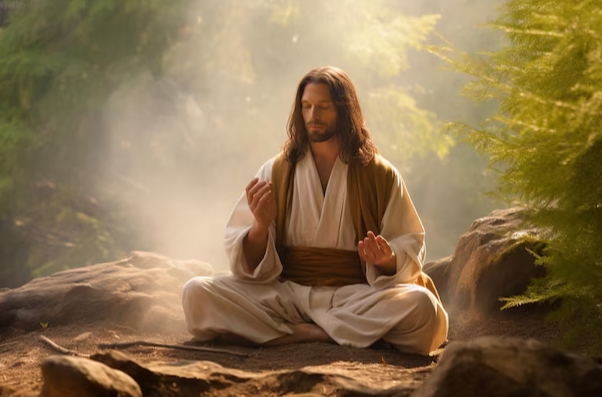
This is not a comparative religion survey. It is a philosophical act — an attempt to distill, from the most interior currents of the world's contemplative traditions, a coherent path for those who find themselves standing at the junction of Christianity and Buddhism and who refuse to pretend the junction does not exist.
Christian mysticism — especially Meister Eckhart, The Cloud of Unknowing, and John of the Cross — already speaks a language that is Buddhist-adjacent. Quakerism, with its emphasis on inner light and silent waiting, translates almost directly into meditative practice. Eastern Orthodoxy, with its doctrine of theosis and its hesychast contemplative tradition, echoes Buddhist teachings on Buddha-nature in ways that surprised both traditions when they first encountered each other. St. Thomas Aquinas, read with fresh eyes, reveals a philosopher of Being who stands remarkably close to the edge of what Zen masters have been pointing at for centuries.
Pure Land Buddhism enters this synthesis in a particular way — not as a lesser or devotional form of Buddhism, but as the tradition that has most directly confronted the question of grace. Its structural parallels with Lutheran and Augustinian Christianity are so precise, so uncanny in their detail, that to ignore them is a failure of intellectual honesty. In both traditions, the pivotal discovery is the same: the ego cannot liberate itself. Liberation must come from beyond the ego's reach — and it arrives not as a reward for effort, but as the fruit of genuine surrender.
What follows is a map drawn from these overlapping territories. It is not a new religion. It is an invitation to walk further into the one you already inhabit — until you arrive at the place where all the great walkers have arrived, and where they discovered, to their surprise, that they were not alone.
The Assimilation —
How the Traditions Map
Every genuine tradition, pressed to its uttermost depth, arrives at a common silence.
These are the correspondences that make that claim intelligible.
| Christian Concept | Buddhist Equivalent | The Synthesis |
|---|---|---|
| God / Esse / Godhead | Dharmakaya / Sunyata | The trans-personal Ground of Being |
| Jesus Christ / Kenosis | Bodhisattva / Anatta | Self-emptying as the highest act |
| Holy Spirit | Prajna + Karuna | Wisdom and compassion as one movement |
| Sin / Avidya | Ignorance / Delusion | The structural misperception of separateness |
| Grace / Sola Gratia | Tariki (other-power) | Liberation beyond the reach of ego-effort |
| Theosis / Sanctification | Buddhahood / Rigpa | The luminous nature revealed, not achieved |
| Kingdom of God | Pure Land | Present reality and future fullness |
| Cross / Resurrection | Nirvana / Return | Death of the ego, birth of universal compassion |
God as the Ground
St. Thomas Aquinas gave philosophy perhaps its most compressed definition of God: Ipsum Esse Subsistens — Being itself, subsisting. Not a being among beings, not even the greatest being in the hierarchy, but the sheer act of existing that underlies all things. To exist at all is to participate, somehow, in this radical ground.
Meister Eckhart, pushing further, distinguished between "God" — the personal deity who creates and redeems — and the "Godhead" (Gottheit): the desert of divinity, prior to all attributes, beyond knowing, beyond naming, the ground from which even the personal God arises. This is astonishing language for a 14th-century Dominican friar. It is also almost word-for-word the description that Buddhism offers of the Dharmakaya — the truth-body of reality, the unconditioned ground from which all phenomena emerge and into which they return.
Paul Tillich in the 20th century would call this same reality the "Ground of Being" and insist that it is not an entity that happens to exist, but the very power of Being itself, in which all entities participate. The language changes; the finger points at the same moon.
Christian Zen identifies these — the Thomistic Esse, Eckhart's Gottheit, Tillich's Ground of Being, the Buddhist Dharmakaya — as different fingers pointing at the same moon. The personal God of Christian prayer and devotion is not simply discarded; that God is the Ground of Being becoming available to relationship. But the ultimate character of Reality, as both traditions have discovered through their deepest contemplatives, is not a person in the ordinary sense. It is trans-personal: beyond the personal/impersonal distinction entirely.
Reality has a Ground that cannot be grasped, only entered. It is not impersonal; it is beyond the personal/impersonal distinction. Every authentic tradition that has pressed its practice far enough has arrived at this same threshold.
Jesus as Bodhisattva
Of all the structural mappings between Christianity and Buddhism, none is more natural or more illuminating than the parallel between Jesus Christ and the Bodhisattva ideal. The Bodhisattva is one who, having arrived at the threshold of final liberation, turns back — because the illusion of the separate self has been so thoroughly dissolved that the suffering of "others" is experienced as one's own. The Bodhisattva cannot leave until all are free — not because of a noble resolution, but because there is no longer a private self to leave.
In Philippians 2:7, Paul uses the Greek word kenosis — self-emptying — to describe what Christ did in the Incarnation. He "emptied himself, taking the form of a servant." This kenotic act — the voluntary relinquishment of divine prerogative to enter fully into the suffering condition of creatures — is the Christian articulation of what the Bodhisattva does. He does not cling to divine status. He pours himself out. He has nothing to lose because nothing was ever hoarded.
The Kyoto School philosopher Masao Abe explored this with philosophical rigor, proposing that divine kenosis — God's self-emptying in creation and incarnation — is structurally parallel to Buddhist sunyata (emptiness). Both describe a kind of infinite self-giving that empties out egoic grasping at the cosmic level. Creation itself, on this reading, is an act of divine kenosis: God making space for the other by stepping back from the fullness of divine Being.
The kenotic Christ and the Bodhisattva ideal are not merely similar. They are the same interior movement — the dissolution of self-grasping in the direction of universal compassion — expressed within different cultural and theological vocabularies.
Spirit, Ignorance, and the Structural Misperception
Buddhism describes two ultimate qualities of awakened mind: prajna (wisdom — the direct seeing of reality beyond all conceptual filters) and karuna (compassion — the natural flow of care that arises when the illusion of separation is dissolved). These are not acquired virtues. They are what awareness naturally does when grasping releases. Christian Zen maps the Holy Spirit onto the joint action of these two qualities without reducing either.
The root cause of suffering, in Buddhist analysis, is avidya — ignorance, or more precisely, a structural misperception. We perceive ourselves as separate, bounded selves in a world of other separate objects. This misperception is not a moral failure; it is a cognitive one — but it generates all the grasping, aversion, and confusion that produces suffering. Christianity's corresponding diagnosis is the doctrine of sin — but in its deepest form, particularly in Augustine and the mystical tradition, sin is less a list of transgressions than a fundamental orientation: the curvatio, the soul curved in upon itself, mistaking the finite for the infinite, the shadow for the light.
Both diagnoses point at the same disease: the soul that has mistaken its own boundaries for the boundaries of reality. Both cures point at the same medicine: the opening of the self to something larger than itself — whether called grace, or the recognition of Buddha-nature — that dissolves the misperception at its root.
Pure Land and the
Theology of Grace
The Deepest Parallel
Of all Buddhist traditions, Pure Land has the most theologically rich relationship with Christianity. The reason is that Pure Land confronts, with full philosophical seriousness, the same problem that Augustine and Luther confronted: the utter inadequacy of self-effort as a path to liberation.
The tradition begins with a cosmic vow. Amitabha Buddha, before his enlightenment, took forty-eight vows, of which the eighteenth is the heart: that any being who sincerely entrusts themselves to him — who turns to his Primal Vow with genuine reliance — will be received into the Pure Land, a realm of perfect conditions for awakening. This is an act of radical, unconditional grace: liberation offered not on the basis of merit but on the basis of a vow that cannot be broken.
The great Japanese Pure Land master Shinran (1173–1263) pressed this logic to its absolute conclusion. His earlier life was a sustained effort of monastic discipline — meditation, study, ritual observance. His sincere efforts only deepened his awareness of his own inadequacy. He concluded that the very attempt to earn liberation was itself the deepest form of spiritual pride. The ego that strives for its own enlightenment is still the ego — still grasping, still performing. True liberation must come from outside the ego's reach.
This is, almost word for word, the spiritual crisis and resolution of Martin Luther (1483–1546). His breakthrough — sola gratia, grace alone — was the discovery that salvation cannot be earned, only received. The very attempt to earn it is the obstacle. The righteousness that saves is not manufactured by the soul but imputed to the soul by a grace that precedes all effort and undercuts all merit.
Driven to despair by the impossibility of earning liberation through effort. Found resolution in radical entrusting (shinjin) to Amitabha's Primal Vow — other-power (tariki) rather than self-power. Concluded that ethical life flows from liberation as gratitude, not toward it as effort. Even the nembutsu, properly understood, is not our act but the Vow's act working through us.
Driven to despair by the impossibility of earning righteousness through effort. Found resolution in radical trust (fiducia) in God's grace alone — sola gratia. Concluded that ethical life flows from salvation as gratitude, not toward it as a means of earning it. Even faith, properly understood, is not our act but the Spirit's act working through us.
Grace is not earned by effort. It is received by opening. The disciplines of prayer and practice do not produce grace; they remove the obstacles to recognizing what was always already given.
The Name
In Pure Land Buddhism, the nembutsu — Namu Amida Butsu, "I take refuge in Amitabha Buddha" — is not a mechanical formula. According to Shandao and Shinran, the Name is the Vow made audible. To say the Name with sincere entrusting is to receive what the Vow promises. The nembutsu is therefore not an act of merit-accumulation; it is an act of reception — the ego stepping aside long enough for the Vow to work.
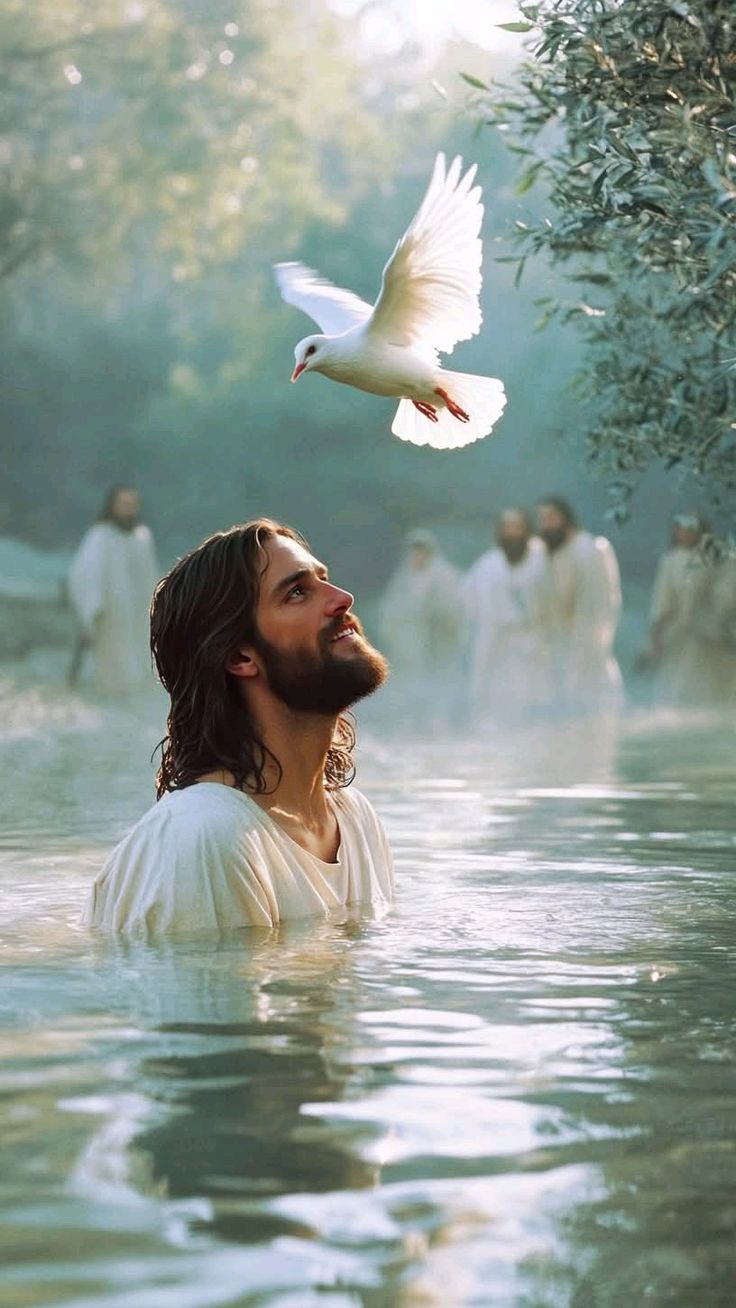
In Eastern Orthodox Christianity, the Jesus Prayer — "Lord Jesus Christ, Son of God, have mercy on me, a sinner" — functions in a structurally identical way. Practiced continuously, descending from the mind into the heart through hesychast cultivation, it is an invocation of the divine Name that carries the full weight of the Incarnation, the Cross, and the Resurrection. The Philokalia describes a transformation of consciousness through the Prayer that parallels the transformation described in Pure Land literature through nembutsu practice: the proliferating mind quiets, the heart opens, a warmth and light begins to arise that does not come from the practitioner's own effort.
"At the name of Jesus every knee shall bow" — this is not primarily a statement about future cosmic choreography. It is a statement about the ontological weight carried by that Name: the Name that is also the Vow, the Name that is also the Light, the Name that does what the practitioner cannot.
Philippians 2:10
Christian Zen honors both the nembutsu and the Jesus Prayer as authentic paths into the Ground of Being — different vehicles carrying the same essential movement: the dissolution of self-enclosure into the openness of the Name, which is also the openness of Reality itself.
The Pure Land as Inner State
Thich Nhat Hanh offered a reading of the Pure Land that opens an important door for Christian Zen. In his interpretation, the Pure Land is not primarily a future destination but an inner state available now, in this life, in this moment, through the practice of mindful presence. "The Pure Land is available in the here and now," he wrote, and then demonstrated this insight by describing how the practice of walking meditation, fully inhabited, is entry into the Pure Land.
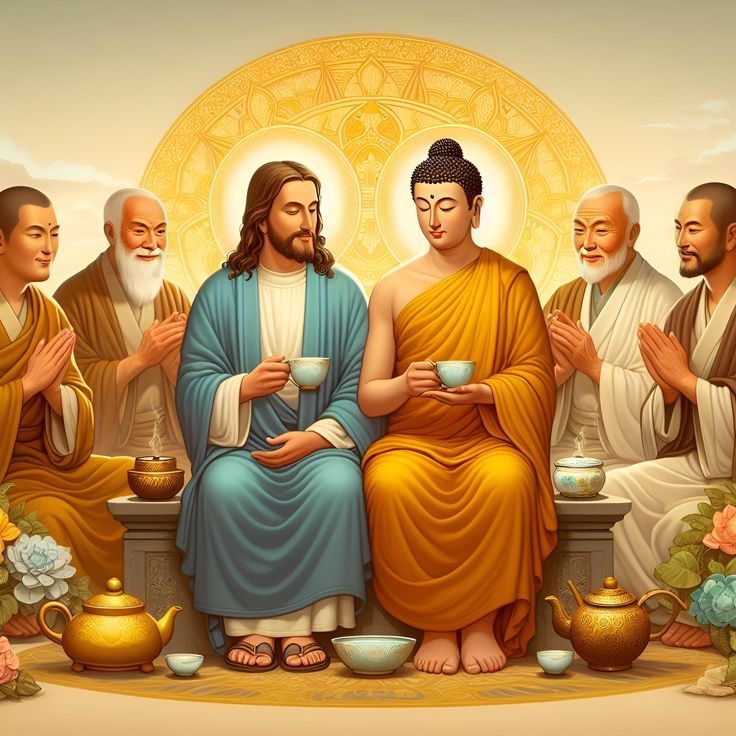
This does not eliminate the cosmological Pure Land; it deepens it. The Pure Land is both: a state of clarity that can be tasted now in moments of genuine presence, and a fullness of that clarity toward which the whole journey moves. Just as the Kingdom of God in the Gospels is both "within you" and "coming" — both present reality and future horizon — the Pure Land has a now-dimension and a then-dimension. Christian Zen takes this seriously: the Eucharist is not merely a memorial or a sacrifice, but a contemplative practice of radical presence — the Ground of Being becoming matter, the table where the Bodhisattva and the Risen Christ sit together.
The Philosophical
Architecture
The Thomistic Spine
Christian Zen does not abandon rational theology. It uses it — as a ladder to be climbed and then set aside. The Thomistic tradition provides the most rigorous philosophical scaffolding for the contemplative journey: its doctrine of participation, its analogical language about God, and its honest reckoning with the limits of human knowing.
The analogia entis — the analogy of being — is Thomas's answer to the question of how we can speak about God at all, given God's radical transcendence. We can speak about God because creatures participate in God's Being. But every positive statement about God is simultaneously negated by infinite distance. Every affirmation requires a negation, and the negation points beyond both into the via negativa: the way of unsaying, approaching the divine by progressively stripping away every description. This is not agnosticism; it is the most rigorous possible form of theological honesty.
This is Aquinas's apophatic side — and it is here that Thomas meets the Zen master. When Aquinas wrote, near the end of his life, "All I have written seems like straw compared to what I have seen," he was not denigrating his life's work. He was reporting something more important: that the finger and the moon are not the same thing — and that he had, at last, looked at the moon.
Truth-seeking and silence-entering are not rivals. Reason clears the ground; contemplation plants the seed; grace brings the flowering. The mystic who has never thought carefully is at risk; the theologian who has never sat in silence has missed the point.
The Zen Core
If Thomism is the scaffold, Zen is the earthquake. It comes not to build but to break open — and what it breaks open is the fundamental assumption that there is a separate self who is undertaking a spiritual journey. The koan is not a riddle to solve. It is a mechanism for exhausting the problem-solving mind — a trap so carefully constructed that every attempt to escape it tightens it, until the one attempting the escape realizes that the one who needs to escape is the obstacle.
The Desert Fathers knew this in their own idiom. Their practice of hesychia — inner stillness — was not mere quietness but the progressive dismantling of the thought-stream until what remained was awareness itself, resting in God. Abba Poemen said: "Stay in your cell and your cell will teach you everything." The cell is the koan. John of the Cross described the Dark Night: the systematic withdrawal of every spiritual consolation until the soul stands, stripped of every support, in what he calls "naked faith." This is not failure; it is the threshold.
God is not found in the soul by adding anything, but by a process of subtraction.
Meister Eckhart
The practice is both simple and total. Sit. Breathe. Let the river of thought flow without grasping. Do not seek an experience. Be what you are when nothing is added. This is not idleness. It is the most demanding act of all.
The Luminous Way
The Luminous Way draws from two streams largely separated in the history of religion: the Hesychast tradition of Eastern Christianity, centered on the uncreated light of Mount Tabor, and the Tibetan Buddhist teaching of Rigpa — the intrinsic awareness that is self-luminous, primordially pure, and present as the very nature of mind.
Both traditions are describing an encounter with luminous awareness that is simultaneously deeply personal and radically beyond the personal self. Both insist it cannot be produced by effort, only recognized. Both describe the encounter in the language of light. In John's Gospel, Christ is the Logos — the light that shines in darkness and was never overcome, the knowing principle of the universe that entered flesh. The Incarnation is not God leaving the luminous Ground to enter matter. It is the luminous Ground becoming fully visible within creation.
The Luminous Way teaches that this Light is not outside you. The innermost heart — what the Hesychasts called the nous, what the Tibetans call Rigpa — is of the same nature as the Light of the Logos. Not identical in person; continuous in nature. The light by which you are reading these words is a participation in the light by which the universe knows itself.
Christ is not only a savior from sin; Christ is the revelation of what awareness itself is. To awaken is to see through Christ's eyes — which are also, mysteriously, your own deepest eyes.
The Christian Buddhist Heart
The Bodhisattva vow — "I will not enter final liberation until all beings are free" — is not a statement about timing. It is a statement about the nature of awakening itself. When the illusion of the separate self dissolves, the suffering of "others" is no longer experienced as separate suffering. The vow arises not as a noble resolution but as the natural response of awareness that has seen through the mirage of separation.
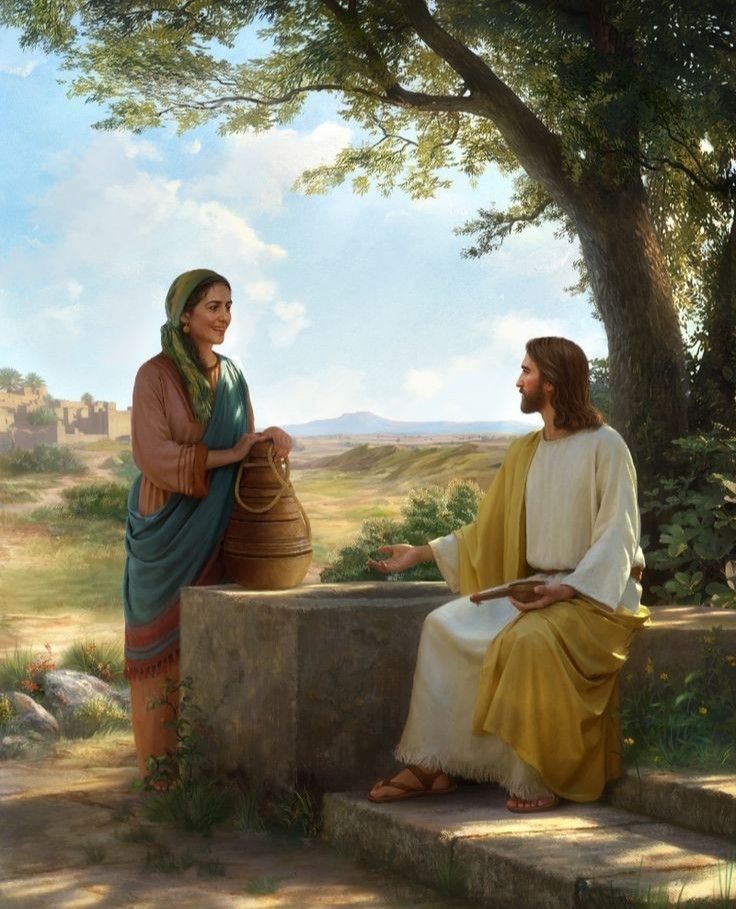
In the Christian tradition, this finds its most complete expression in the specific, particular Jesus of the Gospels: the one who touches lepers, sits with prostitutes, weeps at Lazarus's tomb, feeds thousands of hungry people, and says with unmistakable directness that whatever is done to the least of these is done to him. This is an ontological claim: the suffering of the most marginal is located in the Ground of Being itself.
The resurrection is the demonstration that kenotic self-emptying is not annihilation. The Tenth Ox-Herding Picture shows the awakened one returning to the marketplace — ordinary, cheerful, helpful, fully present, carrying gift-bearing hands. This is the eschatological image of Christian Zen: not the soul ascending to a disembodied heaven, but the awakened one returning to the world with empty hands that are somehow full.
Awakening is not escape from the world. It is the discovery that you were never separate from it — and the arising of inexhaustible compassion in that discovery. The Bodhisattva and the Risen Christ are the same figure seen from the East and from the West.
The Living Practice
A Christian Zen life is not esoteric. It is earthy, ordinary, and rigorous.
Six streams form the practical core.
Sit daily in silence — not to produce spiritual experience, but to rest in what you already are. The practice is the same regardless of the name: posture, breath, release. When the mind wanders, return without drama. The return is the practice. There is no end-state to reach, because the Ground of Being is already where you are sitting.
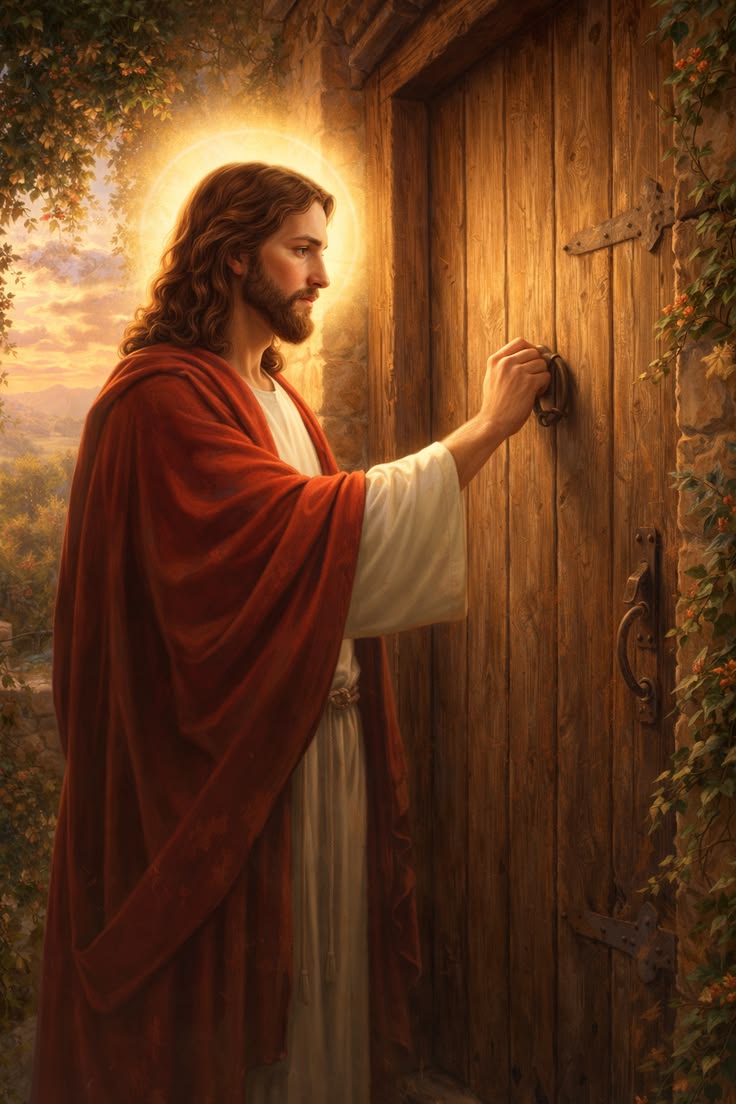
The Jesus Prayer — "Lord Jesus Christ, Son of God, have mercy on me" — used as a continuous mantra functions exactly as the nembutsu does: a vehicle that carries the mind below discursive thought into the heart. The Name is the Vow made audible; to call upon it with sincere entrusting is to open to what the Name carries.
Read scripture not for information but for encounter. Take one line. Sit with it until it sits with you. "Before Abraham was, I am." "The peace that passes all understanding." These are not problems to be solved. They are koans — statements whose surface meaning is the door, and whose depths are inexhaustible.
Every act of care is a liturgical act, an enactment of the Bodhisattva vow, a participation in the kenotic Christ. Washing dishes is Zen. Sitting with the dying is the most advanced practice. Forgiving the genuinely unforgivable is the koan that doctoral theses cannot answer but that ordinary people sometimes solve with a grace they did not produce.
At day's end, simply ask: Where did I meet the Ground today* Where did I flee from it* This is not self-punishment. It is honest seeing — which is already an act of compassion toward oneself. You are not reviewing your performance. You are tracing the movement of Life through the hours.
Christian Zen reads the Eucharist as the ritual enactment of the central insight: the Ground of Being pours itself into matter. To receive it with full awareness is to participate in the ongoing Incarnation — the Ground becoming gift, the infinite becoming finite, the nameless becoming named and consumed and metabolized into life. This is the Pure Land at the table.
The Traditions That Translate Most Fully
Eckhart, John of the Cross, Teresa of Avila. Already doing what Christian Zen describes. Its language of self-emptying, union with the divine Ground, and the via negativa is Buddhist-adjacent in the deepest sense.
Theosis, hesychasm, and the uncreated light offer the richest structural compatibility. The concept of theosis maps precisely onto what both Zen and Pure Land describe as the fruition of practice.
Inner Light, gathered silence, direct experience over dogma, the organic connection between contemplation and social justice. Translates into Christian Zen with almost no friction.
Personal salvation, forensic justification, plenary Scripture. Not wrong in what they affirm — but the reality the cure opens into is larger than the legal metaphor can contain.
What Christian Zen
Affirms
Not as doctrines to be believed, but as discoveries
to be verified in the laboratory of one's own experience.
All things arise from and return to the undivided Ground. This Ground is not impersonal; it is trans-personal — beyond the personal/impersonal division altogether. The appearance of multiplicity is real; the underlying unity is more real. This is not pantheism, which collapses the distinction between creator and creation; it is panentheism at most, or simply the mystical report common to both traditions.
The ego is a useful instrument, not the final truth. The practice is its gradual transparency — not its destruction. You do not kill the self; you discover that it was never the whole story. What remains when the ego becomes transparent is not nothingness; it is spacious, luminous awareness — the same awareness that the Hesychasts called the nous, and that Rigpa names in Tibetan.
Sunyata seen from below looks like boundless openness. Agape seen from above looks like boundless giving. They are two descriptions of what happens when the separate self dissolves. This is why the most rigorous Buddhist teachers and the most advanced Christian mystics sound, at their furthest reaches, almost identical.
The First Noble Truth and the Cross agree: suffering is the fabric of unawakened existence. Neither tradition offers a path around it; both offer a path through it, and both insist that what comes through is not what went in. The crucified one and the enlightened one are both recognizable by their wounds — and by what has been done with them.
Whether called tariki or sola gratia, the deepest truth of both traditions is that the final movement is not one we make. We prepare, we practice, we open — but the opening itself is given. This is not passivity; it is the active receptivity of the one who has learned to get out of the way.
Doctrine, theology, and scripture are fingers. The moon they point to is direct encounter with the Ground — what Aquinas glimpsed, what Zen calls satori, what the Hesychasts called theosis, what the Luminous Way calls abiding in the Clear Light. Protect the words; honor them; study them. But do not mistake them for the thing they indicate. The map is not the territory; the territory is inexhaustible.
It is what awakening looks like from the outside. The one who has genuinely seen through the illusion of separation does not need to decide to be compassionate. Compassion arises the way water flows downhill — not by moral effort but by the nature of the terrain. This is why the saints of both traditions are recognizable not by their doctrine but by a quality of presence: a warmth, an availability, a steadiness that does not flinch.
The Koan of the Cross
There is, at the heart of Christian Zen, a koan that no tradition has fully solved, because it is not meant to be solved. It is meant to be inhabited.
The lotus blooms in the fire.
Emptiness is full.
What resurrects*
Sit with it. Do not answer it with concepts. Do not rush to a theological resolution. Do not reach for the comfort of a tradition's standard answer, because the standard answers — however true — are not this. This is the koan itself, which means it is a door, not a destination.
When it opens — and it will open, in its own time, through its own means — you will not need to announce it. It will show in how you look at a stranger. It will show in how you hold your own grief, without armor and without collapse. It will show in the strange, sourceless quality of your joy — a joy that cannot be explained by circumstances, because it did not arise from circumstances. It arose from the Ground.
Reality is generous. It will show itself to anyone who genuinely wants to see. The Christian tradition has its own indispensable vocabulary for this seeing; the Buddhist tradition has its own. Christian Zen does not require that you choose between them. It requires only that you go all the way — into the silence behind the words, into the stillness behind the practice, into the Ground behind the tradition — and remain there long enough for something other than yourself to speak.

Meister Eckhart · Thomas Aquinas · John of the Cross · Teresa of Avila
Shinran Shonin · Honen · Shandao · Thich Nhat Hanh
Martin Luther · Augustine of Hippo · Hesychius of Sinai
Paul Tillich · Masao Abe · Thomas Merton · Bede Griffiths
The Philokalia · The Cloud of Unknowing · The Ten Ox-Herding Pictures