Generating the Divine Within
The Plants Themselves
Teachers, Medicines, Sacraments
The world's sacred plant medicines are not a homogeneous category. Each plant carries its own personality, its own pharmacology, its own cultural lineage, and its own demands. Psilocybin mushrooms have been called the flesh of the gods. Ayahuasca is the vine of the soul. Peyote is the grandfather medicine. Cannabis is the ancient ally. Each brings a different quality of consciousness, a different form of encounter, and a different set of traditional protocols for its approach.
What they share is the capacity – under conditions of proper set, setting, preparation, and integration – to temporarily dissolve the ordinary boundaries of the self and open the experiencer to dimensions of reality that ordinary consciousness rarely accesses. What the world's contemplative traditions have mapped through long years of practice, these plants can open in hours. What they open must still be integrated over a lifetime.
The Sacred Plants – I
The Ancient Ally:
Cannabis as Entheogen & Healer
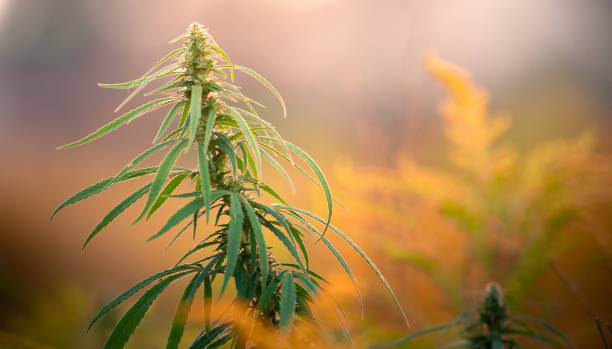
Few plants have accompanied the human story as intimately – or been so comprehensively misrepresented by a single century of prohibition – as Cannabis sativa. Its relationship with our species stretches back at least twelve thousand years, to Neolithic sites in Taiwan where hemp cord was recovered, to burial mounds in the Pontic steppe where cannabis seeds and braziers were found alongside Scythian chieftains, to the pharmacopoeias of ancient China, where the physician-emperor Shen Nong listed it among the supreme medicines circa 2700 BCE.

Yet to speak of cannabis only as a medicine or a fiber crop is to miss its deepest dimension. In its high-dose, ceremonial use, cannabis reveals itself as a genuine entheogen – a plant that can open the doors of perception, dissolve the ego, and bring the user into direct contact with the sacred. The ancient world knew this well. In the Rig Veda, the divine plant Soma is described as a "preparer of knowledge" that "leads the mind to ecstasy." Many scholars now believe that the historical Soma may have been a cannabis preparation, or that cannabis was used alongside it. In the Atharva Veda, cannabis is named as one of the five sacred plants, a "source of happiness, joy-giver, liberator" – a sacrament of the highest order.
"The exploration of the highest reaches of human nature and of its ultimate possibilities ... has involved the best people, the most ethical people, the most spiritual people, the most saintly people." – Abraham Maslow
Cannabis as the Mildest Psychedelic – A Gentle Teacher
Among the entheogenic plants, cannabis holds a unique position. Unlike the often overwhelming power of psilocybin or ayahuasca, cannabis offers a gentle, forgiving, and gradual entrance into altered states of consciousness. This makes it an ideal teacher for those beginning their entheogenic journey, as well as a trusted companion for seasoned practitioners seeking to deepen their capacity for stillness, introspection, and open-hearted awareness.
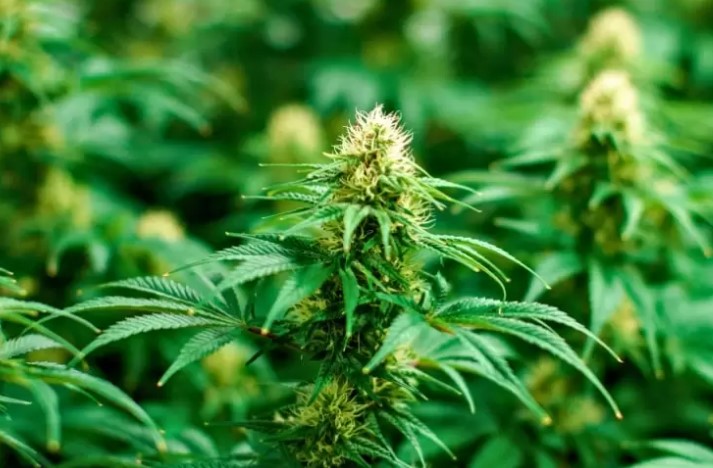
The entheogenic potential of cannabis is often overlooked in the modern West, where it is more commonly associated with relaxation or recreational euphoria. But in the hands of the Shaivite sadhus of India, who have used ganja in ritual for millennia, cannabis is a direct conduit to Shiva consciousness. In the Sufi traditions of the Middle East, hashish was employed as a tool for tawhid – the unitive vision of God. Herodotus, writing in the 5th century BCE, described the Scythians burning cannabis seeds in enclosed tents to produce a "vapour-bath" that made them "howl with pleasure" – a description that suggests a shamanic, ecstatic rite, not mere recreation.
Benefits of Cannabis as an Entheogen
- Gentle Entry: Cannabis provides a gradual, manageable introduction to altered states, making it the most accessible entheogen for newcomers.
- Mystical Insight: At sufficient doses, cannabis can induce profound mystical states – dissolution of the ego, merging with the cosmos, and encounters with loving presence.
- Emotional Healing: Cannabis helps release emotional blockages, allowing suppressed feelings to surface in a safe, compassionate context.
- Enhanced Meditation: The plant deepens contemplative practice, quieting the mind and opening the heart to direct experience of the sacred.
- Neuroplasticity & Creativity: Cannabis promotes new neural connections, enhancing creative insight and problem-solving.
- Physical Healing: As a powerful anti-inflammatory, cannabis treats chronic pain, epilepsy, multiple sclerosis, and many other conditions.
- Anxiety & PTSD Relief: Cannabis is emerging as a remarkably effective treatment for anxiety, depression, and trauma-related disorders.
- Spiritual Grounding: Unlike more intense psychedelics, cannabis allows the user to remain present and grounded while exploring expanded states.
The Entheogenic Flame
At sufficient doses, and in the right set and setting, cannabis can induce profound mystical states. The dissolution of the ordinary self, the felt sense of merging with all things, the encounter with a luminous, loving presence – these are not occasional side effects, but recurring themes in the reports of those who use cannabis with intention and reverence. The psychologist William James, in his Varieties of Religious Experience, noted that cannabis could produce a "mystical consciousness" that was indistinguishable from the experiences described by the great contemplatives. More recent research has confirmed that THC, the primary psychoactive component of cannabis, can produce experiences of insight, awe, and unity that rival those of classic psychedelics.
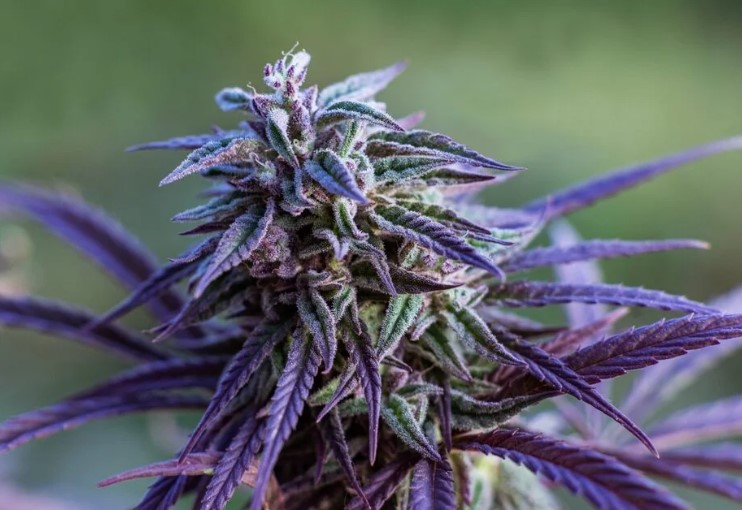
What distinguishes cannabis as an entheogen is its gentle, forgiving nature. Unlike psilocybin or ayahuasca, which can be overwhelming, cannabis typically meets the user where they are. It does not force the dissolution of the ego, but invites it. This makes it an ideal teacher for those new to entheogenic work, as well as a trusted companion for seasoned practitioners who wish to deepen their capacity for stillness, introspection, and open-hearted awareness.
The Healing Wisdom
The healing properties of cannabis are as ancient as its entheogenic use. In the Shen Nong Ben Cao Jing, cannabis was prescribed for a hundred ailments, including pain, inflammation, and "spiritual afflictions." In traditional Ayurvedic medicine, Vijaya (cannabis) was used to balance the vata and kapha doshas, to restore appetite, to treat anxiety and insomnia, and to prepare the mind for meditation.
Modern science has only begun to catch up with this ancient knowledge. The discovery of the human endocannabinoid system – a vast network of receptors and signalling molecules that regulates everything from mood and memory to immune function and inflammation – has revealed why cannabis is so versatile. Cannabinoids like THC and CBD interact with this system, restoring balance where it has been lost. The clinical evidence is now overwhelming: cannabis is a powerful anti-inflammatory, a neuroprotective agent, a treatment for chronic pain, and a remarkably effective medicine for epilepsy and multiple sclerosis.
Perhaps most crucially, cannabis is emerging as a treatment for mental health conditions that have proven resistant to conventional therapies. PTSD, generalized anxiety, depression, and addiction are all being treated with cannabis in clinical settings, often with results that exceed those of standard pharmaceutical interventions. The entourage effect – the synergistic action of cannabinoids and terpenes – means that whole-plant cannabis is often more effective than isolated compounds, offering a wisdom that is greater than the sum of its parts.
The Return of the Teacher
The criminalization of cannabis, driven in the United States by a convergence of racist policing, industrial competition, and moral panic, represents one of the great acts of cultural amnesia in modern history. Yet the teacher plant has survived. It has survived the prohibition, the propaganda, the prison sentences and the stigma. Today, it is returning – not only as a medicine, but as a sacrament.
As legalization spreads across the globe, a new question arises: how will we approach this plant? Will we treat it as a commodity, or as a sacred ally? The answer depends on whether we remember what our ancestors knew: that cannabis is not a drug in the ordinary sense, but a doorway – a doorway to healing, to insight, and to the sacred interior life. Our apothecary honors this ancient tradition. We invite you to approach cannabis with the same reverence you would bring to any great teacher – with preparation, with intention, and with a willingness to be changed.
Hemp – the low-THC fiber, food, and medicine expressions of the same plant – built civilizations. It clothed the armies of China and Rome, rigged the sails of European exploration, produced the paper on which the first Gutenberg Bibles were printed, and provided the rope, oakum, and canvas of the Age of Sail. The criminalization of cannabis – driven in the United States in the 1930s by a convergence of racist policing, industrial competition from the petrochemical and timber lobbies, and yellow journalism – represents one of the more consequential acts of cultural and historical amnesia in modern history.
Sacrament – Ancient & Modern
Cannabis sativa
Entheogenic lineage: Vedic Soma (candidate), Scythian ecstatic rites, Shaivite Tantra, Sufi dhikr, Rastafari – a truly cross-cultural sacrament.
Healing lineage: Shen Nong (China), Ayurveda (India), Islamic medicine, European herbalism – a medicine for body, mind, and spirit.
Modern renaissance: Endocannabinoid system, PTSD, epilepsy, neuroprotection, cancer palliation – science confirming ancient wisdom.
A Note on Lineage
On Approaching These Plants with Humility
Every plant discussed on this page comes embedded in a living tradition – a web of knowledge, protocol, relationship, and reverence that was built over generations by communities whose access to these medicines is now often threatened by the very curiosity that Western interest has generated. To approach the sacred plants without acknowledging their origins, without learning from those who carry their traditions, and without giving back to the communities that preserved them through centuries of persecution is to repeat, in spiritual form, the extractive dynamic that has caused so much harm.
Approach these medicines as you would approach a teacher of great depth and wisdom. Come with questions more than conclusions. Come willing to be changed. Come prepared to give more than you take.
The Sacred Plants – II
The Flesh of the Gods:
Psilocybin & the Mushroom Cults
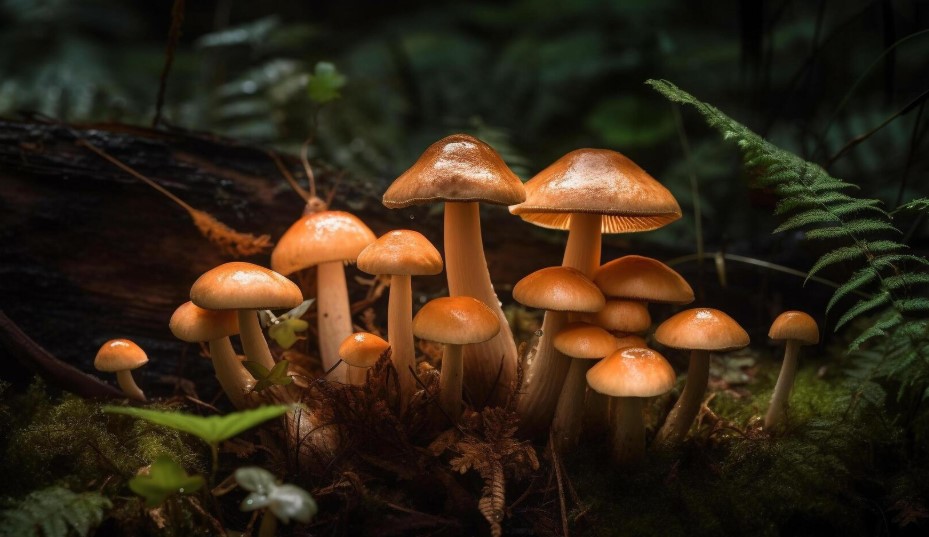
The indigenous peoples of Mesoamerica called them teonanacatl – "flesh of the gods." Psilocybin-containing mushrooms, used ceremonially by the Mazatec, Zapotec, Mixtec, and other indigenous peoples of Oaxaca and southern Mexico, were encountered by Spanish conquistadors in the sixteenth century and promptly suppressed with considerable violence, driven underground for four hundred years. They survived because the indigenous peoples of the Sierra Mazateca protected them, practiced their use in night ceremonies called veladas, and passed the knowledge through generations under the cover of Catholicism.
When R. Gordon Wasson attended a velada conducted by the Mazatec curandera Maria Sabina in 1955, and published his account in Life magazine in 1957, he catalyzed a cultural earthquake. His description of his experience – of "seeing" across time, of ego dissolution, of an overwhelming sense of sacredness – introduced the Western world to what indigenous Mesoamerican tradition had known for at minimum two thousand years.
Benefits of Psilocybin Mushrooms as Entheogens
- Profound Mystical Experience: Psilocybin reliably produces experiences that participants rank among the most meaningful of their lives, comparable to the birth of a child or the death of a loved one.
- Ego Dissolution: The temporary dissolution of the self allows for direct, unmediated experience of the sacred and the interconnectedness of all things.
- Psychological Healing: Clinical trials show remarkable efficacy for treatment-resistant depression, anxiety, PTSD, and addiction.
- Spiritual Awakening: Many report lasting increases in openness, compassion, and a sense of connection to the divine or the universe.
- Neural Regeneration: Psilocybin promotes neuroplasticity and the growth of new neural connections, supporting mental health and cognitive flexibility.
- Death Acceptance: Psilocybin-assisted therapy for end-of-life anxiety has produced profound reductions in fear of death and increases in spiritual well-being.
- Creative Insight: Enhanced access to unconscious material and novel perspectives can catalyze creative breakthroughs in art, science, and personal life.
- Community Bonding: Shared entheogenic experiences create deep bonds of trust, empathy, and mutual understanding within religious and spiritual communities.
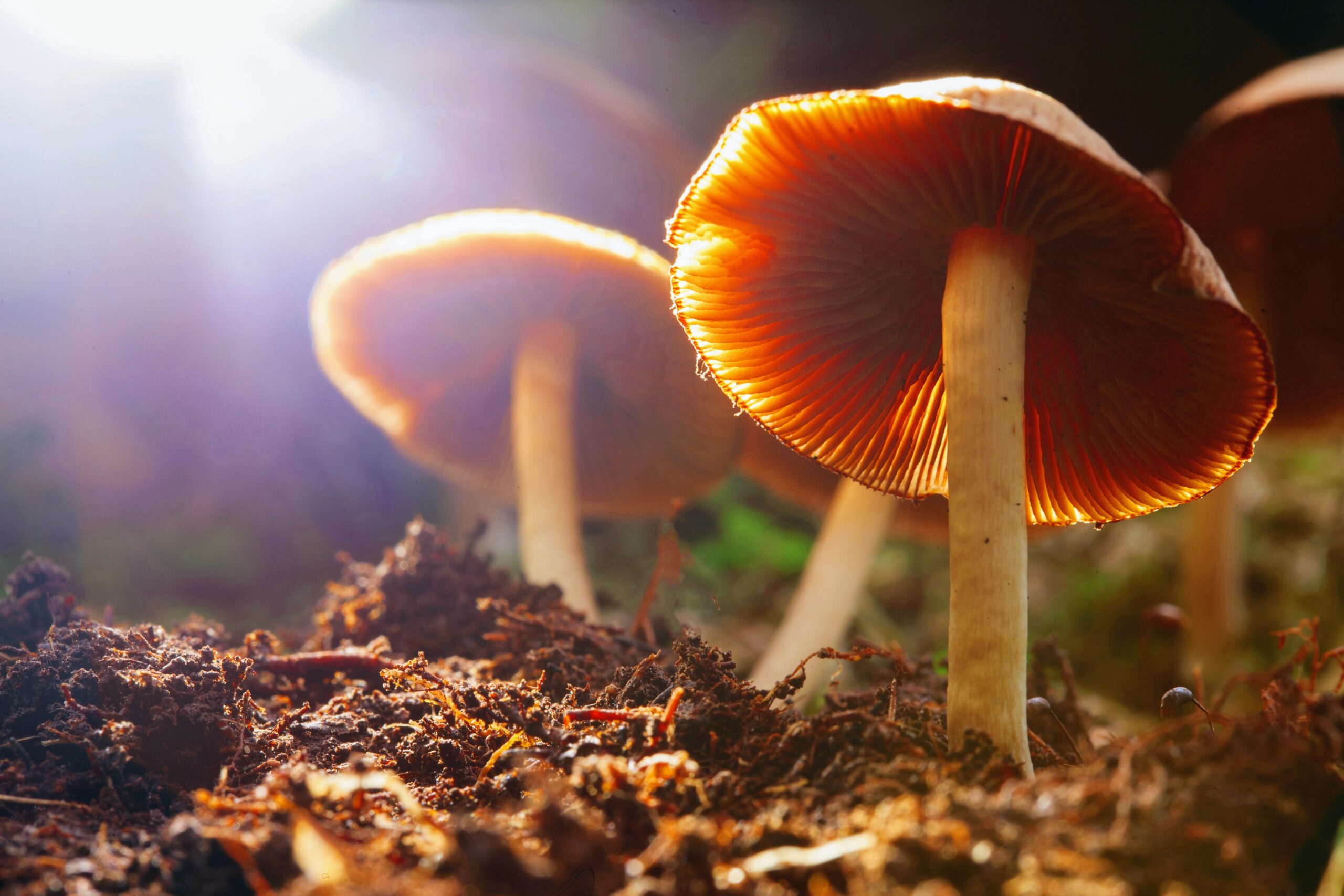
The scholarly work that followed led, through Albert Hofmann (who had already synthesized LSD in 1938), to the isolation of psilocybin as the active compound in 1958. A 2006 Johns Hopkins study found that a single high-dose psilocybin session produced experiences rated by participants among the five most meaningful of their entire lives – and that these ratings were stable at fourteen months follow-up. This research has been replicated and expanded, with studies now demonstrating remarkable efficacy for treatment-resistant depression, addiction, and end-of-life anxiety.
"The mystical experience – the direct, unmediated encounter with the sacred – is the birthright of every human being. Psilocybin is not the experience itself, but the invitation."
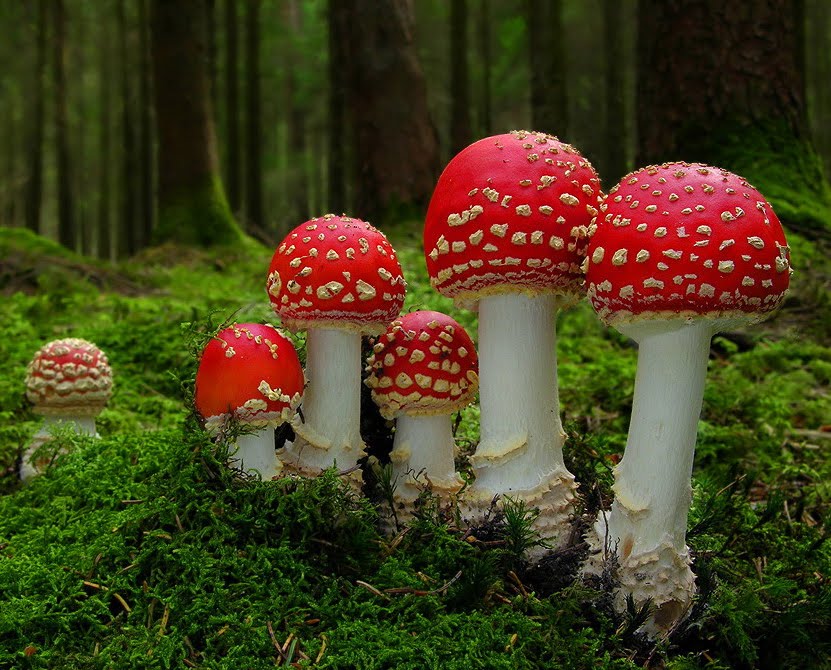
Amanita muscaria – the iconic red-and-white fly agaric – carries its own ancient sacred lineage. Wasson famously argued, in Soma: Divine Mushroom of Immortality, that this mushroom was the mysterious soma of the Rig Veda. The mushroom's documented use in Siberian shamanic traditions – where it was consumed by shamans in trance rituals – is well established. Finno-Ugric shamanism preserved its use into the modern era. More recently, the mushroom has been used in spiritual contexts in Europe and North America, offering a distinct entheogenic experience characterized by powerful visionary states and a profound sense of connection to nature.
The resurgence of interest in psilocybin mushrooms – driven by both clinical research and the reclamation of indigenous traditions – represents one of the most hopeful developments in modern spirituality. The mushrooms themselves, ancient and patient, have survived suppression and stigmatization. They are ready to teach again, to those who approach them with the reverence and preparation they deserve.
The Sacred Plants – III
Other Sacred Medicines
of the World's Traditions
Cactus – Americas
Peyote & San Pedro
Lophophora williamsii – peyote – is among the oldest known sacraments of the American continents, with evidence of ritual use by indigenous peoples of the Chihuahuan Desert extending back at least 5,700 years. The mescaline-containing cactus is the central sacrament of the Native American Church, which counts an estimated 300,000 members across more than fifty tribes and has successfully defended its right to ceremonial peyote use in U.S. federal courts.
The Huichol people (Wixaritari) of Mexico have never broken their relationship with peyote, conducting annual pilgrimages on foot hundreds of miles to their ancestral peyote grounds in the Wirikuta desert – a living ceremonial tradition of extraordinary antiquity.
Cactus – Andes
San Pedro (Echinopsis pachanoi)
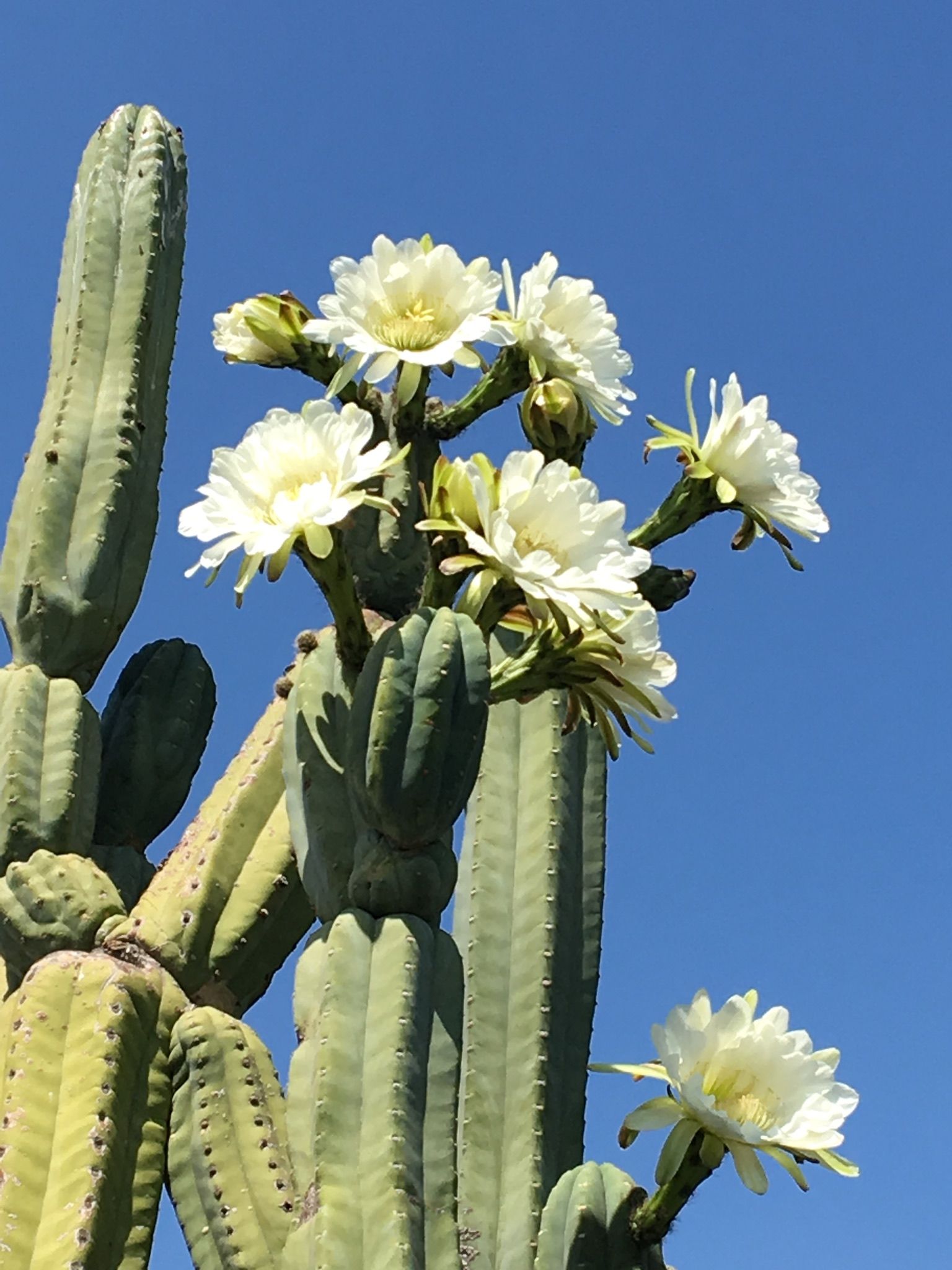
Echinopsis pachanoi – San Pedro – is a columnar cactus native to the Andes mountains of Peru, Bolivia, Ecuador, and Argentina. Its use in Andean healing and shamanic traditions extends back at least 3,000 years, with archaeological evidence including depictions on ancient ceremonial vessels and textiles. The name "San Pedro" (Saint Peter) was given by Spanish colonizers, who recognized the plant's association with spiritual power – Saint Peter, after all, holds the keys to heaven.
The cactus contains mescaline, the same psychoactive alkaloid found in peyote, though typically in lower concentrations. The San Pedro experience is often described as visionary, heart-opening, and deeply connected to nature. Unlike peyote, which is a small, slow-growing desert cactus, San Pedro grows rapidly and can be harvested sustainably, making it a more accessible sacrament for modern entheogenic practice.
Benefits as an entheogen: San Pedro is celebrated for its capacity to produce profound visionary states, emotional healing, and a deep sense of connection to the natural world. It is often used in the context of sanación – Andean healing ceremonies that address physical, emotional, and spiritual ailments. The experience is generally described as gentler and more grounded than that of ayahuasca or psilocybin, making it suitable for those seeking a gradual entry into entheogenic work.
Spiritual tradition: The Curanderismo tradition of Peru and Ecuador maintains the most sophisticated lineages of San Pedro use, with practitioners known as curanderos or vegetalistas. These healers combine the cactus with other plants, music, prayer, and ritual to create a holistic healing container. The cactus is understood as a teacher and a guide, capable of revealing hidden aspects of the self and facilitating profound transformation.

Seed – Mesoamerica
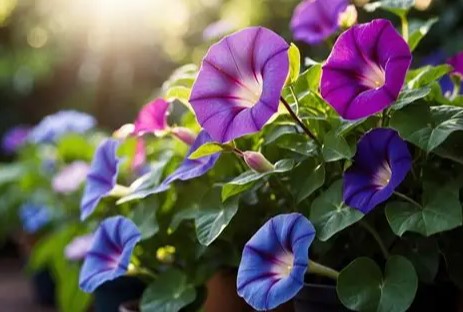
Morning Glory (Turbina corymbosa / Ipomoea violacea)
The seeds of certain morning glory species contain lysergic acid amide (LSA), a close chemical relative of LSD. The Aztec called the plant ololiuqui and used it ceremonially for divination, healing, and spiritual communion. The seeds were ground and consumed in ritual contexts, often in combination with other sacred plants, to produce visionary states and access hidden knowledge.
When Spanish missionaries encountered the use of ololiuqui in the sixteenth century, they recognized it as a "pagan" practice and attempted to suppress it. Indigenous practitioners, however, continued to use the plant in secret, and the tradition has survived to the present day among some communities in Oaxaca and other regions of Mexico.
Benefits as an entheogen: Morning glory seeds offer a gentle, introspective journey characterized by heightened sensory awareness, emotional release, and access to unconscious material. The experience is often described as dreamlike and intuitive, with a particular affinity for creative work and problem-solving. Unlike psilocybin or ayahuasca, which can be intense and demanding, morning glory offers a more subtle and manageable entry into entheogenic states.
Spiritual tradition: The Mazatec people of Oaxaca, who also preserve the mushroom velada tradition, have maintained the use of morning glory seeds for healing and divination. The seeds are typically administered by a curandera or curandero in a ritual context, with the intention of diagnosing illness, uncovering hidden truths, or communicating with the spirit world.
Contemporary use: Morning glory seeds are legal and widely available in many jurisdictions, though their potential for entheogenic use is often overlooked. When approached with respect and preparation, they offer a valuable entry point for those interested in exploring plant-based spirituality without the intensity of more potent sacraments.
Flower – Ancient Eurasia
Opium Poppy (Papaver somniferum)
The opium poppy, with its serene and beautiful flowers, has been cultivated for at least 6,000 years. Its medicinal and spiritual uses are documented in the oldest written records of Sumeria (where it was called the "plant of joy"), in the pharmacopoeias of ancient Egypt, in the Greek and Roman medical traditions, and in the great Islamic medical tradition of the medieval period.
As an entheogen, opium offers a unique and subtle path. Unlike the visionary and dissolutive experiences of psilocybin or ayahuasca, opium produces a profound sense of peace, contentment, and connection that can facilitate deep meditation, prayer, and contemplation. The Sufis of the Middle East used small amounts of opium to enhance their spiritual practice, and the great poets of the Islamic golden age – including Hafiz and Rumi – wrote of its capacity to open the heart and quiet the mind.
Benefits as an entheogen: Opium, used with discipline and reverence, can support deep introspection, emotional release, and a profound sense of unity with the divine. Its analgesic properties can be valuable in ceremonial contexts where physical pain or discomfort might otherwise be a barrier to deep spiritual work. The experience is characterized by a softening of the ego, a heightened capacity for compassion, and a deep sense of well-being.
Spiritual tradition: The poppy is deeply embedded in the religious traditions of the Middle East and Asia. In the Zoroastrian tradition, the poppy was associated with the divine as a symbol of resurrection and eternal life. In Islamic mysticism, small doses of opium were used to enhance the experience of dhikr – the remembrance of God. In India, the poppy was used in the context of the rasayana tradition of Ayurveda, where it was valued as a rejuvenative and a support for spiritual practice.
Total positivity for an entheogenic religion: While the use of opium carries risks of dependency that must be approached with the utmost care and discipline, it offers significant positive potential for religious practice. Used with intention, in small doses, and with the support of a community, it can facilitate profound states of compassion, acceptance, and spiritual connection. The poppy reminds us that the sacred can be found not only in ecstasy and dissolution, but also in peace and stillness.
Flower – Nile & Eastern Lineages
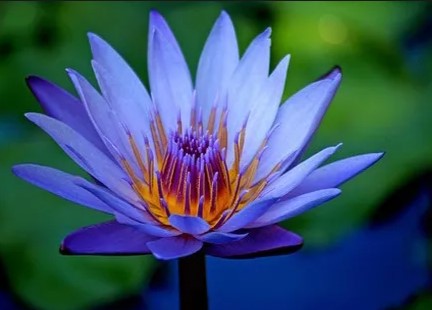
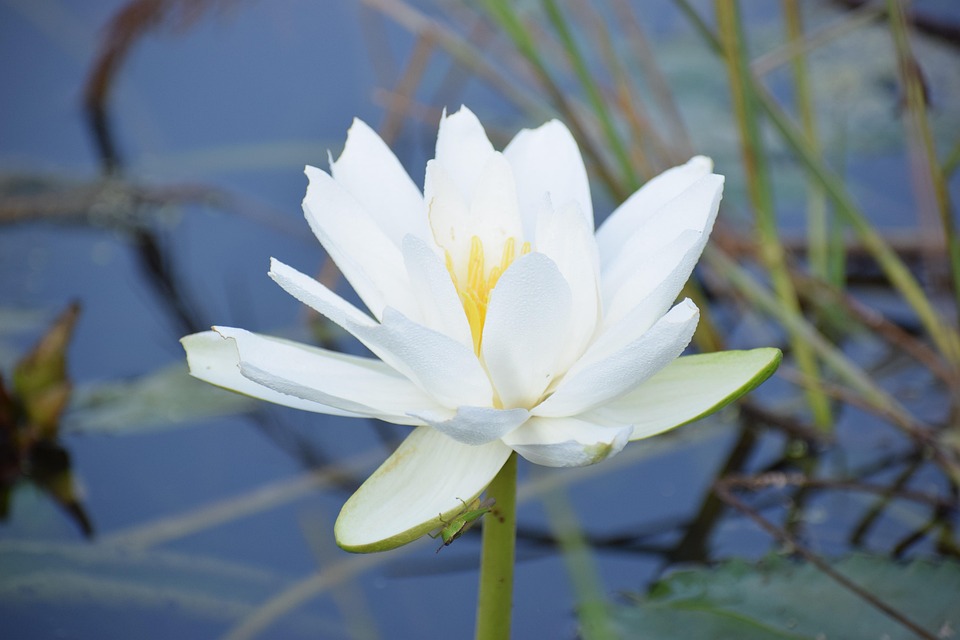
Blue & White Lotus (Nymphaea caerulea / Nymphaea alba)
In the sacred botanical traditions of ancient Nile civilization and Eastern spiritual lineages, few plants hold a position of higher reverence than the Blue Water Lily (Nymphaea caerulea) and the White Water Lily (Nymphaea alba). These luminous flowers, emerging pure and unsullied from murky waters to greet the sun, serve as supreme biological symbols of the soul's awakening, spiritual rebirth, and divine illumination. Within an entheogenic religion, the lotus is not merely a metaphor for enlightenment; it is a living sacrament, an energetic key, and a gentle divine ally that elevates human consciousness to commune with celestial realms.
The psychoactive resonance of the water lily stems primarily from its active aporphine and nuciferine alkaloids. Unlike disruptive or overwhelming substances, blue and white lotus offer a smooth, euphoric, and deeply calming entheogenic state. The experience is characterized by a heart-opening tranquil ecstasy, lucid dream-like introspection, and a subtle, radiant expansion of awareness. This gentle elevation makes the lotus an ideal sacrament for meditative absorption, prayerful communion, ritual trance, and sacred intimacy within a spiritual community.
Divine Potential & Benefits of Sacred Water Lilies
- Serene Mystical Elevation: Induces a gentle, radiant state of spiritual euphoria and tranquility, facilitating unmediated communion with divine presence.
- Lucid Dream & Visionary Work: Enhances inner imagery, intuitive clarity, and lucid dreaming, making it a powerful catalyst for prophetic and contemplative practice.
- Heart-Centered Openness: Relieves spiritual anxiety, dissolves emotional armor, and fosters deep feelings of cosmic empathy, love, and unity.
- Synergistic Incense Sacrament: Serves as a vital ritual incense ingredient, purifying sacred space and altering room atmosphere for collective spiritual practice.
Ritual Incense & Sacred Aromatic Offerings
A vital and foundational aspect of the entheogenic use of blue lotus and white water lily lies in their historic and modern application within sacred ritual incense. In the ancient temples of Egypt, the dried petals, stamens, and concentrated resins of Nymphaea caerulea were combined with sacred gums, frankincense, and myrrh to produce holy temple incense. When burned upon hot coals, the ethereal, sweet, and floral smoke filled the inner sanctuaries, purifying the atmosphere and transporting priests, priestesses, and initiates into elevated states of spiritual receptivity.
The use of lotus in ritual incense operates as both a physical and spiritual sacrament. Inhaling the holy smoke allows the active botanical essence to gently enter the body, calming the nervous system and shifting the brain into relaxed alpha and theta states. Within an entheogenic worship space, burning blue or white lotus incense establishes a sacred container. The fragrant smoke carries prayers to the divine realm while simultaneously opening the subtle energy bodies of all gatherers, preparing the mind and spirit for deeper entheogenic communion.
Sacrament – Nile & Eastern Lineages
Nymphaea caerulea & Nymphaea alba
Entheogenic lineage: Ancient Egyptian sun-worship, temple mystery rites, Buddhist and Hindu iconography, and contemporary temple rituals.
Incense application: Burned on charcoal braziers during temple rites, group ceremonies, and private altar meditations to create an elevated, purified space.
Spiritual resonance: A sacrament of divine peace, spiritual awakening, unitive love, and gentle visionary contemplation.
✦Kava (Piper methysticum)
Sacred ceremonial drink of Polynesia, Melanesia, and Micronesia. Used in chiefly investitures, religious ceremony, healing, and community ritual for three thousand years.
✦Salvia divinorum
The "Diviner's Sage" of the Mazatec people – used by curanderas specifically for diagnosis and healing in visionary trance. One of the most potent naturally occurring psychoactive plants known.
✦Iboga (Tabernanthe iboga)
The sacrament of the Bwiti tradition of Central Africa. Used in multi-day initiation ceremonies producing extended visionary experiences understood as death and rebirth. A profound anti-addictive agent now in clinical trials.
✦Ergot & the Eleusinian Mysteries
Albert Hofmann, Gordon Wasson, and classicist Carl Ruck proposed that the kykeon at the core of the Eleusinian Mysteries contained ergot-derived psychedelics. If so, Western philosophy was partly founded on entheogenic insight.
✦DMT & the Spirit Molecule
N,N-Dimethyltryptamine is endogenous to the human body and found in hundreds of plant species worldwide. Rick Strassman's clinical research produced encounters that defy easy classification.
✦Ayahuasca – The Vine of the Soul
The Amazonian brew combining Banisteriopsis caapi and Psychotria viridis produces a visionary state of extraordinary depth, used in healing and religious contexts across South America and now the world.

Throughout the whole of human history – long before the rise of organized religion, long before the first written scripture – there existed a doorway. It was not built of stone or word, but of plant and fire and darkness and song. Those who stepped through it returned changed: their understanding of self dissolved, their sense of connection to the cosmos expanded, their experience of the sacred made suddenly, shatteringly immediate. We call the substances that opened this door entheogens – from the Greek en theos, meaning "the divine within." They did not create the experience of God. They revealed what was already there.
Today, after decades of prohibition and silence, this ancient doorway is opening again – not only in clinical settings or underground ceremonies, but within a growing conversation about how entheogenic experience might be understood, received, and integrated within the world's living religious and contemplative traditions. This essay is an exploration of that conversation: its historical roots, its theological dimensions, its practical wisdom, and its profound implications for what it means to seek the sacred in the modern world.
The entheogenic path does not belong to any single tradition – it is the common thread that runs through the oldest spiritual impulses of the human family.
A Note on Context
Ancient Wisdom, Modern Conversation
The study of entheogens and their relationship to the sacred is not a fringe pursuit. It is the subject of serious academic, medical, and contemplative inquiry – carried out at institutions including Johns Hopkins, NYU, and Imperial College London, and honored within indigenous traditions that predate all modern institutions by millennia.
This page is offered in a spirit of reverence, education, and honest inquiry. Our apothecary does not encourage unlawful conduct. We do encourage the careful, informed, and ethically grounded exploration of humanity's oldest relationship with the sacred plants of this earth.
Before the Temples:
Entheogens at the Origin of Religion
The evidence is scattered across continents and centuries, written in cave paintings and preserved in archaeological sediment, encoded in mythology and ritual: human beings have been using plant medicines to access non-ordinary states of consciousness for at least ten thousand years, and possibly far longer. The fly agaric mushroom woven through the Vedic hymns to Soma; the blue water lily rendered in Egyptian religious iconography; the ergot-based kykeon consumed at the Eleusinian Mysteries; the peyote ceremonies of the indigenous peoples of North America; the ayahuasca traditions of the Amazon basin – in each case, psychoactive plants stood at the center of a culture's encounter with the divine.
Scholars such as R. Gordon Wasson, Albert Hofmann, and Carl Ruck proposed in their landmark work The Road to Eleusis that the transformative spiritual experiences at the heart of the ancient Greek mysteries may have been chemically mediated – that the profound encounters with divinity reported by initiates including Plato and Pindar were not purely mystical in the traditional sense, but entheogenically catalyzed. The question they raised has never been fully put to rest: what if the ecstatic, unitive experiences at the foundation of many of the world's great religious traditions were not solely the product of prayer and ascetic discipline, but also of carefully held contact with sacred plants?
10,000+ BCE
Cave Art and Shamanic Inception
Archaeological evidence from Tassili n'Ajjer in Algeria depicts mushroom-bearing figures in ritual postures, suggesting entheogenic ceremony among the earliest coherent human communities. The shaman stands at the oldest known interface between ordinary and non-ordinary reality.
c. 1500 BCE
The Soma of the Rig Veda
The Vedic scriptures of ancient India contain over one hundred hymns addressed to Soma – a sacred plant whose consumption produced visionary states described as encounters with the gods themselves. The precise identity of Soma remains debated; its centrality to early Vedic religion does not.
c. 650 BCE – 400 CE
The Eleusinian Mysteries
For over a thousand years, initiates at Eleusis – among them Plato, Marcus Aurelius, Cicero, and Sophocles – consumed the kykeon and underwent initiatory experiences so profound that Cicero declared Eleusis the greatest gift Athens had given humanity. The mystery was not abstract theology; it was direct encounter.
Pre-Columbian – Present
The Living Traditions
Indigenous traditions of the Americas maintain the world's oldest unbroken lineages of entheogenic ceremonial use – the peyote ways of the Huichol and Native American Church, the ayahuasca paths of the Amazonian healers, the mushroom veladas of the Mazatec. These are not relics; they are living, evolving systems of wisdom and relationship.
The question is not whether entheogens produce genuine spiritual experience – the evidence for this is overwhelming and cross-cultural. The question is: what do we do with that experience, and how do we understand it within our living traditions?
This is not to reduce religion to biochemistry, or to suggest that the entirety of spiritual life can be explained by the action of alkaloids on neural tissue. Rather, it is to acknowledge that the sacred has always found multiple pathways into human consciousness – and that plant medicines have been among the most ancient, most widespread, and most reliably potent of those pathways across the span of human civilization. The diversity of these pathways is itself a kind of grace.
The Entheogenic Experience:
What It Actually Is
To speak meaningfully about the integration of entheogenic experience into religious and contemplative frameworks, it is necessary first to understand what that experience actually involves – not as it is caricatured in popular culture, but as it is reported by those who have undergone it with preparation, intention, and care.
The psychiatrist Stanislav Grof, who spent decades researching non-ordinary states of consciousness, described the entheogenic experience as a catalyst for what he called transpersonal states: experiences in which the ordinary boundaries of the self temporarily dissolve, and the individual encounters a sense of profound unity with something vastly larger than themselves. This may manifest as the dissolution of the ego, the felt sense of merging with the cosmos, an encounter with what can only be described as sacred presence or intelligence, a direct experience of one's own death and rebirth, visions of extraordinary beauty and symbolic richness, or a compassion so complete that it feels indistinguishable from love itself.
△
Dissolution
The boundary between self and world becomes permeable, then transparent. What remains is awareness without center – the observer and the observed discovered to be one continuous field of presence.
○
Encounter
Many report an unmistakable sense of meeting something – intelligence, love, presence – that is both intimately familiar and utterly beyond the personal self. Traditions have named it variously; none have fully captured it.
▵
Return
The crossing back carries something: a changed relationship to death, to love, to what matters. The ordinary is not diminished by the encounter – it is, for those who integrate wisely, illuminated from within.
What is striking about these reports is not their idiosyncrasy but their consistency. Across thousands of years, across dramatically different cultural contexts and plant species, the core features of the profound entheogenic experience remain recognizable: the dissolution of the self-other boundary, the encounter with a sense of sacredness or ultimate reality, the deeply felt quality of meaning and revelation, and a lasting transformation in the quality of one's relationship to life, death, and love.
The mystics of every tradition have described exactly this territory: the Dark Night of the Soul, the annihilation of the nafs, sunyata, kenosis – the self emptied of itself, and found, in that emptiness, to be everything.
This convergence is theologically significant. When the language of shamanic visionaries, Buddhist meditators, Christian contemplatives, Sufi mystics, and entheogenic voyagers begins to sound like variations on a common theme, it becomes difficult to dismiss the possibility that they are all pointing – by different routes – toward the same territory of human experience. The maps differ. The territory may not.
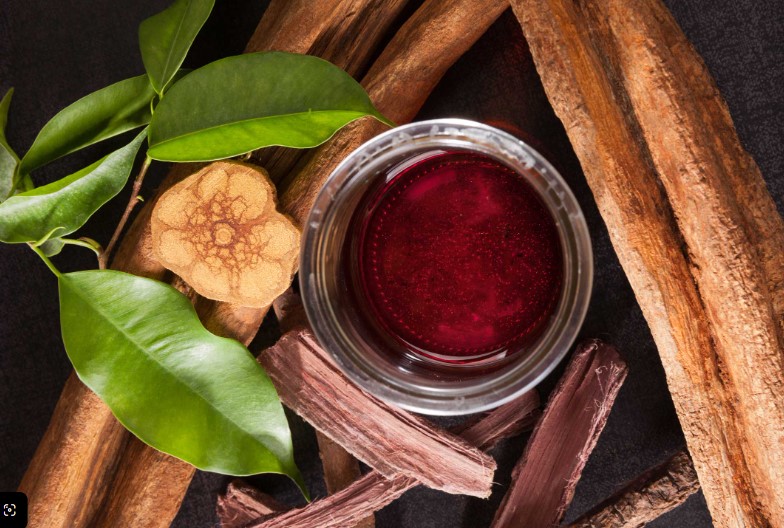
Conversations Across Traditions
One of the most generative developments of the contemporary entheogenic renaissance is the emergence of serious dialogue between those engaged in entheogenic practice and practitioners within established religious and contemplative traditions. These conversations are not without tension – but they are happening, and they are producing insights that neither side could reach alone.
What these conversations reveal is not that entheogens belong to any single tradition, or that they are a substitute for the long work of spiritual formation within a lineage. Rather, they suggest that entheogenic experience opens a door to a territory that the world's traditions have been mapping – from their own angles, with their own languages – for millennia. The traditions offer context, ethics, and the ongoing support of communal practice. The entheogenic experience offers, for many, the direct encounter that the traditions describe but that ordinary practice rarely delivers so suddenly and completely.
Buddhism
Teachers within Tibetan, Zen, and Theravada lineages have noted striking parallels between entheogenic states and the experiences described in meditative literature, while emphasizing that integration through sustained practice remains essential to genuine transformation.
Christianity
Contemplative Christians, particularly those drawing on mystical traditions – Meister Eckhart, The Cloud of Unknowing, the Desert Fathers – find resonance between entheogenic dissolution and the via negativa of apophatic theology.
Vedic & Hindu
The Soma of the Rig Veda and the living traditions of Shaivite practice offer ancient frameworks for understanding plant-mediated encounters with divine presence and the expansion of consciousness beyond ordinary identity.
Sufism
The Sufi concept of fana – annihilation of the ego in the divine – maps remarkably onto the ego-dissolution reported in entheogenic experience, inviting dialogue about the relationship between states and sustained transformation.
Indigenous Ways
The world's oldest and most sophisticated entheogenic traditions – Amazonian, Mesoamerican, North American – offer not just plant knowledge but whole cosmologies of relationship, reciprocity, and integration that took millennia to develop.
Jewish Mysticism
Kabbalistic frameworks, with their rich symbolism of Ein Sof, the descent through the Sefirot, and the ultimate return to unity, offer a profound theological container for understanding the entheogenic journey of dissolution and return.
The emerging dialogue is not about adopting a single framework, but about enriching all frameworks through honest encounter. When a Zen teacher and a Mazatec healer find that they are describing the same territory of awareness using completely different vocabularies, something important is confirmed – not about any particular tradition, but about the nature of the territory itself.

On Integration
The Long Work of Becoming
Experience alone does not transform. The most luminous vision, the most shattering moment of dissolution, the most overwhelming encounter with love – none of these, by themselves, make a person wiser, kinder, or more fully alive. What does that work is the slow, humble, daily practice of allowing what was seen to reshape how one lives.
This is the great teaching of every wisdom tradition: the fruits of spiritual experience are measured not in the quality of the state, but in the quality of the life that follows it. And that quality is built not in extraordinary moments, but in the ten thousand ordinary ones.
The Art of Integration:
From Experience to Embodiment
If the entheogenic experience is the opening of a door, integration is the long, patient work of walking through it – of allowing what was revealed in the extraordinary to take root in the ordinary. This is where the wisdom of religious and contemplative traditions becomes not merely relevant but indispensable.
The contemplative traditions know something that entheogenic culture is still learning: that a powerful experience, however genuine, is only the beginning. The mystics have always warned against attachment to the experience itself – to the states of bliss, the visions, the sense of cosmic significance – and insisted that what matters is not the peak but the transformation it initiates in how one actually lives, loves, and relates to others. Saint John of the Cross wrote of the danger of spiritual greed, the grasping after consolations. Buddhist teachers speak of spiritual bypassing – using experiences of transcendence to avoid the harder, more intimate work of integrating shadow, healing relationships, and showing up fully in one's ordinary life.
Integration is not remembering the experience. It is allowing the experience to remember you – to reshape, slowly and humbly, the person you are becoming.
Meaningful integration draws on several dimensions that the world's wisdom traditions have cultivated over millennia. Community and relationship – the practice of metabolizing experience in the presence of trusted others – mirrors the sangha of Buddhism, the congregation of Christianity, the circle of indigenous ceremony. Regular contemplative practice provides the ongoing ground in which insights can gradually take root. Ethical commitment – the deliberate translation of expanded compassion into concrete action – transforms the feeling of unity into the practice of solidarity.
Our apothecary understands integration as a sacred art in its own right. We do not treat entheogenic experience as the destination, but as the opening of a conversation – between the self and the sacred, between the individual and the tradition, between the moment of revelation and the lifetime of embodiment that follows. The experience may last hours. The integration may last a lifetime. Both are worthy of reverence.
Set, Setting & the Sacred:
The Ethics of the Work
The concept of set and setting – the mindset and environment in which an entheogenic experience takes place – originated with Timothy Leary but has been validated repeatedly by both clinical research and indigenous tradition. The same substance in the same dose can produce terror or transcendence, confusion or clarity, depending almost entirely on the preparation, the context, the relational container, and the intention brought to the encounter.
This is perhaps the most important practical convergence between entheogenic wisdom and religious tradition: both insist that the sacred cannot be approached casually. The elaborate ritual protocols of indigenous ceremony – the dietas, the prayers, the music, the presence of trained guides – are not mere decoration. They are the container that makes genuine encounter possible.
I
Preparation & Intention
A clear intention, emotional readiness, and appropriate physical preparation are not optional elements – they are the foundation upon which any genuine encounter is built. Carelessness is not courage; it is the absence of reverence.
II
Informed Consent
Every person who enters this work must do so with full understanding of what they are undertaking – its risks, its demands, its nature. No one may be brought to this threshold without their full and conscious assent.
III
Reciprocity
The threatened plant medicines – peyote above all – demand that we do not extract from indigenous traditions without relationship, learning, and genuine reciprocity. Taking without honoring is a spiritual harm as well as a cultural one.
IV
Ongoing Support
The ceremony is not the end. Meaningful follow-up, integration support, and communal accountability after the experience are moral necessities – expressions of the care that everyone who undertakes this work deserves.
The ethics of this work extend beyond the individual to the ecosystem and to the cultural fabric of the traditions from which these medicines emerge. To approach the entheogenic encounter with the gravity, preparation, and communal accountability that it deserves is itself a spiritual practice – perhaps the most important one in this domain.
The Long View
Ten Thousand Years of Sacred Plant Knowledge
The modern conversation about entheogens can sometimes speak as though these practices are newly discovered – the product of the 1960s counterculture, or of recent clinical research, or of the "psychedelic renaissance." In reality, human beings have been cultivating sophisticated traditions of sacred plant use for at least ten thousand documented years, and in all probability far longer. The following timeline traces a few of the more visible waypoints in this ancient story.
It is a history of continuity as much as discovery. The living traditions that were never interrupted – the Mazatec velada, the Huichol peyote pilgrimage, the Amazonian ayahuasca ceremony – carry knowledge that no clinical trial or academic paper has yet fully mapped. They are the original teachers, and they deserve the first word.
IV – Sacred Timeline
Ten Thousand Years
of Sacred Plant Knowledge
c. 10,000 BCE
Hemp cultivation begins in East Asia. Among the earliest agricultural crops, predating most cereal grains. Hemp seeds, fiber, and oil sustain Neolithic communities.
c. 7,000 BCE
Tassili n'Ajjer rock art, Algeria: "Mushroom shaman" petroglyphs depicting figures covered in mushrooms, interpreted as evidence of a Saharan mushroom cult predating the Sahara's desertification.
c. 4000 BCE
Ephedra use in Central Asian burial rituals. The plant's stimulant and mildly psychoactive properties are employed in shamanic and funerary contexts, connecting the living with the ancestors.
c. 3700 BCE
Oldest confirmed peyote ritual use: Shumla Cave, Texas. Carbon-dated peyote buttons found in ritual context in the Lower Pecos Canyonlands.
c. 2700 BCE
Chinese emperor Shen Nong includes cannabis in his pharmacopeia as a treatment for over a hundred ailments.
c. 1500 BCE
The Rig Veda hymns to Soma are composed. The identity of soma – the divine pressed plant drink at the center of Vedic liturgy – remains debated among scholars, with Ephedra and cannabis among the leading candidates.
c. 600–400 BCE
Eleusinian Mysteries at their height. Athenian citizens make the pilgrimage to Eleusis to drink the kykeon and be initiated. Participants include Plato, Sophocles, and Cicero.
c. 450 BCE
Herodotus describes Scythian cannabis steam baths. Burial excavations confirm the practice with physical evidence: seeds, pipes, braziers.
1521
Spanish Inquisition in New Spain begins systematic suppression of teonanacatl ceremonies, driving indigenous mushroom traditions underground for four centuries.
1943
Albert Hofmann accidentally discovers the effects of LSD-25 on April 19. The same mind will later isolate psilocybin and become a champion of psychedelic research until his death at age 102.
1955–1957
R. Gordon Wasson attends a Mazatec velada with Maria Sabina. His Life magazine article "Seeking the Magic Mushroom" introduces psilocybin to the Western world.
1970
The U.S. Controlled Substances Act schedules psilocybin, LSD, mescaline, and cannabis as Schedule I – ending two decades of promising clinical research and criminalizing indigenous practices worldwide.
2006
Gonzales v. O Centro – U.S. Supreme Court rules 8-0 for the Uniao do Vegetal's right to ceremonial ayahuasca. A landmark in entheogenic religious freedom law.
2006–Present
Johns Hopkins, NYU, and Imperial College London reopen psilocybin research. Oregon legalizes supervised psilocybin services in 2020. Colorado follows in 2022 with a broader framework.


The Legal Landscape
The Right to the Sacred Interior
For fifty years, the prohibition of entheogenic plants placed the state in direct conflict with the most ancient expressions of religious life on earth. That conflict has not been resolved – but it has begun to shift. Courts have recognized that sincerely held religious use of scheduled substances can be protected under the Religious Freedom Restoration Act. Scientific evidence has dismantled the rationale for Schedule I classification. And a growing number of jurisdictions have begun the long work of decriminalization and regulated access.
What follows is an account of where the law currently stands, and why the philosophical and constitutional arguments for entheogenic religious freedom are compelling on their merits – quite apart from any particular individual's experience or conviction.
V – Religious Freedom & the Law
The Right to the
Sacred Interior
Entheogenic Practice as Constitutional Right
The First Amendment to the United States Constitution guarantees the free exercise of religion. The Religious Freedom Restoration Act of 1993 (RFRA) strengthens this guarantee by requiring the government to demonstrate a compelling interest and employ the least restrictive means before substantially burdening religious practice. When the sacrament at the center of a sincere religious practice is a scheduled substance, the collision between drug law and religious freedom law is direct and fundamental.
The core legal and philosophical question is this: does the state's interest in controlling certain substances override an individual's or community's sincere and deeply held religious use of those substances as sacraments? The answer that courts have increasingly given – beginning with the Supreme Court's unanimous decision in Gonzales v. O Centro in 2006 – is that it frequently does not, at least when the religious practice is sincere, the community is established, and the state's evidence of harm from that specific use is minimal.
The theological argument is equally compelling. If genuine religious experience – the direct encounter with the sacred, the dissolution of the ego before the divine, the healing of the soul – is a legitimate and protected human activity, and if certain plants and fungi have reliably facilitated such experiences across dozens of cultures and tens of thousands of years, by what moral logic does the state claim the authority to criminalize the most intimate acts of spiritual self-determination?
The constitutional arguments for entheogenic religious freedom rest on several converging pillars. Sincere religious belief need not align with any mainstream tradition; the courts have consistently held that sincerity, not doctrinal orthodoxy, is the test. Historical precedent is overwhelming: no plant tradition discussed on this page is without a documented religious context predating prohibition. The harm case is weak: psilocybin, ayahuasca, and peyote are not physically addictive and have among the lowest harm profiles of any psychoactive substances in clinical assessment.
"The exploration of the highest reaches of human nature and of its ultimate possibilities ... has involved the best people, the most ethical people, the most spiritual people, the most saintly people." – Abraham Maslow
Key Legal Cases & Precedents
Unanimous 8-0 ruling. The government could not demonstrate a compelling interest sufficient to override RFRA's protection of the Uniao do Vegetal's sacramental ayahuasca use. Chief Justice Roberts wrote the opinion. Established that entheogenic religious communities have standing to invoke RFRA and that drug scheduling alone does not constitute a compelling government interest.
The 1990 Smith decision gutted Free Exercise protections for drug-related religious practices, but Congress responded with the American Indian Religious Freedom Act Amendments of 1994, explicitly protecting the ceremonial use of peyote by members of the Native American Church. In many states, any Indigenous person can now use peyote ceremonially regardless of tribal enrollment.
U.S. District Court and Ninth Circuit upheld the right of a Santo Daime branch in Oregon to use ayahuasca in religious ceremony, applying the O Centro precedent and finding the government had not demonstrated a compelling interest to override RFRA protections.
Oregon legalized supervised psilocybin services in 2020. Colorado in 2022 legalized supervised access to psilocybin, psilocin, ibogaine, mescaline (non-peyote), and DMT for adults at licensed healing centers. These represent the leading edge of a rapidly evolving legal landscape.
Brazil decriminalized ayahuasca in 1987, recognizing it as a religious sacrament with cultural heritage status. The Netherlands permits ayahuasca in religious contexts. Peru has declared ayahuasca a "National Cultural Heritage" and an expression of indigenous peoples' religious freedom – creating a framework of international human rights law that recognizes entheogenic practice.
The broader movement toward legal recognition of entheogenic religious freedom is accelerating, driven by three converging forces: the overwhelming weight of historical evidence that these practices are ancient, sincere, and genuinely religious; the mounting clinical evidence that these substances produce profound psychological and spiritual benefits and carry low risk profiles; and a maturing jurisprudence that takes the Free Exercise Clause seriously enough to examine drug prohibition's actual costs and benefits when they collide with sincere religious practice.
The sacred medicines are not going anywhere. They have been here longer than the laws that prohibit them, longer than the civilizations that forgot them, and longer, in all probability, than the present order of things. They will be here when we are ready to remember.
The Return
Every genuine spiritual journey has the same essential shape: departure, descent, and return. The traveler enters the darkness not to remain there, but to bring back – from the depths of the extraordinary – something real enough to change the ordinary. The entheogenic path is no different. What matters is not the profundity of the experience in the visionary state, but what the traveler brings back: what seeds of transformation are planted in the ordinary soil of daily life, relationship, and service.
The world's contemplative traditions exist precisely to receive such seeds – to help them germinate, to ensure that what was glimpsed in the extraordinary becomes, slowly and imperfectly and beautifully, the ordinary texture of a life lived with greater love, greater awareness, and greater care for all that lives. The traditions are not obstacles to the entheogenic path. Rightly understood, they are its natural home.
Our apothecary is a place dedicated to this work – in all its dimensions. We carry not just the plants, but the context, the ethics, the conversation, and the ongoing commitment to integration that transforms a powerful experience into a transformed life.
The eye, once opened, does not close – it learns, slowly, to see.
The Entheogenic Path
Reverence, Integration, and the Sacred Interior
An entheogenic religion can affirm the spiritual value of sacramental plants while refusing to reduce them to commodities. The sacrament belongs within a larger practice of prayer, contemplation, ethical conduct, ecological responsibility, study, community, gratitude, and integration. The experience is a beginning rather than the whole religion.
Integration means allowing insight to become character. A profound experience becomes spiritually meaningful when it changes how a person listens, forgives, serves, creates, protects the living world, and understands the relationship between self and cosmos. The teacher plant does not replace the spiritual path; it can become one doorway into deeper participation in that path.
The botanical traditions presented throughout this work also demonstrate that there is no single "entheogenic experience." Cannabis, psilocybin fungi, mescaline-containing cacti, lotus traditions, ergoline-containing seeds, poppy alkaloids, and ephedra chemistry belong to different pharmacological worlds. Their histories are equally diverse. A mature religious tradition can honor that diversity without forcing every plant into one doctrine.
Positive spiritual interpretation and careful scholarship can coexist. Reverence does not require historical exaggeration. Faith does not require pretending every modern claim is established fact. The sacred becomes stronger when its literature distinguishes archaeological evidence, traditional testimony, scientific findings, contemporary interpretation, and theological reflection.




Essays & Commentary
Context, history, theology, ethics, and the long work of integration — the living conversation around entheogenic spirituality.